Who Else Could It Be?
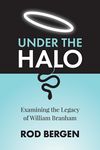

Amos Omoboriowo wrote a 12-part series as a direct answer to the Scriptural Challenge issued on this website. He also wrote a response to our article on the Prophecies of William Branham's Death. This is our reply to his analysis. Your are in the article highlighted above. Part 7 was preached on Saturday 4 December 2021 and published in the Scribe magazine in June 2022.[1]
Who Else Could It Be?
Part 7 is the crescendo of the whole series. Here Amos Omoboriowo gathers his proofs into one place and lays them on the table together: Malachi 4, Matthew 13:52, Luke 17:30, Ephesians 4, Revelation 18:4. Each is said to describe a single end-time man, and each, he says, was fulfilled by William Branham. Then comes the challenge, repeated over and over, in different words on nearly every page: "Since you boldly and proudly declare that William Branham is not Elijah, then, tell us who fulfilled these End Time Prophecies... for only one man can fulfill all these Scriptures."[2]
It sounds like a strong challenge. It is worth showing why it is not.
The challenge only bites if you first agree that these verses were ever about a single end-time man to begin with. And they were not. In every case, the meaning that points to William Branham is a meaning the argument supplies, not a meaning the text states. The man was read into the verses, and then we are dared to name someone else who fits the reading. **"Who else could it be?" is only a hard question once you have already agreed to the answer.**
Two of the load-bearing proofs make this plain, because to reach William Branham they have to turn the text upside down.
The verse turned upside down
The first is Matthew 13:52, the "householder scribe." Amos Omoboriowo makes this verse into an office: William Branham is "the Principal Householder Scribe," and the "every scribe" he tutors becomes a line of "successive apostolic scribes," beginning with Raymond Jackson and running down to the present ministry.[3]
But to build that, he first has to do something remarkable to the verse just before it. Matthew 13:51 reads, "Jesus saith unto them, Have ye understood all these things? They say unto him, Yea, Lord." The apostles say they understood. Amos Omoboriowo tells us they did not. He writes that when Jesus asked "Have ye understood," he "really meant, Have you heard all that I shared with you," and that the parables "passed over their heads."[4]
That is not what the word means, and it is not what the passage says. The apostles answered "Yea, Lord," and on the strength of their understanding the Lord went on to speak of the scribe who brings out of his treasure things new and old. And notice that the very same Gospel uses the very same word a few chapters later, of these very men: "Then the disciples understood that he spake unto them of John the Baptist" (Matthew 17:13). They understood. To make Matthew 13:52 an exclusive end-time office, Amos Omoboriowo has to first deny the apostles the understanding the text plainly grants them.
And the verse itself will not carry the weight. Jesus said the kingdom-trained scribe "is like unto a man that is an householder." It is a simile, a picture of every disciple schooled in the kingdom, bringing out treasure old and new. It is not the crowning of one modern man who then ordains a succession. We showed this in our response to Part 4, and Part 7 only leans on it harder. **A simile about every disciple cannot be turned into a throne for one, and it certainly cannot be, if the argument first has to unteach the apostles.**
The Elijah already come
The second, and the heart of Part 7, is the "dual application" of Malachi. Amos Omoboriowo argues that John the Baptist fulfilled only the first half of Malachi 4:6, the turning of "the heart of the fathers to the children," and that the second half, "and the heart of the children to their fathers, lest I come and smite the earth with a curse," was "left hanging" for an end-time Elijah, William Branham. He even says the angel Gabriel "went to Malachi Chapter 4, verse 6, and broke it into two parts," applying part A to John and leaving part B out entirely.[5]
This is the pillar the whole crescendo rests on, and it does not stand, because the Lord Jesus already settled the question, and settled it the other way.
Jesus did not divide the Elijah prophecy into a fulfilled half and a reserved half. He said the whole of it was fulfilled in John. "Elias truly shall first come, and restore all things. But I say unto you, That Elias is come already, and they knew him not... Then the disciples understood that he spake unto them of John the Baptist" (Matthew 17:11-13).[6] He said it plainly again: "And if ye will receive it, this is Elias, which was for to come" (Matthew 11:14). Notice that Jesus even attaches the "restore all things" language, the very restoration Amos Omoboriowo reserves for the end time, to John, saying "Elias is come already." There is no leftover clause hanging in the air, waiting twenty centuries for another man. The remainder that Part 7 needs is manufactured by cutting in half a prophecy the Lord treated as whole and fulfilled.
I understand why the movement needs the split. Without a piece of Malachi still unfulfilled, there is no scriptural doorway for a second Elijah, and the whole edifice loses its foundation verse. But the doorway is not in the text. It is cut into the text. And the One who had the authority to interpret Malachi did the opposite: "this is Elias, which was for to come." **The Elijah of Malachi already came, and Jesus told us his name.**
"The Son of man revealed" is Christ, not a stand-in
The proof then reaches for Luke 17:30, "even thus shall it be in the day when the Son of man is revealed." Amos Omoboriowo reads this as William Branham re-expressing Christ's earthly ministry at the end time, "a son of man" revealing "the Son of man."[7]
But "the Son of man" in Luke 17 is the Lord Jesus Christ Himself, and the passage is about the suddenness of His own coming and the judgment of that day, set against the days of Noah and Lot. It is not about a prophet in the twentieth century demonstrating Christ to a crowd. To make it so, William Branham has to be inserted as the "revealing" of the Son of man, which is once more a meaning supplied rather than stated.
And watch where this reading is allowed to end, because Part 7 takes it to its conclusion and quotes the conclusion approvingly. The climactic testimony of the whole instalment is from a memorial address, quoted at length: "the man we know as William Branham, was sent to demonstrate God again in the flesh."[8] That is offered as the crown of the proof that Branham fulfilled Luke 17:30.
Weigh that sentence. "Sent to demonstrate God again in the flesh." This is precisely the elevation of a man that the former followers named when they wrote that they had "replaced faith in Christ with faith in a man." The entire series insists it does not lift a man above measure. Its crowning proof-quote says a man was sent to demonstrate God in the flesh again. **When the case for a prophet crests at "God in flesh again," it has answered our question about whether he preached what Paul preached, and it has answered it against itself.**
The trick in the question
Now the challenge itself can be seen for what it is. Across Part 7, Amos Omoboriowo demands, again and again, that if William Branham did not fulfill these Scriptures, we must name the man who did. "Was it Kenneth Hagin... Was it Gordon Lindsay... Was it Oral Roberts... Was it even Billy Graham?" And then, "if you cannot show us the way, strictly by the Roadmap of the Holy Bible, then keep quiet, and sit down."[9]
This is a trick question, and not a hard one once it is named. It asks us to nominate a rival end-time Elijah, a rival Householder Scribe, a rival "Son of man revealed." But those offices are not in the verses. They were assembled by the argument and then hung on William Branham. We are under no obligation to supply another candidate for a scheme the Bible never sets up. The absence of a second nominee is not evidence for the first one. It is evidence that the scheme was invented, because a true reading of Scripture does not leave the church hunting for the one man who fills a chart.
And if the question is asked honestly, the Bible answers it. Who fulfilled the Elijah prophecy of Malachi? Jesus told us. John the Baptist. Who is the Son of man of Luke 17? The Lord Jesus, at His own coming. There is no vacancy for a twentieth-century figure to fill, and so there is no one we need to name to fill it.
The harshness, and the test
I have left the tone of Part 7 until last, because it is not the point, but it should not go unmentioned. This instalment calls Rod and Jeremy Bergen "sons of Lucifer," "three blind mice," "blind leaders of the blind," and says they have "hung themselves." It mocks the "726 articles" of this website again and again. And it complains that we could have simply walked away and disagreed quietly, instead of making this our work.[10]
I will not return any of that. I will only say, plainly, why we did not walk quietly away. We did not make attacking a man our life's work. We asked three questions, and we documented the answers, because the eternal welfare of people we love is bound up in them. That is the same reason Amos Omoboriowo gives for preaching as he does, and it is a good reason. It does not become sin when we do it.
Part 7 also gathers the fiercest passages in the New Testament to license its heat: Paul striking Elymas blind, John calling Cerinthus the firstborn of Satan, the Lord saying "ye are of your father the devil." But look at who those words were spoken to. A sorcerer actively turning a man from the faith. A teacher denying that Christ had come in the flesh. Men rejecting the incarnate Son of God to His face. They were not aimed at people asking whether a modern prophet's dated prophecies came to pass. Turning those swords on that question is not holy indignation. It is a category mistake with an edge on it.
The test has not moved. "Believe not every spirit, but try the spirits whether they are of God" (1 John 4:1). "If the thing follow not, nor come to pass, that is the thing which the Lord hath not spoken" (Deuteronomy 18:22). Applying that test is not blindness and it is not the work of Lucifer. It is obedience, and it is offered in love.
What still stands
So I thank Amos Omoboriowo for Part 7, because it brought the whole case into one room. And in one room it can be seen whole. Every proof is a meaning assigned, not stated. Matthew 13:52 became a throne only by first denying the apostles their understanding in the verse before. Malachi 4:6 became a doorway for a second Elijah only by cutting in half a prophecy the Lord called fulfilled in John. Luke 17:30 became a stand-in prophet only by inserting a man where the Son of man stands, and the crown of that proof is a sentence about a man "sent to demonstrate God in the flesh." And the great challenge, "who else could it be," turns out to assume its own answer.
The question was never who is the most impressive minister of the age, and it was never whom we would nominate in his place. It was whether the things William Branham spoke in the name of the Lord came to pass, whether he was honest, and whether his gospel was the gospel of Paul. The Elijah of Malachi already came, and Jesus named him. Do not take that from me. Take it from the Lord Jesus, in Matthew 11 and Matthew 17, and read it for yourself. A true reading of Scripture leaves no throne empty and no church searching for the one man who fits the chart. It points, every time, to Christ.
Footnotes
- ↑ Page numbers in the footnotes are from the printed Scribe, "God Sent Vessels ... Part 7" (June 2022, Ref. 04-12-2021). The Part 7 file is OCR'd in a two-column layout, so page markers ("Page 2," "Page 13," etc.) are how I located them.
- ↑ God Sent Vessels, Part 7, p. 28.
- ↑ God Sent Vessels, Part 7, pp. 3-5, 11-12, 18-19.
- ↑ God Sent Vessels, Part 7, p. 2.
- ↑ God Sent Vessels, Part 7, pp. 13-14.
- ↑ Matthew 17:11-13, KJV. Jesus says the Elijah who is to "restore all things" has already come, and the disciples understand that he means John the Baptist.
- ↑ God Sent Vessels, Part 7, pp. 44-47.
- ↑ God Sent Vessels, Part 7, pp. 49-50, quoting T. L. Osborn's 1966 memorial address "God In Flesh Again."
- ↑ God Sent Vessels, Part 7, pp. 28-30.
- ↑ God Sent Vessels, Part 7, pp. 15, 16, 34-35, 39, 41.
Navigation
See also: The Argument That Proves Anything, The Question Was Never Whether He Was Perfect, The Test He Calls a Sin, The Exception He Had to Invent, Famous Is Not the Same as True, The Year That Did Not Come, An Analysis of William Branham's Visions and Prophecies, Was William Branham Honest.