Sweet Water and Bitter
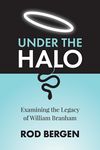
Amos Omoboriowo wrote a 12-part series as a direct answer to the Scriptural Challenge issued on this website. He also wrote a response to our article on the Prophecies of William Branham's Death. This is our reply to his analysis. Your are in the article highlighted above. This article responds to "A Rebuttal Of The Prophecy Of Anna Schrader On William Branham," a Scribe message by Amos Olusegun Omoboriowo of Bible Faith Tabernacle, Lagos, Nigeria (Ref. 26-06-2005, re-presented August 2022).[1]
Something Amos Omoboriowo overlooks from the start
Before we get into Amos Omoboriowo's arguments, I would like to step back and look at the two prophecies of Anna Schrader. We provide the details of the prophecies in our article on the Prophecies of William Branham's Death.
When William Branham first tells the story of the 1933 Ohio River Experience in 1950 and 1951, he never mentions a voice speaking.
Both Gordon Lindsay's book, 'A Man Sent From God', and Julius Stadsklev's book, 'A Prophet Visits South Africa' record the light appearing during the baptism, but omit the voice. It is obvious that they both received this information directly from William Branham without any checking of the facts. It is important to note that there is NO MENTION of a voice.
However, Gordon Lindsay's book does include the following similar prophecy from Anna Schrader:
The next incident was a stirring message given in the Spirit and interpreted, almost identical to two others which were to be given in other Branham meetings in different places, a sure testimony of the authenticity of this anointed ministry. It was uttered with such rousing force that it almost seemed unearthly, and this was the gist of the message… that as John the Baptist was sent as a forerunner of the Lord’s first coming, so was He sending forth this evangelist and others like him to move the people and prepare them for His second coming. Months later we heard this same message interpreted amidst a large crowd of people attending the Branham meeting in Tulsa, Oklahoma, by Sister Anna Schrader whom we later learned to appreciate deeply. Truly, these words penetrated our hearts.” (Gordon Lindsay, A Man Sent From God)
NOTE: The prophecy refers to "this evangelist and others like him", and not solely to William Branham.
The critical "prophecy" that all message followers focus on was not told by William Branham until August 1952, which was after Gordon Lindsay published his book. William Branham, in his first telling of the voice which spoke, says that it said the following:
- "As John the Baptist was sent to warn the people of the first coming of Christ, so is this Message to warn the people of the second coming."[2]
We must conclude that since the voice was not mentioned in William Branham's own early retelling of the story that it never occurred and that he simply used the language from the Lindsay book. There was no voice and no prophecy at the Ohio River in 1933. William Branham appropriated the wording of Anna Schrader's prophecy.
You should consider this as we look at the arguments raised by Amos Omoboriowo.
The Same Vessel
Anna Schrader was a woman with a gift of prophecy who worked with the evangelist Gordon Lindsay. She gave two prophecies about William Branham, years apart, and they point in opposite directions.
The first, around 1944 in Shreveport, William Branham treasured. He told it again and again, by name, as one of the great confirmations of his call. The second, in 1964 or 1965, his defenders would rather forget:
"Go warn Brother Branham. He's walking in the way of Dowie. He's going to die."[3]
Amos Omoboriowo does not deny that these two prophecies clash. He says so plainly, and builds his whole Scribe on it: here is "the same vessel" giving "two contradicting prophetic revelations."[4] One of them, he reasons, must be false, because God is not the author of confusion. We agree with him that God is not the author of confusion. There are two questions that must be addressed:
- If the two are contradictory, how does he decide which one to keep? His answer to this question is the undoing of his whole defense.
- Are the two prophecies really are contradictory? We will deal with this queston towards the end of this article.
The witness Branham called
Start with the prophecy he keeps, because William Branham chose it himself.
Branham put Anna Schrader forward, repeatedly and by name, as a supernatural witness to his commission. In a 1960 sermon he recounted how the Angel had spoken over him at the Ohio River in 1933, and then:
"eleven years later, when I walked into a meeting, this little woman rose and spoke in tongues and interpreted. It was word for word the same thing that Angel said."
He named her: "her name is Mrs. Schrader." And he added that she then foretold "things that would happen in the meeting the following night, and not one time did it fail."[5]
Amos Omoboriowo endorses this without reservation. That first prophecy, he says, "was True," a word by which the Holy Ghost was "vindicating William Branham's Ministry as Elijah."[6]
So mark where we stand before the second prophecy is even mentioned. Both William Branham and Amos Omoboriowo have vouched for Anna Schrader. They have called her to the witness stand, sworn her in, and entered her testimony as genuine, Spirit-given, word-for-word accurate, never once failing. She is their witness.
"The same vessel"
Then the same witness, with the same gift, said William Branham was walking in the way of a false Elijah and would die. And now Amos Omoboriowo's verdict on her changes completely. The later prophecy, he declares, "was spoken by a lying spirit." Anna Schrader was "prophesying in the flesh," carnally, under the influence of Gordon Lindsay's grudge.[7]
Same woman. Same gift. Spirit of God when she blesses William Branham; lying spirit when she warns him.
You are allowed to conclude that a prophet spoke falsely. Scripture tells you to test prophecy and to reject what fails. But you must test it by something, and the something cannot be the very point in dispute. So watch the reason Amos Omoboriowo actually gives. The later prophecy is false, he says, first because it "contradicts the earlier Prophecy," and second because "the Evident Fruits of Brother Branham's Ministry, clearly proves that Anna Schrader was Prophesying in the flesh."[8]
The first says: the prophecy against Branham is false because it disagrees with the prophecy for Branham, which we have already decided is the true one.
The second says: the prophecy against Branham is false because Branham's ministry is genuine. But whether Branham's ministry is genuine is the entire question. This is not a test applied to reach a verdict. It is a verdict, written first, and then called a test.
Any prophecy that confirms William Branham is Spirit-given; any prophecy that convicts him is fleshly; and the rule that sorts them is simply whether they agree with William Branham. Feed that machine a thousand prophecies and it will clear him every time, because it was built to.
The clincher that cuts both ways
Amos Omoboriowo saves what he calls his clincher for last, "the point that settles this issue once and for all," and it is worth taking seriously, because it settles the issue against him.
His argument is this. Under the New Testament a woman may have the gift of prophecy but not the office of a prophet. A person with the gift, he says, can only prophesy "spontaneously," in the moment, under the anointing. Only a prophet, holding the office, can carry a message received earlier and deliver it as a standing instruction, "Go tell Brother Branham this and that." Therefore, when Anna Schrader said "Go warn Brother Branham," she was doing something a woman's gift cannot do, which proves she spoke in the flesh.[9]
Now turn and look at the prophecy he wants to keep. The 1944 word in Shreveport was not a vague spontaneous stirring. By Branham's own account it was word-for-word the specific message the Angel had spoken over him eleven years earlier at the Ohio River, a fixed content carried across more than a decade and delivered on cue. If a woman's gift cannot carry a previously given, directed message, then the 1944 prophecy fails that rule at least as badly as "Go warn Brother Branham" does. It, too, is a prior message, precisely repeated, delivered to a specific man about a specific commission.
His clincher does not cut only the prophecy he dislikes. It cuts the branch William Branham is sitting on.
You cannot disqualify the warning as too exact and directed for a woman's gift while keeping the vindication, which is every bit as exact and directed.
And the underlying rule is shaky in any case. Scripture simply records women prophesying, without apology: "the same man had four daughters, virgins, which did prophesy" (Acts 21:9).[10] The point here is not to settle every question about women in ministry. It is only this: the rule Amos Omoboriowo built to sink the second prophecy sinks the first one with it.
The rule he keeps breaking
The strangest thing is that Amos Omoboriowo states the right principle himself, in this very Scribe, and states it beautifully.
"My soul cannot be established by any Prophetic utterance, but exclusively by Truth, the Truth of the Word of God." "I go strictly by the revelation of the inspired written Word of God, and not by any man's prophecy, or testimony, or dream, or vision, regardless of who he is."[11]
Amen, and amen. We could not have said it better, and we hold it with him without reservation.
But then look at what actually carries William Branham's identity through these pages, and through Branham's own preaching. The Elijah claim, the forerunner claim, the whole "as John the Baptist, so this Message" framework, rests on exactly what Amos Omoboriowo says he will not lean on: a woman's tongues-and-interpretation in 1944, a stranger's outburst in San Antonio, a voice by the Ohio River. Prophecies. Testimonies. Visions. If the soul cannot be established by any prophetic utterance, then it cannot be established by the ones that flatter William Branham either. You do not get to say "not by any man's prophecy" and then rest a man's entire office on a stack of them.
And this is the thread that runs through both of these prophecy Scribes, the Kenneth Hagin one and this one. A prophecy that honors William Branham is treated as the Holy Ghost vindicating him. A prophecy that indicts him is treated as a fleshly nullity from a lying spirit. And in neither case is the deciding rule the written Word. In every case the deciding rule is William Branham.
That is not judging prophecy by Scripture. That is judging Scripture, and everything else, by William Branham.
Amos Omoboriowo even hands us the image to say it with. He quotes James against the second prophecy: "Doth a fountain send forth at the same place sweet water and bitter?" (James 3:11).[12] It is a good question, so let him answer his own. If Anna Schrader is a fountain that sent forth bitter water in 1965, then by James she is not a fountain you may trust for the sweet water of 1944. An unreliable spring is unreliable throughout. You cannot cup your hands under it only on the days it runs sweet and call that discernment.
The trap that will not close, again
There remains the awkward fact that the second prophecy came true. William Branham did die, within the window named. Amos Omoboriowo's answer is the one we already examined in Heads I Win, Tails You Lose: God gave the fulfilled prophecy to hand Gordon Lindsay and Kenneth Hagin "the idols in their heart," so its coming to pass proves nothing.[13]
We took that apart there and will not repeat it, except to note that here it has to carry even more weight than before. The same prophecy must now be, all at once, the word of "a lying spirit," genuinely fulfilled, and a tool God used on purpose. A lying spirit's word that God fulfils to trap the righteous-seeming: the account bends into whatever shape neutralizes the evidence in front of it. Scripture asks for something simpler. "Let the prophets speak two or three, and let the other judge" (1 Corinthians 14:29).[14] Prophecy is to be weighed, openly, by the Word. It is not to be cashed when it pleases us and burned when it does not.
We never needed her testimony
So let us do the honest thing and set the whole duel down. If the two prophecies are contradictory, they prove nothing by themselves, and we rest nothing on either. If Amos Omoboriowo wants to set aside Anna Schrader's warning, we will set aside her vindication there beside it, and the balance will be even. But does this also mean we set aside one of the biggest "self- vindications" of Branham's ministry, the 1933 Ohio River Experience?
Notice who put her on the stand. It was not this website. It was William Branham, who reached for Anna Schrader by name, again and again, as proof of his call. Having summoned her as his witness, neither he nor his defenders can send her away when she turns, except by the one rule we have watched at work: she is a true prophetess exactly as far as she agrees with him.
We do not need her at all, in either direction, because a prophet is not proved or disproved by another person's vision. He is proved by his own words, measured against Scripture. That is God's own test: "when a prophet speaketh in the name of the LORD, if the thing follow not, nor come to pass, that is the thing which the LORD hath not spoken" (Deuteronomy 18:22). And there we have no need of Anna Schrader, or Kenneth Hagin, or any voice but William Branham's own. He told his hearers the world's systems would end by 1977. The year came and went. We set it out at The Year That Never Came. That is the test that decides this, and it needs no other witness.
What if the two prophecies aren't contradictory
Could both prophecies be true? It is possible. What if William Branham started out on the right foot but slowly, over time, decided on the wrong path?
Originally, William Branham stood for the unity of the church. This is something that God treasures:
Behold, how good and how pleasant it is for brothers to live together in unity![15]
The glory which You have given Me I also have given to them, so that they may be one, just as We are one; I in them and You in Me, that they may be perfected in unity, so that the world may know that You sent Me, and You loved them, just as You loved Me.[16]
But eventually his view of himself as Elijah got the better of him. Originally he preached a vision of unity... that Trinitarians and Oneness both had the Holy Spirit (see the vision of the Plum and Apple Trees). But in the last few years of his ministry, Branham shattered that unity by saying things such as this:
"Jesus said, 'Except you believe that I am He, you will die in your sins.' He is the revelation of God, the Spirit of God revealed in human form. If you can't believe that, you're lost. You put Him a third person, second person, or any other person besides God, you're lost." (July 25, 1965)
His self-proclaimed status as Elijah caused him to fall into the sin of John Alexander Dowie, bringing stark dissension into the church of God. God would not tolerate this and warned him, through several prophecies that he would be taken from the earth if he did not change his ways.
Gordon Lindsay took the warnings of the prophecies to William Branham:
‘I talked to him as the Lord had instructed me, but I saw that he wouldn’t listen…”[17]
This is a reasonable way of looking at the prophecies as being non-contradictory. However, this explanation will be rejected out of hand by Amos Omoboriowo as it means that he would have to accept that William Branham's self-proclaimed status as Elijah the prophet was the error... and that destroys his worldview.
What still stands
I want to close where I closed the last time, because it is still true. Amos Omoboriowo is right that God does not contradict Himself, right that a true fountain does not run sweet and bitter, right that a soul must rest on the written Word and not on any man's vision. We believe all of it. We only ask him to spend that good coin on his own case.
Because the fountain that never runs bitter is not Anna Schrader, and it is not William Branham. It is the Word of God, which is why we keep returning you to it. Lay down the prophecies, all of them, the ones that wound and the ones that flatter. Take up the open Bible instead. Weigh the prophet by his own words, the way Deuteronomy 18 tells you to, and hold fast only what stands. "Prove all things; hold fast that which is good" (1 Thessalonians 5:21). You do not need a witness Branham had to call and then could not control. You need the sure Word, and Christ at the center of it, who never walked in the way of Dowie, or of anyone, and whose word has never once failed.
Footnotes
- ↑ The copy we read is an OCR of a two-column magazine with erratic, interleaved page markers. We footnoted by quotation with best-estimate pages.
- ↑ 52-0817E - Do You Now Believe?
- ↑ A Rebuttal Of The Prophecy Of Anna Schrader, quoting Kenneth Hagin's account of the warnings Anna Schrader gave to Gordon Lindsay.
- ↑ A Rebuttal Of The Prophecy Of Anna Schrader. He frames the case as "the same vessel" giving "two contradicting prophetic revelations."
- ↑ A Rebuttal Of The Prophecy Of Anna Schrader, quoting William Branham, "The Revelation Of Jesus Christ," 4 December 1960, para. 40.
- ↑ A Rebuttal Of The Prophecy Of Anna Schrader. He calls the earlier prophecy "True" and a vindication of Branham's Elijah ministry.
- ↑ A Rebuttal Of The Prophecy Of Anna Schrader. He calls the later prophecy the product of "a lying spirit" and says she was "prophesying in the flesh."
- ↑ A Rebuttal Of The Prophecy Of Anna Schrader, in his "three proofs" that the later prophecy was false.
- ↑ A Rebuttal Of The Prophecy Of Anna Schrader, the third and "clincher" proof, distinguishing the gift of prophecy from the office of a prophet.
- ↑ Acts 21:9, KJV. Amos Omoboriowo cites this same verse; it plainly reports women prophesying.
- ↑ A Rebuttal Of The Prophecy Of Anna Schrader. He insists his soul rests "not by any man's prophecy, or testimony, or dream, or vision" but on the written Word alone.
- ↑ James 3:11-12, KJV, quoted by Amos Omoboriowo against the later prophecy.
- ↑ A Rebuttal Of The Prophecy Of Anna Schrader, applying Ezekiel 14:1-10 to the fulfilment.
- ↑ 1 Corinthians 14:29, KJV. Prophecy is to be weighed by the hearers, not banked when it flatters.
- ↑ New American Standard Bible (La Habra, CA: The Lockman Foundation, 2020), Ps 133:1.
- ↑ New American Standard Bible (La Habra, CA: The Lockman Foundation, 2020), Jn 17:22–23.
- ↑ K. Hagin, ‘He Gave Gifts unto Men’, pg 164-170.
Navigation
See also: The Half He Kept, The Year That Did Not Come, Who Else Could It Be?, The Argument That Proves Anything, One of My Weaknesses, Above the Bible, I Have Pardoned, An Analysis of William Branham's Visions and Prophecies.