Inventing The Exception
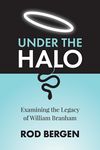
Amos Omoboriowo wrote a 12-part series as a direct answer to the Scriptural Challenge issued on this website. He also wrote a response to our article on the Prophecies of William Branham's Death. This is our reply to his analysis. Your are in the article highlighted above. Part 4 was preached on Thursday 2 December 2021 and published in the Scribe magazine in April 2022.[1]
The Exception He Had to Invent
Part 4 is where the series turns a corner. For three messages Amos Omoboriowo defended William Branham by insisting that prophets are flawed men. In Part 4 he begins to build something positive: a doctrine of the "First Church Age" as a fixed pattern that God must reproduce at the end of time, complete with a lead apostle, a pure-seed church, and an Elijah who lays the foundation for it all. It is an ambitious piece of construction, and I want to give it the careful reading it deserves.
But something happens as he builds. At the very point where he needs to shield William Branham's teaching from examination, he stops and lays down a brand-new rule. A God-sent vessel, he says, can teach something wrong, and God simply overlooks it. He calls it a "Boxed Revelation."
What is he talking about??
For three parts he has told us that fallibility only touches a prophet's character, never his message. Now, needing more room, he admits that it can touch the message too. And the moment he admits that, he has conceded the only thing this entire dispute has ever been about. The more Part 4 builds, the more it gives away.
The exception he had to invent
Here is the new rule in his own words.
"The understanding a God Sent Vessel of Truth carries, can be wrong, if he takes an issue ahead of the time that God has ordained in His omniscient and sovereign mind, to unveil that Truth. And God never judges any such teaching or presentation, because He does not judge men for the revelation of things that He has not yet opened up, being what I call, a 'Boxed Revelation'."[2]
Notice what this does. Through th,ree sermons the argument was that a prophet's weaknesses are personal and never affect the truth he bears. Amos Omoboriowo even repeats that claim on the same pages of Part 4:
"It is the revelation of Jesus Christ that a man carries that is infallible, not the man himself."[3]
But a "Boxed Revelation" is not a personal weakness. It is a wrong teaching, spread among God's people, which he says God does not judge. So which is it? Either the revelation a man carries is infallible, or a true messenger can carry a wrong teaching that God overlooks. Part 4 asserts both, two pages apart.
And once he has admitted the second, the case is essentially over. We have never argued anything more than this: that a genuine-seeming messenger can teach and predict things that are false.
Amos Omoboriowo has now agreed.
All that remains is the question this series has refused from the first page: which of William Branham's teachings and prophecies were true, and which were not? A rule that declares a prophet's errors uncountable does not answer that question. It only admits the errors are there.
The rule also rests on a verse that will not bear it. He grounds "Boxed Revelation" in Acts 17:30, "the times of this ignorance God winked at."[4] But that sentence has nothing to do with a messenger's false teaching. Paul is standing on Mars Hill in Athens, speaking to pagan philosophers about their altar to an unknown god, and he means that God overlooked the idol-worship of the nations before the gospel came to them.[5] It is about God's patience toward those who never had the light. It is not a licence for those who claim to bring the light to get it wrong.
Even his illustration turns against him. He offers the rumour of John 21, that John "should not die," as a case of Peter spreading a wrong message that God winked at.[6] But look at what the passage actually does. It records the false saying precisely in order to correct it: "Yet Jesus said not unto him, He shall not die" (John 21:23). Scripture does not wink at the error. Scripture names it and fixes it, so that no one will be misled. That is exactly what this website has done with William Branham's failed sayings, and it is the opposite of what Amos Omoboriowo claims the verse teaches.
A pure-seed church with a tare in the first chapter
The centrepiece of Part 4 is the claim that the early church was made up of elect seeds only, with no tares, no unbelievers, no false converts, until the last apostle died. "There was not one Non-Elect, not one Non-Seed that made up the Original Church, but they were all Elect Seeds of God."[7] The tares, he says, could not be sown "until after men slept, the last of whom was Apostle John, who passed away around 100 to 101 A.D."[8]
This is built on the parable of the wheat and tares, and it reads the parable backwards. Jesus interpreted his own parable, and he could not have been plainer about where the tares are sown: "The field is the world" (Matthew 13:38).[9] Amos Omoboriowo quotes that very line, and then applies the tares to the church anyway. The Lord said the field is the world. The sermon says the field is the church. They cannot both be right, and the Lord settled it himself. Amos is disagreeing with Jesus.
History settles it too. The New Testament shows tares inside the church from the very beginning, long before any apostle died. In Acts chapter 5, the very chapter Amos Omoboriowo cites for his "pure seeds only" claim, Ananias and Sapphira are struck dead for lying to the Holy Ghost, inside the Jerusalem church, at its purest hour. In Acts chapter 8 Simon the sorcerer is baptized and then told, "thou hast neither part nor lot in this matter... thou art in the gall of bitterness" (Acts 8:21-23). Judas sat among the Twelve. John himself wrote, "they went out from us, but they were not of us" (1 John 2:19). And Paul warned the Ephesian elders, while the apostles were still living, "of your own selves shall men arise, speaking perverse things" (Acts 20:30). The purest church that ever existed had a tare in Acts 5.
Why does this matter for the defence of William Branham? Because the unspoken argument underneath the whole series is that we followed the Message for decades, so their present rejection must be rebellion. But the church has always contained people who looked like wheat and were not, and it has always contained sincere people who later had to leave error behind. Length of time inside a movement proves nothing about whether the movement is true. And it means the church has always needed the very thing believethesign is doing: testing, by the Word, what is wheat and what is tare.
A pattern that only fits if you assume the man
Much of Part 4 is given to a single argument. God does not change, therefore the way he built the first church is the way he must rebuild the last one, therefore the end time must have an Elijah who lays the foundation and a lead apostolic ministry to follow, exactly as the first age did.[10] The reader is meant to arrive at William Branham as the Elijah and this movement as the apostles.
Two things need to be said. First, the immutability of God is about his character and his faithfulness, not a promise to reproduce an organizational chart in every generation. To say "God changes not" is to say he is holy, truthful, and reliable. It is not to say he must repeat a delivery structure like a stamp.
Second, and more tellingly, the pattern he appeals to forecloses itself. The qualification for replacing Judas, which Amos Omoboriowo quotes at length, was that the man
"have companied with us all the time that the Lord Jesus went in and out among us, beginning from the baptism of John... a witness with us of his resurrection" (Acts 1:21-22).[11]
That criterion cannot be reproduced. It requires a man who walked with the earthly Jesus and saw him risen. If the first-age pattern must be copied exactly, then the end time cannot have apostles like the Twelve at all, because the one non-negotiable qualification of the Twelve can never occur again. Part 4 keeps the parts of the pattern that install a lead ministry, and quietly drops the part that makes such a ministry impossible to duplicate.
Which leaves the assumption doing all the work. The template only produces William Branham and this movement if you first assume that William Branham is the end-time Elijah and this movement is the end-time apostolate. That is the thing to be proved, and Amos Omoboriowo admits, in Part 4 itself, that he has not yet proved it: the Elijah ministry of William Branham, he says, is something "we shall later prove by the Holy Scriptures."[12] The scaffolding is elaborate. The identification is still only asserted.
The line the whole series kept denying
There is one more thing in Part 4 that must be named plainly, because it is the clearest statement yet of the very thing the series claims it is not doing.
Amos Omoboriowo writes:
"anyone, who does not follow the Bible Restoring Message of Brother William Branham, will not make it as The Bride of Jesus Christ! Full stop."[13]
The best such a person can hope for, he adds, is to be a foolish virgin, "if at all you are of God." Earlier he says that if all you hold is Christ and him crucified, "I have every reason to doubt you were ever even saved."[14]
That is a man's message set as the boundary line of salvation. It is precisely what the former followers named when they wrote that they had "minimized the power of Jesus' death on the cross to completely save the lost, and replaced it with faith in a man." Part 4 says the series does not lift a man above Scripture. Then Part 4 makes following a man's message the difference between the Bride of Christ and the outer darkness.
The sermon proves the charge it is denying.
The verses reached for to support this actually command the opposite. He uses "he that knoweth God heareth us; he that is not of God heareth not us" (1 John 4:6), and "whosoever abideth not in the doctrine of Christ, hath not God" (2 John 9).[15] But John wrote both of those in the same breath as "try the spirits whether they are of God" (1 John 4:1), and the measure he gives is the apostolic confession of Jesus Christ come in the flesh. The "doctrine of Christ" that we must abide in is the gospel the apostles delivered, not the message of a twentieth-century preacher. So these verses do not make William Branham the test. They make the apostolic gospel the test, and by that test a prophet is to be weighed, not enthroned.
These are heavy words to lay on people, that they were never saved, that they cannot be the Bride. Many sincere readers have been told exactly this and have carried it as a wound. It is not the gospel. The gospel says, "whosoever believeth in him should not perish, but have everlasting life" (John 3:16), and it makes Christ, not a man, the door.
What still stands
So I thank Amos Omoboriowo for the labour of Part 4. But the great structure he raises does not defend William Branham. At its center it concedes the case, by admitting that a true messenger can teach falsely and calling it "Boxed Revelation." It rests on a pure-seed church that his own chapter refutes in Acts 5. It appeals to a pattern that forecloses itself in Acts 1. And it ends by making a man's message the boundary of salvation, which is the very thing it denies doing.
He does ask one fair question:
How, he asks, does believing William Branham is Elijah lift a man above the Bible, any more than believing John the Baptist was Elijah?[16]
The answer is simple. Jesus Christ himself testified that John was the Elijah who was to come (Matthew 11:14; 17:12). No one in Scripture testifies it of William Branham. So the comparison holds only if you first prove that William Branham is what John demonstrably was, and that proof is exactly what Part 4 keeps promising for later and never brings. The question the series will not face is still here, unmoved, and it is not unkind to ask it.
Did the things William Branham spoke in the name of the Lord come to pass? Was the gospel he preached the gospel Paul preached?
Scripture tells us to ask, and it tells us how to weigh the answer. Do not take it from us, and do not take it only from his defenders. Open the record, lay it beside the Word, and see. A true messenger has nothing to fear from that, and neither do you.
Footnotes
- ↑ Page numbers in the footnotes are from the printed Scribe, "God Sent Vessels ... Part 4" (April 2022, Ref. 02-12-2021).
- ↑ God Sent Vessels, Part 4, p. 3.
- ↑ God Sent Vessels, Part 4, pp. 3-4.
- ↑ God Sent Vessels, Part 4, p. 3.
- ↑ Acts 17:22-31. The "ignorance" of Acts 17:30 is pagan idolatry, addressed by Paul at the Areopagus in Athens; the Greek verb rendered "winked at" means overlooked, as in Acts 14:16.
- ↑ God Sent Vessels, Part 4, pp. 3-4, on John 21:20-23.
- ↑ God Sent Vessels, Part 4, pp. 7-8, citing Acts 5:12-14 and Acts 2:47.
- ↑ God Sent Vessels, Part 4, p. 10.
- ↑ Matthew 13:38, KJV. Jesus' own interpretation places the wheat and the tares in "the world," not inside the church.
- ↑ God Sent Vessels, Part 4, pp. 25-28, drawing on Malachi 3:6, Hebrews 13:8, and Deuteronomy 6:4.
- ↑ God Sent Vessels, Part 4, pp. 32-33, quoting Acts 1:21-22.
- ↑ God Sent Vessels, Part 4, p. 35.
- ↑ God Sent Vessels, Part 4, p. 20.
- ↑ God Sent Vessels, Part 4, p. 18.
- ↑ God Sent Vessels, Part 4, pp. 22-24, applying 1 John 4:5-6 and 2 John 9-11 to the acceptance of William Branham's message.
- ↑ God Sent Vessels, Part 4, pp. 30-31.
Navigation
See also: The Argument That Proves Anything, The Question Was Never Whether He Was Perfect, The Test He Calls a Sin, An Analysis of William Branham's Visions and Prophecies, Was William Branham Honest.