I Have Pardoned
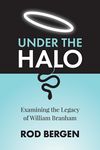
Amos Omoboriowo wrote a 12-part series as a direct answer to the Scriptural Challenge issued on this website. He also wrote a response to our article on the Prophecies of William Branham's Death. This is our reply to his analysis. Your are in the article highlighted above. Part 12 was preached on Sunday 5 December 2021 and published in the Scribe magazine in July 2022.[1]
I Have Pardoned
This is the last of twelve. Over a year of preaching and forty-six printed pages of this final instalment, Amos Omoboriowo brings his defence of William Branham to a close. I want to hold on to two things from it. One is a single sentence of Scripture. The other is the place the whole defence finally arrives, which is not the place it promised to go.
Start with the sentence, because it is small, and clear, and it decides a great deal.
"I have pardoned"
One of the charges on this website concerns what Amos Omoboriowo calls the Sin in the Wilderness. He quotes us fairly: "William Branham believed that the children of Israel that died in the wilderness and did not enter the Promised Land were Eternally Lost. But is this what the Bible Teaches?"[2]
Our point was as simple as a point can be. When Moses interceded, God answered him in words that leave nothing to interpret. "And the LORD said, I have pardoned according to thy word" (Numbers 14:20).[3] God would not let that generation enter Canaan, and He said so in the very next breath. But the word He used for what He did with their sin was "pardoned."
Now hear what William Branham did with that sentence. Amos Omoboriowo quotes him at length, and I will let the quotation stand: "God said to Moses, 'I have Pardoned', but William Branham said it was an 'Unpardonable Sin': God never did forgive that. Every one of them perished in the wilderness... never was forgiven. It's an unpardonable sin; never forgiven them."[4]
Read the two lines side by side. God said, "I have pardoned." William Branham said, "never forgiven." These are not two shades of the same thought. They are a flat contradiction, and the contradiction is not between William Branham and this website. It is between William Branham and the sentence God spoke in the first person.
And here is the whole series in a single moment. Faced with that collision, Amos Omoboriowo does not side with the sentence. He sides with the prophet, and spends six pages explaining why "I have pardoned" does not mean what it says. **When a man's teaching requires you to deny a sentence God spoke plainly, it is the teaching that has to go, not the sentence.**
The category that is not in the text
The tool Amos Omoboriowo uses to get around "I have pardoned" is the one we watched him use on Zechariah 14 in Read It in Context. When the text will not give the needed answer, insert a category the text never mentions, and assign the inconvenient words to it.
Here the category is the "mixed multitude." The pardon of Numbers 14:20, he argues, was never really about forgiving the people. It was only God agreeing not to wipe the nation out entirely, so as to preserve an elect remnant and keep His promise to build Israel. The pardon, he says, "was most certainly NOT FOR THE MIXED MULTITUDE," who were "chronic unbelievers" and "damned through ALL Eternity."[5]
But go back to what Moses actually asked, because the pardon was granted "according to thy word," so the word matters. Moses prayed, "Pardon, I beseech thee, the iniquity of this people according unto the greatness of thy mercy, and as thou hast forgiven this people, from Egypt even until now" (Numbers 14:19). This people. The whole company God had carried since Egypt. God answered that prayer, in those terms: "I have pardoned according to thy word." There is no mixed multitude in the sentence. There is no elect remnant carved out of the pardon. That division is not drawn by Moses, and it is not drawn by God. It is imported from outside, and it is imported for one reason: to keep William Branham's "never forgiven" from colliding with God's "I have pardoned."
Then comes the discipline, in the same passage, and the text holds both together without strain. "But as truly as I live... surely they shall not see the land which I sware unto their fathers" (Numbers 14:21-23).[6] Pardoned, and yet barred from Canaan. That is not a contradiction. Any parent knows it is not. You can forgive a child fully and still let a consequence stand. Forgiveness and consequence are different things, and Numbers 14 places them one beside the other on purpose. What William Branham did was collapse the two into one, read "shall not see the land" as "never forgiven," and so overturn the very word "pardoned" that stands three verses above it.
And when the Apostle Paul later writes, "By faith they passed through the Red sea as by dry land" (Hebrews 11:29), and closes the chapter, "these all, having obtained a good report through faith, received not the promise: God having provided some better thing for us, that they without us should not be made perfect" (Hebrews 11:39-40), Amos Omoboriowo tells us this "only speaks in a general context" and must not be applied to the multitude.[7] The same move again. The plain words are demoted to "general," and the special category does the work the text refuses to do. **Twice now, in two different chapters, the method is identical: when the Bible says the wrong thing, invent a group it can be said about instead.**
Where twelve parts were headed
Here is the second thing to hold on to, and it is the reason this finale matters more than its parts.
Somewhere around its midpoint, Part 12 quietly stops defending William Branham at all. The rebuttal ends, and in its place comes an unveiling. And what is unveiled is not an answer to any question this website asked. It is a hierarchy.
William Branham, we are told, was the Elijah, the "Principal Householder Scribe." After his death the Lord anointed Raymond Jackson as "the PAUL of this End Time," "The Chief Apostle," to put the Message "in its proper Bible perspective."[8] After Jackson comes a third man, a "Lead Apostle John," who is still to appear, and who will "write the Last Chapter of the Book of Acts," and who will personally eat the little book of Revelation 10 and prophesy again to the whole world.[9] And Amos Omoboriowo places himself in this line, as one of the "Every Scribe" the Elijah tutored.[10]
Sit with what that means, because it is stated openly. Amos Omoboriowo approvingly quotes Raymond Jackson: "God has not finished writing the Acts of the Apostles."[11] The Book of Acts, on this teaching, is an open book, still being written, its last chapter reserved for a coming apostle. And the engine that drives the whole succession is named plainly: the promise of Jesus that the Spirit "will shew you things to come" (John 16:13), which Amos Omoboriowo applies exactly as he did in Part 10, as a pipeline of ongoing revelation reaching across the centuries to these End Time men.[12]
This is the very thing we examined in Above the Bible. There, Jesse Smith charged that making Branham the Elijah who brings new truth means exalting his teaching over the Bible, and Amos Omoboriowo called that "utter nonsense." Part 12 is the nonsense made concrete. It is a line of living men, each said to add revelation the last one could not, still writing Scripture's book, still eating its scrolls. And Amos Omoboriowo even reaches for a doctrine he admits is not in the Bible at all. His teaching of "the Input of Ham," the claim that the race of Ham now bears the concluding revelation, he concedes is "a fact that is unwritten."[13]
An unwritten fact. After twelve parts insisting that only the Bible may decide anything, the defence closes by asserting a doctrine its own author grants the Bible never wrote down. **A defence that began by demanding we read nothing but Scripture ends by seating a succession of men who are still adding chapters to it, on the authority of a fact it admits is unwritten.**
Scripture shut that door, and it shut it hard. "Though we, or an angel from heaven, preach any other gospel unto you than that which we have preached unto you, let him be accursed" (Galatians 1:8). "The faith which was once delivered unto the saints" (Jude 3). "If any man shall add unto these things, God shall add unto him the plagues that are written in this book" (Revelation 22:18). The Book of Acts is not open. It was finished, and the faith was delivered, once.
The three questions, twelve parts later
So let us stand back from all twelve, because the series is over and it is fair to ask what it did.
This website put three questions to the Message. Was William Branham a prophet? Was he honest? Did he preach what the Apostle Paul preached? They are plain questions, and they can be answered plainly.
Across twelve parts, not one of them was answered plainly. Each was turned aside. The failed prophecies were "personal" (Part 6). The contradictions were the Fan, God's own design (Part 8). The exaggerations were a "weakness" (Part 9). The idolatry was a "mixed multitude" (Part 9). The out-of-context readings were the text "juggled" by God (Part 11). And now the plain word "pardoned" is a mixed multitude too. Every question met a category that made the evidence inadmissible before it could be weighed.
What the series answered instead was a question no one had asked: who holds authority now. And the answer it gave, a chain of living apostles still writing the Book of Acts, is the answer Scripture most plainly forbids. The "I have pardoned" moment is the whole thing in miniature. On one side, a sentence God spoke. On the other, a prophet's revelation that denies it. Twelve parts, at the last, are a choice between those two, and the defence chose the prophet.
What still stands
I want to thank Amos Omoboriowo, and I mean it, at the end as at the beginning. He worked hard, he stayed with the Scriptures more than most, and he brought his real case into the open where it can be seen and weighed. That is a service. A case you can see is a case a sincere person can test, and testing is all this website has ever asked anyone to do.
And when you test it, the good news that survives is smaller and far kinder than a maze of scribes and seeds and rains and coming apostles. It is this. God said, "I have pardoned." He is the God who forgives, the God who "cannot lie" (Titus 1:2), the God who "is not a man, that he should lie" (Numbers 23:19). His Word is finished, and it is enough, "the faith which was once delivered unto the saints." You do not need an Elijah, a Paul, and a coming John standing between you and Him. You do not need a scroll that has yet to be eaten or a chapter of Acts that has yet to be written. The door He opened is already open, and the only name at it is the name of Jesus Christ, who pardons still, exactly as He said.
So take Amos Omoboriowo's own closing invitation, the one he offers even as he warns you away from us. Come to the Word of God. Read it in its own order, in its own words, and let it mean what it says, even the sentence that undoes a prophet. "I have pardoned." That is the God who is really there. He always was, and He is enough.
Footnotes
- ↑ Page numbers in the footnotes are from the printed Scribe, "God Sent Vessels ... Part 12" (July 2022, Ref. 05-12-2021, preached 5 December 2021; note Amos says Parts 10, 11, and 12 were split from one sermon).
- ↑ God Sent Vessels, Part 12, p. 2, quoting believethesign.com.
- ↑ Numbers 14:20, KJV.
- ↑ God Sent Vessels, Part 12, pp. 2-3, quoting William Branham.
- ↑ God Sent Vessels, Part 12, pp. 4-8.
- ↑ Numbers 14:19, 21-23, KJV.
- ↑ God Sent Vessels, Part 12, pp. 6-7, quoting Hebrews 11:29, 39-40.
- ↑ God Sent Vessels, Part 12, pp. 32-34.
- ↑ God Sent Vessels, Part 12, pp. 38-40.
- ↑ God Sent Vessels, Part 11, p. 7, where he calls himself "the Second of the Every Scribe."
- ↑ God Sent Vessels, Part 12, p. 33, quoting Raymond Jackson.
- ↑ God Sent Vessels, Part 12, p. 46, citing John 16:13.
- ↑ God Sent Vessels, Part 12, pp. 45-46.