The Argument That Proves Anything
Amos Omoboriowo wrote a 12-part series as a direct answer to the Scriptural Challenge issued on this website. He also wrote a response to our article on the Prophecies of William Branham's Death. This is our reply to his analysis. Your are in the article highlighted above. Part 1 was preached on 23 November 2021 and published in the Scribe magazine in March 2022.
The Argument That Proves Anything
I want to thank Amos Omoboriowo. I mean that. Most people ignored our challenge, and he did not. He took it seriously enough to preach twelve parts, to open his Bible, and to say plainly what he believes. That is more than most have offered, and I respect the effort behind it.
So I am going to treat his work the way I would want mine treated. Carefully, and to its face.
Our challenge asked three questions:
- Was William Branham a prophet?
- Was William Branham honest?
- Did William Branham preach what Paul preached?
We attached those questions to specific, checkable claims. A vision of a bridge falling into the Ohio River. The Roosevelt prophecy. A cloud. A string of prophecies with dates on them. We said, in effect, here is the evidence, show us where we have it wrong.
Amos Omoboriowo read that challenge. But then he answered a different one.
Across roughly forty pages, he does not examine a single one of those claims. Not the bridge. Not the cloud. Not one prophecy, not one date, not one doctrine laid beside the letters of Paul. Instead he does one thing, over and over. He compares William Branham to John the Baptist, and to the rejected servant in the vineyard, and to Christ before Pilate. And he compares us, this website, to the Pharisees who rejected them. Every page is a variation on that one comparison.
I am not going to build a straw man out of his message. I am going to show you the comparison in his own words, and then I am going to ask you to test it. Because a comparison is not proof. A comparison is the very thing that has to be proven, not the thing you get to assume.
He was asked for evidence, but gave a comparison
Read how Amos Omoboriowo describes our challenge. He calls engaging our actual pages a "wild-goose chase." He calls following our specific claims going "down the rabbit hole." He tells Jeremy (who ceased his involvement many years ago), before he has answered anything, "you will not hear boo from me after this."
Now hold that beside what the challenge actually asked. It did not ask for a debate about personalities. It asked whether particular statements William Branham made are true. Those are questions of fact. A bridge either fell or it did not. A prophecy with a date either came to pass or it did not.
When a man is asked "is this specific thing true," and he answers "you only ask because you hate leadership," he has not answered. He has changed the subject.
And that is the pattern in Part 1 from beginning to end. The reason we reject William Branham, Amos Omoboriowo tells his church, is our "ministerial ego," our "big-manism," our hatred of a "one-man ministry." He has decided our motive in advance, and once the motive is settled, the evidence never has to be discussed. You cannot answer a question about facts by deciding what is wrong with the person who asked it.
We did not raise these issues because we hate leadership. Far from it, I am actually the pastor of LEADERSHIP at our local church in Canada. I teach on leadership issues... a lot. I understand the need for godly leadership in the church.
We raised these issues because we spent decades inside the Message, we loved it, and then we tried to prove it true. That is the one possibility his whole message does not allow: that someone looked at the evidence honestly and found it wanting.
The comparison only works if you already believe it
Here is the heart of it. Follow the reasoning slowly, because everything in the series rests on it.
Amos Omoboriowo argues:
- John the Baptist was a true man sent from God, and the religious leaders rejected him.
- Jesus was the true Messiah, and the religious leaders rejected him out of envy and pride.
- believethesign.com rejects William Branham.
- Therefore William Branham is a true vessel of truth, and we are the religious leaders.
Do you see the gap between the third point to the fourth. It only holds if William Branham already belongs in the same class as John and Jesus. That is exactly the question in dispute. That is the thing the challenge asked him to prove. And he does not prove it. He assumes it, and then every comparison he draws simply repeats the assumption in a new set of clothes.
There is an old name for this. It is called assuming what you set out to prove. You put your conclusion inside your starting point, and then you act surprised when it comes back out at the end. When Amos Omoboriowo says the husbandmen who beat the servant in Mark 12 are doing "exactly as this website is now doing to Brother Branham," he has already decided Branham is the servant. When he says the disciples who left Jesus in John 6 became "the First Overturned BelieveTheSign.Com," he has already decided Branham is Christ. Take the assumption away, and not one of these comparisons is left standing.
I want to be fair to him. Comparisons to Scripture are a real and good thing. Patterns in the Bible do repeat. But a pattern is only an argument if you can first show that this case actually fits it. Otherwise anyone can claim any pattern for anything. Being able to draw a line from yourself to Jesus is not the same as having earned the right to.
The one test he offers would clear Jim Jones
Amos Omoboriowo does give us one measuring stick. He states it plainly and repeats it for forty pages. Truth is always spoken against, he says, so opposition to a man is evidence that the man is true. "Who wants to follow a man who has been demonized?" he asks. The reasoning runs like this: the world attacks God's true vessels, William Branham is attacked, therefore William Branham is a true vessel.
Watch what that test actually does. It cannot fail. If a man is opposed, that proves he is true. If he is opposed more, that proves he is more true. There is no possible piece of evidence that could ever count against the claim, because every criticism is folded back in as fresh proof. A belief that nothing could ever disprove is not a strong belief. It is a locked room with no windows.
And here is the part Amos Omoboriowo does not seem to notice. He raises Jim Jones himself. He says the Jews wrongly looked on the followers of Jesus "more like the late Jim Jones." He means it as a defence. It is the opposite.
Jim Jones was opposed. Jim Jones was called a false prophet. Jim Jones was attacked by the religious world of his day and by the press. By his test, Jim Jones passes. So does every cult leader who ever lived, because being hated by the mainstream is the one thing they all share. A test that clears Jonestown clears nobody. If opposition proves a man is a true prophet, then it proves every false prophet true, and the word "true" has stopped meaning anything at all.
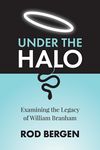
The only way to tell John the Baptist from a false prophet is to do the very thing Amos Omoboriowo refuses to do. Examine the claims. Check whether the prophecies came to pass. Weigh the man against Scripture. That is not persecution. That is Deuteronomy 18:22, and it is what the Bereans did when they searched the Scriptures daily to see whether these things were so (Acts 17:11). I am not asking you to take my word for anything. I am asking you to check it for yourself, which is the one thing his whole approach is built to stop you doing. This is the very reason we put over 950 footnotes in Under The Halo.
John 6: the offence was Christ, not a middleman
Amos Omoboriowo leans hard on John chapter 6. Many disciples heard a "hard saying," were offended, and walked away. He reads them as a picture of Message followers who stumbled and left. Let us actually read the chapter, because it does not say what he needs it to say.
What the crowd stumbled over
The saying that offended them is in verse 53.
"Except ye eat the flesh of the Son of man, and drink his blood, ye have no life in you."
The Greek words for "hard saying" in verse 60 mean a harsh or offensive word.[1] The word for "offend" in verse 61 means to trip someone, to make them stumble.[2] And what made them stumble was Christ himself. His flesh. His blood. His claim to be the bread that came down from heaven.
In other words, the stone they tripped over was the person of Jesus Christ. Not a lesser messenger. Not a man they were being asked to follow on the way to Christ. Christ himself.
What verse 63 actually says
Then look at verse 63, which Amos Omoboriowo passes over. Jesus explains his own hard saying.
"It is the spirit that quickeneth; the flesh profiteth nothing: the words that I speak unto you, they are spirit, and they are life."
The Greek is plain. The flesh profits nothing. The words that Christ speaks are spirit, and they are life.[3]
The Lord points the whole chapter to himself, and to feeding on him by faith. That is the meaning the offended crowd would not receive.
Now set that beside the people Amos Omoboriowo is condemning. The former Message followers he calls apostates say, in their own words, that they came back to "faith in Christ alone," and to "the power of Jesus' death on the cross to completely save the lost." That is not the stumbling of John 6. That is the confession of John 6. They are standing exactly where Peter and the Twelve stood, on Christ and his finished work, and off the elevation of a man. Amos Omoboriowo has the chapter precisely backwards. The offence in John 6 was faith in Christ alone, and faith in Christ alone is the very thing the people he condemns say they came back to.
Matthew 23: a sentence of judgment, not a charter
To support an ongoing line of authoritative messengers running from William Branham down to the present ministry, Amos Omoboriowo cites Matthew 23:34, where Christ promises to send "prophets and scribes." He treats it as God setting up a permanent end-time office of "Householder Scribes," a class his own movement claims to be.
Read the verse in context, and in the Greek, and that office is nowhere in it.
The verse is a woe, not a commission
Matthew 23 is the great chapter of woes. From verse 13 the Lord is pronouncing judgment on the scribes and Pharisees, seven times over. Verse 34 sits inside that judgment, and verse 35 tells you why it is there. "That upon you may come all the righteous blood shed upon the earth." Verse 36 seals it. "All these things shall come upon this generation."
So when Christ says "I send unto you prophets," he is not founding an institution. He is bringing a charge against a generation that will kill the messengers he sends, exactly as their fathers killed the prophets before them. In the Greek, the ones he sends are "prophets and wise men and scribes."[4]
Notice that Amos Omoboriowo quotes it as "prophets and scribes." The middle word, "wise men," quietly drops out. It is a small thing, but it matters, because the full list is plainly a picture of the messengers of that generation, not a two-rung ladder of prophet and scribe for the last days. And the word Christ uses here for scribe is the very same word he has been using for the men he is condemning through the whole chapter. He is turning their own title back on them. To read verse 34 as the founding of an authoritative scribal ministry is to read a blessing where Christ pronounced a curse.
The "householder scribe" is a figure of speech
The other pillar, Matthew 13:52, does not carry the weight either.
"Every scribe which is instructed unto the kingdom of heaven is like unto a man that is an householder."
The key word is "like." It is a comparison about every disciple who has been taught the kingdom, and who brings out of his treasure things new and old. It is not the naming of an office called Householder Scribe. A curse on one generation and a figure of speech about every disciple cannot carry an end-time ministry of authority, and they most certainly cannot prove that any one man holds it.
The charge that lands in the wrong direction
I want to close where Amos Omoboriowo closes, because his final point is the most revealing one in this sermon, and I want to handle it gently, because it touches people I care about.
He accuses the former followers of idolatry. He says they "idolized the man," lifted William Branham "above scriptural measure," and put his quotes above the Bible. On that, he and I actually agree. That is exactly what much of the Message does, and it is exactly what many of us repented of. He has named the disease correctly.
Then watch what he does with the cure. In the same message, he tells us that William Branham stands above every man in the ministry in the entire earth. He tells us that to reject such a man is "at the peril of your own soul." And he ends with this. To claim to be a lead ministry for the universal Bride of Christ, he says, "is as good as committing an unpardonable sin," so that to reject that claim becomes the "greatest sin you can commit in the religious world."
He has built a system in which one man is lifted above every other minister on earth, and in which disagreeing with that man is made the unpardonable sin. That is not the cure for idolizing a man. That is idolizing a man, written up as doctrine.
I say this with real affection for the people caught in it. The very charge he throws at us is the exact shape of the thing he is defending. You cannot rescue people from exalting a man by exalting the man higher.
The three questions are still on the table
So I thank Amos Omoboriowo again, and I mean it. But I have to tell him honestly that Part 1 did not answer the challenge. It answered a caricature of the challenge. It never touched the bridge, or the cloud, or a single dated prophecy, or one doctrine measured against Paul. It gave us a comparison in which William Branham is simply assumed to be John and Jesus, and in which every criticism is turned into proof by a test that would just as easily clear Jim Jones.
The questions are still here, unmoved, and they are simple. Not whether the world hates a true prophet. We grant that it sometimes does. The question is how you tell a true prophet from a false one. And Scripture has already told us how. By his fruit. By whether the thing he prophesied actually came to pass. By whether his gospel is the gospel Paul preached.
I am not asking you to believe me because I have a website, or to believe Amos Omoboriowo because he has a pulpit. I am asking you to do the one thing that neither pride nor loyalty ever wants to do. Open the record. Check the prophecies against what happened. Check the message against your Bible. Check it for yourself.
That is not persecution. That is the love of the truth. And the truth has never once been afraid of examination
See also: Was William Branham Honest, An Analysis of William Branham's Visions and Prophecies, The Cloud.
Footnotes
- ↑ John 6:60, sklēros logos, a hard or harsh saying. Interlinear at https://biblehub.com/interlinear/john/6-60.htm
- ↑ John 6:61, skandalizō, to cause to stumble or take offence.
- ↑ John 6:63, hē sarx ouk ōphelei ouden (the flesh profits nothing) and ta rhēmata ... pneuma estin kai zōē estin (the words are spirit and are life). Greek text confirmed at https://biblehub.com/text/john/6-63.htm and https://www.blueletterbible.org/tools/interlinear/tr/jhn/6/63/
- ↑ Matthew 23:34, idou egō apostellō pros hymas prophētas kai sophous kai grammateis, "behold, I send unto you prophets and wise men and scribes." Interlinear at https://biblehub.com/interlinear/matthew/23-34.htm and https://www.blueletterbible.org/tools/interlinear/tr/mat/23/34/