When The Lilies Had To Toil
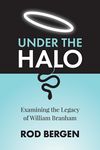
Amos Omoboriowo wrote a 12-part series as a direct answer to the Scriptural Challenge issued on this website. He also wrote a response to our article on the Prophecies of William Branham's Death. This is our reply to his analysis. Your are in the article highlighted above. This article is a companion to I Have Pardoned, our response to Part 12 of "God Sent Vessels Of Truth, Vessels Of Clay - In Defence Of William Branham," by Amos Olusegun Omoboriowo of Bible Faith Tabernacle, Lagos, Nigeria (Part 12 preached 5 December 2021, published July 2022). That response kept to the finale's main argument and set aside several smaller items Part 12 also raised. Here we take up those four: the lilies, suffering as punishment, the failed prophecy about smoking, and the "Choosing of a Bride" vision.[1]
When the Lilies Had to Toil
Before its long finish, Part 12 clears away a handful of small things this website had raised. They are minor, and Amos Omoboriowo treats them quickly. But small claims are the most useful ones, because they can be checked. A grand doctrine about the End Time apostolic order is hard to test. Whether lilies toil is not. And watching how a defense handles the checkable claims tells you what it will do with the large ones. In all four of these, the pattern is the same. William Branham says something plain, the plain thing turns out to be wrong or untestable, and the defense rescues it by making it un-plain.
The lilies that toil
Start with the smallest, because it is the clearest.
This website asked a one-line question:
"Do lilies toil? William Branham said they do, Jesus said they don't. Why was William Branham misquoting Jesus?"[2]
The reference is plain.
"Consider the lilies of the field, how they grow; they toil not, neither do they spin" (Matthew 6:28).[3]
Jesus says the lilies do not toil. William Branham said they do.
Now read Amos Omoboriowo's answer, because he begins by conceding the whole point and then spends a page taking it back. He writes: "Of course, Lilies do not toil, and Jesus is the one who said so."[4] That should have been the end of it. Instead he continues: the lilies "have to side-track and overcome whatever is in their way... to come to the light... and in that wise, they are in labour... they do toil, nonetheless, because they have to overcome whatever obstacles are in their way, to break out to the light. That is a toil!"[5]
So the lilies toil not, and Jesus said so, and also the lilies toil. To reach the second half of that sentence, Amos Omoboriowo has to quietly change what the word means. Jesus used "toil" in its plain sense, the anxious labor of a man working for his bread, and He said the lily is free of it. William Branham needed the lily to toil, so the word is stretched to cover a flower growing toward light, which is not toil in any sense Jesus or His hearers would recognize.
When your prophet contradicts a plain sentence of Jesus, and the repair is to redefine the very word Jesus used until the prophet agrees with Him again, the repair is the confession.
This is the same move we watched in the finale, where God's plain "I have pardoned" had to be talked out of meaning of "pardon". Here it is a single word of Jesus, and it still could not be left to stand.
The sign that pointed the other way
The second item is a real prophecy, and it is testable, which is exactly its trouble.
On 1 January 1965, William Branham described what the church of the United States would become. Among the marks he named was this one, in his own words as quoted in our debate with Jesse Smith: the church would be "dancing, paint, shorts, bobbed hair, smoking cigarettes, twisting as they walked to rock and roll."[6] Smoking cigarettes is a concrete, countable sign. So it was checked. As noted in the debate, smoking in the United States fell by roughly two-thirds between 1965 and 2017, down to around fifteen percent of adults and still dropping, and churchgoers least of all.[7] On the specific mark William Branham chose, the trend ran the opposite way from the prophecy.
Amos Omoboriowo's reply is to wave the fact off: "what has that fact got to do with anything?"[8] But it has everything to do with it, because William Branham is the one who put smoking on the list. He was not asked to. He named a checkable sign, and the sign failed. Scripture gives exactly one test for a prophecy like this: "when a prophet speaketh in the name of the LORD, if the thing follow not, nor come to pass, that is the thing which the LORD hath not spoken" (Deuteronomy 18:22). The honest response to a named sign that did not come to pass is not "what has that got to do with anything." It is to weigh it.
And notice the escape. Amos Omoboriowo does not defend the smoking prediction. He changes the subject to something no one can measure: "Christianity in America has gone carnal, worldly, and extremely morally loose," women "wear mere leggings to Church."[9] Perhaps so. But that is a mood, not a prophecy, and it can never be wrong, which is precisely why it is offered.
The specific claim that could fail is quietly traded for a general impression that never can.
That trade is the whole maneuver, and once you see it, you will see it everywhere in these pages.
The filthiest bunch, or the most faithful?
The same 1965 vision gives the third item, and here the stakes are higher, because William Branham stamped it with the highest possible authority.
In "The Choosing of a Bride," preached 29 April 1965, he described a vision of the modern church passing before him for preview. Of one group he said:
"here come the Asian Church up. I never seen such a filthy bunch."
He called it "the filthiest-looking thing I ever seen."
And he sealed the whole vision: "Now, this is THUS SAITH THE LORD."[10]
This website's answer was not a doctrine. It was a fact about the world. The church in Asia over those decades has been one of the fastest-growing and most heavily persecuted bodies of believers on earth, growing from tens of millions to hundreds of millions, with enormous numbers suffering hostility, imprisonment, and death for the name of Christ, persecution described in the debate as reaching near-genocidal levels.[11] As the debate put it, that sounds like the early church. It does not sound like "the filthiest bunch."
Amos Omoboriowo's reply is that numbers do not equal spirituality:
"What has numbers got to do with the state of the Asian Church? Does this growth in numbers prevent them from being carnal?"[12]
As a general statement that is fair enough, and if the point had only been about size, it would answer it. But it dodges the actual objection twice:
- First, William Branham did not say the Asian church was large but carnal. He said it was the filthiest of all the churches he was shown, worse than the rest.
- Second, and this is the part the reply never touches, the objection was about persecution, not numbers. A church being imprisoned and killed for refusing to deny Christ is the very opposite of the naked, twisting figure the vision describes.
A preview stamped "Thus saith the Lord" that most badly misreads the very believers who are laying down their lives for Christ is not a small difficulty. It is the difficulty.
And Amos Omoboriowo answers it by counting, when no one was counting.
It is worth adding, gently, what kind of claim this is. It is a private vision, which no one else can check, used to condemn the entire visible church and to exalt in its place the "Little Flock" that follows the Message.
Where the vision did touch something checkable, the smoking, it missed.
And where it touched on arguably the healthiest church on the planet, the Chinese church, which has withstood decades of intense persecution, it missed again.
The unfalsifiable part is asked to carry enormous weight while what we can check is swept under the carpet.
Suffering, and the friends of Job
The fourth item deserves care, because here Amos Omoboriowo has a partial point, and honesty requires granting it.
This website noted that William Branham taught God had punished him with affliction for listening to his mother-in-law and not joining the Pentecostal movement, and set against it the book of Job and the teaching of Jesus, that suffering is not automatically a sign of being out of God's will.[13] Amos Omoboriowo answers that sickness can indeed be a divine chastening, and he is not wrong about that. Scripture does record it. "For this cause many are weak and sickly among you, and many sleep" (1 Corinthians 11:30).[14] Miriam's leprosy was a judgment. So a flat rule that suffering is never disciplinary would be too strong, and we should say so plainly.
But that concession does not touch the actual problem, because the problem was never whether God ever disciplines through sickness. It is whether a man can confidently read his own suffering, or anyone's, as the verdict for a particular sin. And on that, Scripture is not neutral. It is pointed, and it points the other way.
Consider the very two witnesses this website raised. When the disciples looked at a man born blind and asked whose sin had caused it, "Jesus answered, Neither hath this man sinned, nor his parents" (John 9:2-3).[15] Jesus rejected the whole instinct to read the suffering as a verdict. And the friends of Job are the standing warning against it. Amos Omoboriowo is right that they were rebuked, but look at what they were rebuked for. They were not wrong that God ever judges. They were wrong to look at a suffering man and pronounce his pain the proof of his sin, and God's word to them was, "ye have not spoken of me the thing that is right, as my servant Job hath" (Job 42:7).[16]
That is exactly the move William Branham made, only he made it about himself. He looked at his own affliction and named its cause: a mother-in-law, a movement he declined to join.
That confident diagnosis is not the answer to the error of Job's friends. It is the error of Job's friends, turned inward.
And it sits oddly beside the rest of the Message, which elsewhere treats William Branham's sickness and hospital visits as ordinary, or as the attack of Satan. Punishment, mortality, or the devil: the meaning of the same suffering shifts to whatever the moment requires. The steadier path is the one Jesus and Job both mark out: be slow, be very slow, to tell God why a person suffers.
A closer look at William Branham's story

All Message followers are familiar with the heartbreaking story of his first encounter with Pentecostal people at a convention in Mishawaka, Indiana. While he was drawn to them and was invited to speak in their churches, he refused to join with them because he listened to his mother-in-law instead of God. And, as a result, his wife and daughter died as a direct result of his disobedience to God.
But, is this the truth?
According to Roy Davis and Douglas Weaver, William Branham attended a Pentecostal Baptist church pastored by Roy Davis prior to 1933 when he started his own church. Roy Davis himself says that William Branham received the baptism of the Holy Spirit in his home. This all precedes the death of Hope and Sharon Rose Branham in July 1937.
The original name of Branham Tabernacle was the Pentecostal Tabernacle.
So was the story that William Branham's wife and daughter died because he rejected the Pentecostal people true? The facts would say otherwise.
And people like Amos Omoboriowo, who REFUSE to do their homework, continue to preach false stories to their congregations without even knowing it. Will God hold them responsible for that?
What still stands
These four were the minor notes before Part 12's crescendo, and their smallness is the point. They are small enough to check, and every one of them was saved only by making it uncheckable. The word "toil" was redefined until Jesus and William Branham could agree. A named, failed sign was swapped for an unmeasurable mood. A "Thus saith the Lord" preview that libels the persecuted church was answered by counting heads. A confident verdict on the meaning of suffering, the very thing Jesus and Job warn against, was defended as though the warning were not there.
The remedy is the same small, stubborn thing every time. Let the words mean what they mean. "Consider the lilies of the field... they toil not." Jesus said it, and it is true, and no prophet gets to amend it. Weigh the named prophecy by whether it came to pass. Let the martyrs of Asia be who they are. And hold your tongue about why a man suffers, as your Lord did at the roadside in John 9. You do not need a special revelation for any of this. You need to take Jesus at His plain word, weigh the prophet by his own, and let the difference fall where it falls. That is not blighting a man. It is loving the truth, which is the only ground on which anyone was ever set free.
Footnotes
- ↑ Page numbers are from the printed Scribe "God Sent Vessels ... Part 12" (July 2022).
- ↑ God Sent Vessels, Part 12, p. 2, quoting believethesign.com.
- ↑ Matthew 6:28, KJV.
- ↑ God Sent Vessels, Part 12, p. 2.
- ↑ God Sent Vessels, Part 12, pp. 2-3.
- ↑ God Sent Vessels, Part 12, pp. 17-18, quoting the debate exchange, citing William Branham, 1 January 1965.
- ↑ God Sent Vessels, Part 12, pp. 17-19, reproducing the CDC and Gallup data cited.
- ↑ God Sent Vessels, Part 12, p. 18.
- ↑ God Sent Vessels, Part 12, pp. 18-19.
- ↑ God Sent Vessels, Part 12, pp. 15-17, quoting William Branham, "The Choosing of a Bride," 29 April 1965.
- ↑ God Sent Vessels, Part 12, pp. 17-19, reproducing the debate's figures on the growth and persecution of the church in Asia.
- ↑ God Sent Vessels, Part 12, pp. 18-19.
- ↑ God Sent Vessels, Part 12, p. 13, quoting believethesign.com.
- ↑ 1 Corinthians 11:30, KJV. Paul does attribute some sickness and death in Corinth to the Lord's discipline.
- ↑ John 9:2-3, KJV.
- ↑ Job 42:7, KJV. The friends' error was reading Job's suffering as the verdict on his sin.