The Test He Calls Sin
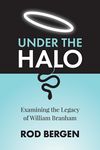
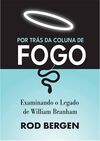
Amos Omoboriowo wrote a 12-part series as a direct answer to the Scriptural Challenge issued on this website. He also wrote a response to our article on the Prophecies of William Branham's Death. This is our reply to his analysis. Your are in the article highlighted above. Part 3 was preached on Tuesday 30 November 2021 and published in the Scribe magazine in March 2022.[1]
The Test He Calls a Sin
Something changes in Part 3, and it is worth noticing, because it is progress. For the first time in the series, Amos Omoboriowo actually names the things this website has said about William Branham. He mentions the concern that Branham called himself a prophet in one place and denied it in another. He mentions the concern about the family photographs and the double standard on dress. He is no longer only comparing William Branham to John and to Christ. He is finally reaching for the real charges.
And then he answers them the same way he answered everything else. He proves, at great length, that the prophets of the Bible were flawed men.
- Elijah mocked the priests of Baal and then ran from one woman.
- Elisha cursed the children and the bears came.
- Samuel failed to discipline his sons.
- Peter played the hypocrite at Antioch.
- Paul and Barnabas quarrelled and parted.
All of that is true, and all of it is beside the point.
We have never said William Branham should be rejected because he was a flawed man. Every servant of God was a flawed man. That was never our claim, and saying it louder and longer does not make it our claim. Our claim is that he prophesied things in the name of the Lord that did not come to pass, and that he taught things that contradict the gospel Paul preached. Those are not questions about his temper or his weaknesses. They are questions about his accuracy and his doctrine.
Part 3 does two things with those questions. It answers a charge we did not make, and then it tells us that even to ask is a sin. A weakness is not a false prophecy, and testing a prophet is not a sin. Scripture is plain on both.
He names the charge, then answers a different one
Take the "prophet" question first, because Amos Omoboriowo states it plainly. He says that because William Branham would say in one place, "I am not a Prophet," and in another, "Do you believe me to be a Prophet of God?", this website accuses him of "flip-flopping," and that we do this because we cannot recognize humility.[2]
That is not the concern, and I think he knows it is not. The concern was never the humble phrasing. The concern is a man who stood in a pulpit and said "THUS SAITH THE LORD" over specific predictions, and the predictions failed. Whether he called himself a prophet modestly on Tuesday and boldly on Thursday is not the issue. Whether the things he foretold in God's name happened is the issue.
His defence is to point at John the Baptist. John said "I am not Elias" (John 1:21), and yet John was the Elijah who was to come. Was John flip-flopping? Look closely, because the answer undoes the comparison. John denied being the literal Elijah returned in person, which the Jews were expecting, and Amos Omoboriowo says exactly this himself.[3] At the same time John came "in the spirit and power of Elias" as the forerunner (Luke 1:17). Two different questions, two consistent answers, no contradiction at all. So John is not an example of a prophet contradicting himself. He is an example of a prophet being precise. The parallel collapses in Amos Omoboriowo's own hands.
Then there is John's question from prison, "Art thou he that should come, or look we for another?" (Luke 7:19). Amos Omoboriowo offers it as proof that even John doubted, so we should not be troubled by anything.[4] But watch how the Lord answered that doubt. He did not rebuke John, and he did not threaten anyone. He pointed to the evidence. "Go your way, and tell John what things ye have seen and heard; the blind see, the lame walk" (Luke 7:22). Jesus met an honest question by showing the facts. That is the very thing we are asking for, and it is the very thing Part 3 will not do. When John had a question, Christ answered it with evidence. That is the model, and it is the opposite of what Part 3 offers.
The "double standards" answer, and the mistake it rests on
Amos Omoboriowo also raises the concern about the family photographs and the shorts, and about what he calls the charge of "Double Standards."[5] Here too, notice what the concern actually is. It is not that a daughter wore a dress above the knee, or that a man wore shorts on a hunting trip. It is that William Branham preached dress and holiness standards from the pulpit as the commandment of God, standards by which he measured and condemned others, while his own household did not keep them. The question is not about the clothing. It is about a man binding a standard on others that he did not bind on his own house.
His answer is that Samuel and Eli had sons who did far worse, and God did not charge the fathers with it, so no one may charge William Branham. This fails in two ways.
First, it is the old defence of pointing at someone else. Even if every prophet in Scripture had a wayward child, that would not tell us whether a man preached a standard he did not keep. The one has nothing to do with the other.
Second, and more seriously, the example is simply not true to the text. Amos Omoboriowo states that "the Lord did not judge Eli."[6] But God did judge Eli, and the Bible could hardly be more direct about it.
"For I have told him that I will judge his house for ever for the iniquity which he knoweth; because his sons made themselves vile, and he restrained them not" (1 Samuel 3:13).[7]
An entire prophecy of judgment was pronounced on Eli's house precisely because he failed to restrain his sons. The one example Amos Omoboriowo reaches for, to prove that God overlooks a leader's failure, is in fact an example of God judging that very failure. The passage he brings to close the case is the passage that opens it.
Paul's own example undoes the defence
The most revealing pages of Part 3 are the ones on the Apostle Paul, because here Amos Omoboriowo does to Paul exactly what he forbids us to do to William Branham, and he does not seem to see it.
He points out that Paul counselled unmarried believers to stay single, on the ground that "the time is short" (1 Corinthians 7), and that this counsel "affected many lives," and that Paul later "made an about-turn" and told younger widows to marry (1 Timothy 5). Amos Omoboriowo explains it plainly: Paul "honestly felt time was short," and the Lord "used the instrument of time" to "straighten him out."[8]
Read what he has just granted. He has said that a genuine messenger of God can teach something, sincerely, that later has to be corrected because the messenger was mistaken about a matter of fact. He examines Paul's mistaken expectation openly, weighs it, dates it, and even measures the harm it caused, and he does all of this without any fear that he is committing a sin. That is precisely the kind of examination we have asked to make of William Branham's predictions. If it is fair and safe to do it with Paul, it is fair and safe to do it with William Branham.
Two things make the point sharper still. Paul labelled that very counsel as his own judgment and not a divine command.
"Now concerning virgins I have no commandment of the Lord: yet I give my judgment" (1 Corinthians 7:25).
Paul carefully told his readers when he was giving considered advice rather than "Thus saith the Lord." That is the opposite of a failed prophecy. And it is the honesty we are asking about: when a man says "Thus saith the Lord" and it does not come to pass, Scripture has a word for that, and it is not "he was a vessel of clay." Amos Omoboriowo examines Paul freely and forbids us to examine William Branham. That is the double standard.
The test he calls a sin
This is the heart of Part 3, and it is where the message turns against itself most completely.
Throughout the sermon, Amos Omoboriowo warns that to weigh a man's ministry and message on behalf of others is to intrude into holy things. He compares us to King Saul, who offered a sacrifice he had no right to offer, and to King Uzziah, who was struck with leprosy for burning incense, and he cites, "No man taketh this honour unto himself, but he that is called of God" (Hebrews 5:4).[9] He tells us we "cannot fight for the honour of God without a revelation, and without a divine charge."[10] And he says more than once that to judge a God-sent man this way is the "Unpardonable Sin, which is Sin against the Holy Ghost," so that we have "sealed our doom."[11]
I want to answer this carefully, because it is meant to frighten, and fear is a heavy thing to put on people. So let us simply lay it beside the Book he says he carries, and carries alone.
Testing a man who claims to speak for God is not forbidden in Scripture. It is commanded.
"Beloved, believe not every spirit, but try the spirits whether they are of God: because many false prophets are gone out into the world" (1 John 4:1).
"Prove all things; hold fast that which is good" (1 Thessalonians 5:21).
The Bereans searched the Scriptures daily to see whether even the preaching of Paul was so, and the Bible calls them "more noble" for it (Acts 17:11).
And in the very letters that open the Book of Revelation, the Lord Jesus himself commends a church for doing the thing Part 3 calls a damnable sin. "Thou hast tried them which say they are apostles, and are not, and hast found them liars" (Revelation 2:2).
Christ praised them for testing men who claimed an office, and for concluding, on the evidence, that the claim was false.
So the plain command of Scripture is that God's people must weigh those who claim to speak in his name, and the plain measure is Deuteronomy 18:22, whether the word comes to pass. The Bible that Part 3 says it carries alone commands the very test that Part 3 calls the unpardonable sin.
There is one more thing to say about that phrase, and I say it thoughtfully. The unpardonable sin, in the Gospels, is not the questioning of a preacher. It is attributing the Holy Spirit's own work to Satan. Mark tells us exactly what provoked the Lord's warning: "because they said, He hath an unclean spirit" (Mark 3:30). It is worth weighing, then, that throughout these three messages it is not this website that has called a work of God demonic. It is Part 3 that repeatedly calls this website "demonic," and says "the devil gave you a job to do." I do not raise that to return the charge. I raise it because a man handling so grave a warning should be very sure which way it points.
What still stands
So I thank Amos Omoboriowo again for coming closer to the real questions in Part 3, and I mean it. But naming a charge is not the same as answering it. He named the concern about the prophet claim and answered it with humility. He named the concern about double standards and answered it with a story that, read to the end, judges the very failure he says God ignored. And he spent his strongest pages proving that prophets were fallible men, which no one denies, while the actual charge, that William Branham prophesied falsely and taught contrary to Paul, was never touched.
Fallibility was never the issue. Every one of us is a vessel of clay, and grace is the only reason any of us stands. The issue is accuracy, and honesty, and whether the gospel preached was the gospel of Paul. Scripture tells us how to settle it, and Scripture commands us to. Try the spirits. Prove all things. Search and see whether these things are so.
I will end where the Lord ended with John. John asked an honest question, and Christ did not threaten him. Christ showed him the evidence and said, "blessed is he, whosoever shall not be offended in me" (Luke 7:23). We are asking for the same thing, not for ourselves, but for every sincere person still weighing this. Open the prophecies.
Lay them beside what happened. You will not be committing a sin by looking. You will be doing what the Lord Jesus praised.
Footnotes
- ↑ Page numbers in the footnotes are from the printed Scribe, "God Sent Vessels ... Part 3" (March 2022, Ref. 30-11-2021)
- ↑ God Sent Vessels, Part 3, p. 14.
- ↑ God Sent Vessels, Part 3, p. 15, where he explains that John "denied being Elijah" because he "knew the Jews were only expecting the Elijah who will Forerun Christ's Second Advent, which he was not."
- ↑ God Sent Vessels, Part 3, pp. 13-14.
- ↑ God Sent Vessels, Part 3, pp. 12-13.
- ↑ God Sent Vessels, Part 3, p. 12.
- ↑ 1 Samuel 3:13, KJV. See also 1 Samuel 2:27-36, the man of God's oracle against the house of Eli, and 1 Samuel 4:18, Eli's death, presented as part of that judgment.
- ↑ God Sent Vessels, Part 3, pp. 28-29.
- ↑ God Sent Vessels, Part 3, pp. 5-6.
- ↑ God Sent Vessels, Part 3, p. 5.
- ↑ God Sent Vessels, Part 3, pp. 4 and 27.
Navigation
See also: The Argument That Proves Anything, The Question Was Never Whether He Was Perfect, An Analysis of William Branham's Visions and Prophecies, Was William Branham Honest.