The Year That Never Came
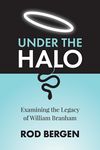
Amos Omoboriowo wrote a 12-part series as a direct answer to the Scriptural Challenge issued on this website. He also wrote a response to our article on the Prophecies of William Branham's Death. This is our reply to his analysis. Your are in the article highlighted above. Part 6 was preached on Saturday 4 December 2021 and published in the Scribe magazine in April 2022.[1]
The Year That Did Not Come
For five messages the prophecies of William Branham stayed safely out of reach. Part 6 is where that changes. Here, at last, Amos Omoboriowo does two things the earlier parts avoided. He names specific, dated prophecies, the kind that can be laid beside history and checked. And he engages this website directly, by name, over a recorded debate.
I want to meet both squarely, and I want to keep the tone he did not always keep, because the questions deserve it.
Grant again what is not in dispute. The discernment in the healing lines, the reading of hearts and diseases, is described by many witnesses and I have no need to deny it. That was settled in our response to Part 5, and it is not the issue here either.
The issue is what happens the moment a prophecy becomes checkable. Because in Part 6, one of William Branham's prophecies finally steps into the light, and it did not come to pass. And the way Amos Omoboriowo defends that failure tells you almost everything. **When the prophecy could finally be checked, it failed the check, and the defense of it rests on a distinction the Bible does not make.**
The year that did not come
Here is the admission, in Amos Omoboriowo's own words. Answering a critic's line that William Branham "prophesied that by 1977 all denominations would be consumed by the World Council of Churches," he writes that this is "an outright lie against the prophet, because he only gave a personal prediction, not a prophecy, and not a Thus Saith the Lord, he only predicted that the world should end by 1977."[2]
Read that slowly, because it gives the whole game away. In the act of defending William Branham, Amos Omoboriowo concedes that he "predicted that the world should end by 1977." The world did not end by 1977. That is a dated, public, checkable prediction, and it failed.
The defense is that it was "only a personal prediction, not a prophecy, not a Thus Saith the Lord." But Scripture knows no such exemption. The test God gave His people is short and it has no back door: "When a prophet speaketh in the name of the Lord, if the thing follow not, nor come to pass, that is the thing which the Lord hath not spoken, but the prophet hath spoken it presumptuously" (Deuteronomy 18:22).[3] The measure is not the label a defender attaches afterward. The measure is whether it happened.
And a confident date on the end of the world was already off the road before it began, because the Lord Jesus closed that door in the plainest words He ever spoke: "But of that day and hour knoweth no man, no, not the angels of heaven, but my Father only" (Matthew 24:36). He said it again to the apostles: "It is not for you to know the times or the seasons, which the Father hath put in his own power" (Acts 1:7).[4] A man who tells the church the world will end by a certain year is not exercising a gift. He is doing the one thing Christ said no man can do.
His own witness against the dodge
The "personal prediction, not a Thus Saith the Lord" defense has a further problem, and it is fatal. It is contradicted by Amos Omoboriowo's own showcase quote, a few pages later, in the same sermon.
To prove William Branham's prophetic power, Part 6 quotes at length his account of a breakfast in Chicago, where he foretold that a booked hotel room would be cancelled and described exactly where each man would sit. And in Branham's own words, quoted approvingly, he says of that prediction: "That's Thus Saith the Lord."[5]
So the exemption collapses on the spot. If the excuse for 1977 is that William Branham never claimed "Thus Saith the Lord" for his predictions, then his own testimony, produced by Amos Omoboriowo as evidence, shows that he did attach "Thus Saith the Lord" to his predictions. You cannot rescue the failed prediction with a line that your own star quote erases. Either the dated predictions were spoken as the word of the Lord, in which case Deuteronomy 18 applies to the one that failed, or they were merely a man's guesses, in which case they cannot be paraded as proof of a prophet. Part 6 wants them to be proof when they land and mere opinion when they miss. **A prediction cannot be a prophecy on Thursday and only an opinion on Friday, chosen by whether it came true.**
"Before the fact" answers a charge no one made
Part 6 engages this website over a recorded debate, and it fastens on one line: that William Branham's prophecies were given "after the fact."[6] Against this, Amos Omoboriowo points to the discernment in the healing lines, the reading of secrets "before the fact," before people opened their mouths.
Notice the switch. The concern about things given "after the fact" is not about the healing-line discernment. It is about the dated public prophecies and the biographical stories, the material that was written down and published long after the events it claimed to foretell. Answering it with the healing-line discernment is answering a different point. The discernment, as we said in Part 5, was never the question.
And the very example Amos Omoboriowo chooses proves the concern rather than answering it. His centerpiece is the "Watch Russia" vision, the "three isms," which he says William Branham received in 1933. But he tells us himself where it is recorded: in a message "dated 1960," some twenty-seven years later.[7] A vision announced in 1960 as something seen in 1933, after much of the twentieth century had already unfolded, is exactly the kind of claim that cannot be verified, and it is precisely what "after the fact" means. The content does not help either. History did not "swallow Fascism and Nazism up into Communism"; they were defeated in a world war. To hold this up as a triumph of foresight is to prove the critic's point, not to refute it.
The same is true of the son. Amos Omoboriowo defends the prophecy that God would give William Branham a son, Joseph, and concedes in the same breath that "the fulfilment of this very prophetic promise was delayed, for he first had a daughter instead of a son."[8] A prophecy of a son, followed first by a daughter, so that people at the time said "you must have meant Josephine," is not a clean case of foretelling. It is a case that had to be explained.
A timeline read into a parable Jesus already explained
Underneath all of this sits the machinery from Part 5: the claim that the dragnet of Matthew 13 and the ten virgins of Matthew 25 are a coded biography of William Branham, first a healing revival (the "Awakening"), then a 1960 teaching ministry (the "Separation of Seeds").
But the Lord interpreted both parables Himself, and neither interpretation is a twentieth-century timeline. Of the net He said, "So shall it be at the end of the world: the angels shall come forth, and sever the wicked from among the just" (Matthew 13:49). The sorting is done by angels at the end of the world, not by healing evangelists "sitting down" in the 1950s. Of the ten virgins He said, "Watch therefore, for ye know neither the day nor the hour" (Matthew 25:13). The point is readiness, precisely because the timing cannot be known, which is a hard thing to reconcile with a ministry built on announcing dates.
And watch what happens when the parable will not fit. Amos Omoboriowo assigns "the bridegroom came" (Matthew 25:10) to a specific event in March 1963, and then must deal with the next words, "and the door was shut." The parable says the door was shut. He tells us it is "not yet closed as we speak," in December 2021.[9] When the verse says the door is shut and the argument needs it open, the verse is quietly rewritten. That is not reading the parable. That is overruling it.
What the defense concedes
Two admissions in Part 6 hand us the very things our challenge asked about, and they should not slip by.
First, the message. Part 6 quotes a critic describing William Branham's "serpent's seed" doctrine, that "Eve's sin involved sexual relations with the serpent," and that a literal serpent-lineage exists, and Amos Omoboriowo affirms it.[10] Genesis says Eve took of the fruit and ate (Genesis 3:6), and that "Adam knew Eve his wife; and she conceived, and bare Cain" (Genesis 4:1). Paul says sin entered by one man, Adam, and that God "hath made of one blood all nations of men" (Romans 5:12; Acts 17:26). Our third question has always been whether William Branham preached what Paul preached. Part 6 answers it for us, by affirming as truth a doctrine Paul never taught and Genesis does not contain.
Second, the boundary. Quoting the same critic, Amos Omoboriowo endorses the line that "only the seed of God, those who received Branham's teaching, were predestined to become the Bride of Christ," and adds, "and that is an absolute fact, it is totally correct."[11] There it is again, in the plainest terms yet: receiving a man's teaching is made the line between the Bride of Christ and the lost. That is the very thing the former followers repented of when they wrote that they had "replaced faith in Christ with faith in a man." Part 6 does not merely deny the charge. It states the charge as doctrine and calls it correct.
A word about the debate
Part 6 speaks of Rod Bergen by name, and not gently. I will not answer in kind. I will only restate the point plainly, because it was not answered.
The concern was never that William Branham had no gift. It was that his checkable prophecies, the dated ones and the ones tied to his own recorded stories, do not survive examination, and that many were set down long after the events they claim to foretell. Part 6 has now, unintentionally, supplied the clearest example available: a prediction that the world would end by 1977, conceded on the page, and defended not by showing that it came to pass, but by arguing that it does not count. That is not a rebuttal of the concern. It is a demonstration of it.
What still stands
So I thank Amos Omoboriowo for Part 6, and I mean it, because Part 6 finally did what the first five parts would not. It brought a prophecy into the daylight where it could be measured. And measured, it failed. 1977 came and went, and the world did not end.
The defense of that failure needed a distinction Scripture does not recognize, and it needed us to forget that Branham himself said "Thus Saith the Lord" over his predictions. It needed a healing-line gift to answer a charge about dated prophecies. It needed a parable rewritten so its shut door could stay open. And along the way it conceded, in writing, both that the message includes a doctrine Paul never preached and that a man's teaching is the boundary of the Bride.
The test has not changed since Moses gave it, and it is not unkind to apply it. "If the thing follow not, nor come to pass, that is the thing which the Lord hath not spoken" (Deuteronomy 18:22). Do not take that from me, and do not take it from Amos Omoboriowo. Take the dated prophecies, all of them, lay them beside what actually happened, and see. The gift in the healing lines was never the question. The word that could be checked was, and in Part 6 it has been checked, and it did not come to pass.
Footnotes
- ↑ Page numbers in the footnotes are from the printed Scribe, "God Sent Vessels ... Part 6" (April 2022, Ref. 04-12-2021).
- ↑ God Sent Vessels, Part 6, p. 29.
- ↑ Deuteronomy 18:20-22, KJV. The test is whether the word comes to pass. There is no category of "personal prediction" by a man presented as God's prophet that is exempt from it.
- ↑ Matthew 24:36 and Acts 1:7, KJV.
- ↑ God Sent Vessels, Part 6, pp. 32-33, quoting William Branham's sermon "The Evening Messenger," 16 January 1963.
- ↑ God Sent Vessels, Part 6, p. 30.
- ↑ God Sent Vessels, Part 6, pp. 30-31, on the "Seven Visions" related in the 1960 sermon "The Seven Church Ages."
- ↑ God Sent Vessels, Part 6, p. 31.
- ↑ God Sent Vessels, Part 6, pp. 19-20.
- ↑ God Sent Vessels, Part 6, pp. 28-29.
- ↑ God Sent Vessels, Part 6, pp. 28-29.
Navigation
See also: The Argument That Proves Anything, The Question Was Never Whether He Was Perfect, The Test He Calls a Sin, The Exception He Had to Invent, Famous Is Not the Same as True, An Analysis of William Branham's Visions and Prophecies, Was William Branham Honest.