Amos Omoboriowo

Amos Olusegun Omoboriowo is the pastor of Bible Faith Tabernacle, a Message church in Lagos, Nigeria. They are part of the subsect of the Message which we refer to as the Jackson Camp. While they claim to follow William Branham as their "Restorer Prophet," they reject a good portion of what he taught and follow more closely the teachings of Raymond Jackson, who they describe as "the Chief Apostle."
Amos Omoboriowo has people in his church transcribe his sermons and publish them on their church website. In a series of sermons, he has done what no one else in the message has attempted to do: Answer our scriptural challenge to Message followers
Answering our scriptural challenge
The articles linked below respond to the written sermon series "God Sent Vessels Of Truth, Vessels Of Clay - In Defence Of William Branham, In Opposition To believethesign.com," by Amos Olusegun Omoboriowo of Bible Faith Tabernacle, Lagos, Nigeria.
Across twelve parts, Amos Omoboriowo sets out to answer this website's three questions about William Branham (was he a prophet, was he honest, did he preach what Paul preached) but never squarely answered any of them. Instead the series runs one recurring maneuver in a dozen costumes: when evidence or a plain text threatens the prophet, he introduces a category or a rule that puts the evidence out of reach, then treats the objection as proof that his opponents "have no revelation."
The deflections, part by part, are strikingly uniform:
- Failed prophecy becomes "personal, not doctrinal" (Part 6).
- Contradictions become the "Fan," a divine mechanism God built in on purpose (Part 8).
- Exaggeration and shifting accounts become a forgivable "human weakness," filed alongside Noah's drunkenness (Part 9).
- Idolatry among followers becomes the fault of a "mixed multitude" who don't count (Part 9).
- An out-of-context proof text becomes a chapter God deliberately "juggled," readable only by Branham's revelation (Part 11, Zechariah 14).
- And God's own words "I have pardoned" become, again, a matter for the "mixed multitude," so that the prophet's "never forgiven" can stand (Part 12).
Every question meets a rule that makes the evidence inadmissible before it can be weighed. That is the engine, and it is self-sealing: an argument built to survive any possible objection is not strong faith, it is unfalsifiable.
The deeper problem is that the defense repeatedly concedes the case while trying to win it.
- Part 9 admits, in Branham's own words and his own eyewitnesses, that Branham exaggerated and gave different accounts, which is the honesty question answered against him.
- Part 10 sets out to refute Jesse Smith's charge that the Message exalts Branham "above the Bible," then defends exactly that by using John 16:13 ("guide you into all truth") to license new revelation beyond the apostles, which is the "did he preach what Paul preached" question answered against him.
- Part 11 invokes "no prophecy is of private interpretation" (2 Peter 1:20) while performing the most private interpretation imaginable.
- And the finale drops the pretense of rebuttal altogether and unveils the real payoff: a living succession of authority, Branham as Elijah, Raymond Jackson as "the Paul of this End Time," a coming "John" who will "write the last chapter of the Book of Acts," and Amos himself among the scribes, resting partly on a doctrine (the "Input of Ham") he concedes is "unwritten."
So the twelve parts are best read not as a defense of Branham's honesty or doctrine, which they quietly surrender, but as a defense of an ongoing authority structure that continues to add to Scripture. That is precisely what Galatians 1:8, Jude 3, and Revelation 22:18 close the door on, and it is what our responses keep pressing: we expose the one method underneath all of them, and keep returning you to the plain text the method was built to escape.
The following are our responses to the series:
- Part 1 - The Argument That Proves Anything
- Part 2 - The Question Was Never Perfection
- Part 3 - The Test He Calls Sin
- Part 4 - Inventing The Exception
- Part 5 - Famous Does Not Equal True
- Part 6 - The Year That Never Came
- Part 7 - Who Else Could It Be?
- Part 8 - More Untruth Than Truth
- Part 9 - One Of My Weaknesses Is...
- Part 10 - Above The Bible
- Part 11 - It Means Whatever I Want
- Part 12 - I Have Pardoned
Throwing rocks at fulfilled prophecy
- The Kenneth Hagin prophecy - Heads I Win, Tails You Lose
- The Anna Schrader prophecy - Sweet Water and Bitter
A word of warning for Amos Omoboriowo
It is with a high degree of reluctance that I provide the warning below. But as a follower of Jesus, I cannot refrain:
My brothers and sisters, if anyone among you wanders from the truth and is brought back by another, you should know that whoever brings back a sinner from wandering will save the sinner’s soul from death and will cover a multitude of sins.[1]
Therefore I declare to you this day that I am not responsible for the blood of any of you, for I did not shrink from declaring to you the whole purpose of God.[2]
If you do warn an evil person and he doesn’t stop sinning, he will die, still a sinner, but your life will be spared.[3]
It was early May 2012. Less than a week earlier I had being asked to leave the message church we attended (because I was asking too many questions). I was in London, England on business, and while there attended a large Christian leadership gathering at the Royal Albert Hall.
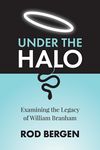
Inside of 15 minutes, I found myself in a metanoia experience with God that profoundly changed my life. I tell the story in the book I published last year, Under The Halo. I also related it in a short video as a warning to message pastors and preachers - https://youtu.be/1h3YQUF7MVk
In his Scribe series, Amos Omoboriowo engages in almost constant ad hominem attacks, which we did not respond to and have no intention of responding to. However, in addition to the warning in the video above, which he needs to heed because of his attacks on, among other things, the church in China, I would ask him to read the following scriptures:
Do not judge others, so that God will not judge you, for God will judge you in the same way as you judge others, and he will apply to you the same rules you apply to others.[4]
But as for you, why do you judge your brother or sister? Or you as well, why do you regard your brother or sister with contempt? For we will all appear before the judgment seat of God. For it is written:
- “AS I LIVE, SAYS THE LORD, TO ME EVERY KNEE WILL BOW,
- AND EVERY TONGUE WILL GIVE PRAISE TO GOD.”
So then each one of us will give an account of himself to God.
Therefore let’s not judge one another anymore, but rather determine this: not to put an obstacle or a stumbling block in a brother’s or sister’s way.[5]
Now I expect that Pastor Amos, like any good message preacher, will simply state that I am not his brother. But that is in itself a judgment which he will be held accountable for.
I would not want to be in his shoes. Enough said...
Footnotes
- ↑ New Revised Standard Version: Updated Edition (Friendship Press, 2021), Jas 5:19–20.
- ↑ New Revised Standard Version: Updated Edition (Friendship Press, 2021), Ac 20:26–27.
- ↑ American Bible Society, The Holy Bible: The Good News Translation, 2nd ed. (New York: American Bible Society, 1992), Eze 33:8–9.
- ↑ American Bible Society, The Holy Bible: The Good News Translation, 2nd ed. (New York: American Bible Society, 1992), Mt 7:1–3.
- ↑ New American Standard Bible (La Habra, CA: The Lockman Foundation, 2020), Ro 14:10–13.