Heads I Win, Tails You Lose
Amos Omoboriowo wrote a 12-part series as a direct answer to the Scriptural Challenge issued on this website. He also wrote a response to our article on the Prophecies of William Branham's Death. This is our reply to his analysis. Your are in the article highlighted above. This article responds to "A Rebuttal Of The Prophecy Of Kenneth Hagin, On The Death Of William Branham," a Scribe message by Amos Olusegun Omoboriowo of Bible Faith Tabernacle, Lagos, Nigeria (Ref. 01-01-2017, re-presented August 2022).[1]
The Half He Kept
In January 1964, the Pentecostal teacher Kenneth Hagin recorded a prophecy about William Branham. Amos Omoboriowo quotes it in full, and so will we, because everything turns on its exact words:
"At the end of '65, he who now stands in the forefront of the Healing Ministry as a Prophet will be taken out of the way. He'll make a false step and Satan shall destroy his life, but his spirit will be saved, and his works will follow him. Ere '66 shall come, he shall be gone."[2]
William Branham died on 24 December 1965, after a car accident. The prophecy named the year, and the year came.
Because critics have pointed to this, Amos Omoboriowo wrote an entire Scribe to take the prophecy apart. His conclusion, repeated on nearly every page, is blunt: the prophecy "proves absolutely nothing."[3]
Here is the strange thing. On that last point, we very nearly agree with him. A single prophecy from one man about another man's death does not, by itself, settle anything. But Amos Omoboriowo does not actually believe his own conclusion, and you can prove it from his own pages, because he keeps the half of the prophecy he likes and burns the half he does not.
"Proves nothing," except the parts that flatter
Watch what he does with the very prophecy he calls worthless.
When the prophecy says Branham "will make a false step and Satan shall destroy his life," Amos Omoboriowo says it is empty, that Kenneth Hagin was "a hypocrite," a "Prophetic Fraud," a man "under a false spirit."[4] So that clause is discarded.
But the same prophecy also calls Branham "he who now stands in the forefront of the Healing Ministry as a Prophet." And that clause Amos Omoboriowo keeps, and leans on, and calls out as significant:
"the Leadership Ministry position which William Branham occupied in that day, was clearly acknowledged."[5]
Suddenly the fraud's worthless prophecy has become a witness for the defense. And there is more. He accepts that the prophecy's central prediction came true, and he says so plainly:
"part of the January 1964 prophecy, was fulfilled, because God works in very intricate ways."[6]
So the death clause is genuine. The "leading prophet" clause is genuine. Only the "false step" clause, the one that stings, is thrown out.
You cannot do that.
A prophecy is either a witness or it is not. You do not get to keep the sentence that flatters your prophet, cash the sentence that came true, and burn only the sentence that convicts him.
The words came as one utterance, from one mouth, in one breath. If Kenneth Hagin was a fraud under a false spirit, then his kind words about Branham are worth exactly nothing, and his correct call on the year is a coincidence you cannot lean on. If instead the prophecy is worth citing when it honors Branham and worth trusting when it names the year, then the clause about a false step is standing right there in the same sentence, and it will not be waved away.
The trap that cannot be sprung
Amos Omoboriowo does sense the problem, and his escape is worth examining, because it is the same device we have met all through his other writings.
The prophecy came true. That is awkward. So he explains the fulfilment away with Ezekiel 14. God, he says, gives such prophecies to ensnare men who have "idols in their heart," so that the prophecy "will also most certainly come to pass," but only as a snare for the deceived.[7]
Look at what that accomplishes. If the prophecy had failed, it would prove Kenneth Hagin false. Now that it has come true, it proves nothing either, because God supposedly gave it only to trap idolaters. Failure disproves it; fulfilment is a trap. There is no result the prophecy could have produced that Amos Omoboriowo would count.
An argument rigged so that a hit and a miss both come out in your favor is not reading a prophecy. It is immunizing a man against one.
We have watched this same move turn a failed year into a "personal" prophecy and a chapter's plain order into a divine scramble. Here it turns a fulfilled prediction into a snare. The costume changes; the trick does not.
And Ezekiel 14 does not say what he needs it to say.
"These men have set up their idols in their heart... and cometh to the prophet; I the LORD will answer him that cometh according to the multitude of his idols" (Ezekiel 14:3-4).
The passage is about idolaters who come to a prophet to inquire, and about the prophet who answers them. It is a warning to both. In fact the next verses turn on the prophet himself:
"if the prophet be deceived when he hath spoken a thing, I the LORD have deceived that prophet... the punishment of the prophet shall be even as the punishment of him that seeketh unto him" (Ezekiel 14:9-10).[8]
If Amos Omoboriowo wants Kenneth Hagin to be the prophet in that scene, then by his own chosen text Kenneth Hagin is the deceived prophet God judges, which is hardly a foundation to build a defense on. Either way, the passage says nothing about God planting an accurate prediction about a third man in order to snare that man's critics decades later. That reading is imported whole; the text does not carry it.
The mystery he admits
Now comes the most honest, and most damaging, part of the Scribe, and it is damaging precisely because Amos Omoboriowo is being candid.
He accepts that a "false step" is a real category. He compares it to Moses striking the rock: "a wrong step that he would take; a mistake that he would make; a disobedient conduct, or even anger displayed, just as Moses... for which reason God called him home."[9] So he grants the framework the critics use: God does sometimes remove a servant for a serious misstep.
Then he grants that the prophecy about Branham was fulfilled. And then, having granted both, he confesses that he cannot say what Branham's false step actually was. His words, not ours:
"we are still in total wonderment... as to what exactly Brother Branham did in those two final years, to warrant his being called home."
"Whatever that particular conduct... was, or is, remains a mystery to date, and that should not be!"
"Some things just do not add up! Some things just do not make sense!"[10]
Look at what has just been conceded:
- He accepts the prophecy was fulfilled.
- He accepts, by his own Moses parallel, that God removes a servant for a genuine misstep.
- And he admits he cannot identify Branham's, only that it must have happened.
That is not a rebuttal. That is a man agreeing that the prophecy landed, agreeing a false step was made, and confessing he cannot say what it was. His one guess, offered as "my personal belief," is that Branham was taken home over the idolatry of his followers. But the prophecy says "he'll make a false step," not "his followers will." Even Amos Omoboriowo's own guess does not fit the words he is defending.
And measure it by his own standard. He tells us God "is perfect in all His ways," that "He does not leave His children in darkness," that with Moses "the reason was not left shrouded in secrecy, as no speculation was created."[11] By that very standard, a Moses-level messenger removed by a Moses-level judgment for a step no one can name, leaving nothing but speculation, is a problem for the claim, not a defense of it. He has written the difficulty down himself.
What Kenneth Hagin was is beside the point
Most of the Scribe never touches any of this. It is spent on Kenneth Hagin. He was a Trinitarian; he believed in women preachers; he pioneered the Word of Faith teaching; he once gave a long, rambling prophecy that Amos Omoboriowo reprints and mocks; he later claimed to be "John," a forerunner of the Second Coming himself.[12]
Grant all of it. Suppose every charge against Kenneth Hagin is true. It still does not answer a single question about William Branham. Whether Kenneth Hagin understood the Godhead has no bearing on whether Branham's teaching matched Scripture. Whether Kenneth Hagin rambled in 1997 has no bearing on whether Branham's own predictions came to pass. The question on this website was never "was Kenneth Hagin a sound prophet?" It was, and remains, "was William Branham who he claimed to be, and was his message true?" You can demolish Kenneth Hagin from now until evening and leave that question exactly where it stood. Attacking the man who carried the prophecy does not touch the man the prophecy was about. This is answering a question no one asked, at length.
There is even a smaller irony worth noting. Amos Omoboriowo argues, correctly, that a fulfilled death-prophecy proves nothing about the one who gave it, citing the old prophet of 1 Kings 13 and the sons of the prophets of 2 Kings 2. Good. But that rule cuts both ways, and in the same Scribe he leans on the confirming prophecies of Anna Schrader and a stranger in San Antonio as vindication of Branham. If a fulfilled prophecy cannot validate the ministry of the one who speaks it, then those confirming prophecies cannot validate Branham either. He cannot switch the rule on and off between paragraphs.
We never needed the prophecy
So let us do the thing Amos Omoboriowo says he wants, and mean it.
Ignore the Kenneth Hagin prophecy. We are content to. We have never rested the case on it, because a prophet is not proved or disproved by someone else's vision. He is proved or disproved by his own words, held against Scripture.
That is not our rule. It is God's.
"When a prophet speaketh in the name of the LORD, if the thing follow not, nor come to pass, that is the thing which the LORD hath not spoken, but the prophet hath spoken it presumptuously: thou shalt not be afraid of him" (Deuteronomy 18:22).[13]
The measure is not what Kenneth Hagin said about William Branham. The measure is what William Branham said, and whether it came to pass.
And there we do not need to wonder, and there is no mystery. William Branham told his hearers that all things would be finished, and the world's systems would end, by 1977. That is his own word, spoken in the name of the Lord, and the year came and went. We have set the record out in The Year That Did Not Come. That is the test Scripture actually names, and it needs no Kenneth Hagin, no Anna Schrader, no vision from anyone but the man himself. Amos Omoboriowo brought Kenneth Hagin to the table. We can hand him back, and open the Bible to the test that was there all along.
What the Hagin prophecy did do
The Hagin prophecy was unknown to us for most of the time we were in the Message. When we heard about it, I took the scriptural response. I tried to confirm it from several independent sources according to scripture:
ON THE TESTIMONY OF TWO OR THREE WITNESSES EVERY MATTER SHALL BE CONFIRMED.[14]
It took a while to find them because they were only available used:
- Lindsay, Freda, My Diary Secrets, Christ for the Nations Inc., seventh edition, 1998.
- Hagin, Kenneth,He Gave Gifts Unto Men, Kenneth Hagin Ministries Inc., 1992.
When I received them, I was shocked to find that they not only contained the prophecy but they confirmed it independently of each other. And it wasn't the main objective of the books. Both were quite long and the prophecies with respect to Branham's death were hidden away in the middle of both books.
Reading them in the light of scripture meant that the prophecy did happen. It was not fabricated. This happened almost at the same time that we discovered that Ed Byskal, our pastor, had covered up the sexual abuse of a minor.
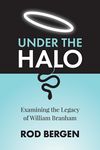
We tell what happened next in the introduction to our book, Under The Halo. But we are thankful for the books and their inclusion of the prophecies, as they were part of the process that started us asking questions.
What still stands
I want to end where Amos Omoboriowo and I can almost shake hands. He is right that a death-prophecy from a rival preacher settles nothing, and he is right that Kenneth Hagin's own ministry is no yardstick for anyone. The Kenneth Hagin prophecy is a sideshow, and both of us can walk away from it.
But we cannot walk away from the prophet's own words. That is the one thing a defense cannot shelve, and it is the one thing this Scribe never squarely faced. It spent its strength discrediting the man who made the prophecy, immunizing the prophecy that came true, and finally admitting that the "false step" it grants was real but is a step no one can name. Strip all of that away and the honest question is still waiting, patient and unanswered: did William Branham's own words, spoken in the name of the Lord, come to pass?
Test it the way Scripture tells you to. "Prove all things; hold fast that which is good" (1 Thessalonians 5:21). You do not need a rival's prophecy to do it, and you do not need to solve the mystery that Amos Omoboriowo could not.
You need an open Bible, the plain test of Deuteronomy 18, and the willingness to let the answer be what it is. The God of truth "cannot lie" (Titus 1:2), and He does not ask you to believe a man whose own words did not stand. He asks you to come to Christ, the sure Word, who never made a false step at all.
Footnotes
- ↑ PAGE NUMBERS: The copy we worked from is an OCR of a two-column magazine, and its page markers are erratic and interleaved. We have footnoted by quotation and given our best page estimate.
- ↑ A Rebuttal Of The Prophecy Of Kenneth Hagin, quoting Kenneth Hagin, "He Gave Gifts Unto Men" (1992), p. 165. Page reference in the printed Scribe to be verified.
- ↑ A Rebuttal Of The Prophecy Of Kenneth Hagin. The phrase recurs throughout; see especially his closing pages.
- ↑ A Rebuttal Of The Prophecy Of Kenneth Hagin. He calls Hagin a "hypocrite," a "Prophetic Fraud," and repeatedly questions the spirit behind the utterance.
- ↑ A Rebuttal Of The Prophecy Of Kenneth Hagin. He treats Hagin's phrase "the Leading Prophet at that time" as an acknowledgment of Branham's position.
- ↑ A Rebuttal Of The Prophecy Of Kenneth Hagin, near the discussion of the changing reasons Hagin gave.
- ↑ A Rebuttal Of The Prophecy Of Kenneth Hagin, citing Ezekiel 14:1-10.
- ↑ Ezekiel 14:3-5, 9-10, KJV.
- ↑ A Rebuttal Of The Prophecy Of Kenneth Hagin, in the third of his "four crucial facts."
- ↑ A Rebuttal Of The Prophecy Of Kenneth Hagin, in the discussion following the Moses comparison.
- ↑ A Rebuttal Of The Prophecy Of Kenneth Hagin, contrasting Moses' clearly-stated fault with Branham's unexplained removal.
- ↑ A Rebuttal Of The Prophecy Of Kenneth Hagin, in the extended treatment of Hagin's doctrine, his 1997 utterance, and his July 2001 "forerunner" claim.
- ↑ Deuteronomy 18:20-22, KJV. The test is the prophet's own word, not another man's.
- ↑ New American Standard Bible (La Habra, CA: The Lockman Foundation, 2020), 2 Co 13:1.
Navigation