What Heresy Actually Means
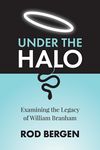

In 2012, we turned the Believethesign website from a site that promoted William Branham into one that examined him honestly. Barry Coffey responded that year from the pulpit at Hickory Bible Tabernacle with a six-part series called The Present Truth.
If you want to listen to all or part of the entire series, please click here. All of the timestamps in our article refer to the part of the series being examined. You are currently in the part of the series that is highlighted:
- Part 1 - The Test That Fails Its Maker
- Part 2 - The Photograph That Proves Too Much
- Part 3 - The Absolute He Would Not Apply
- Part 4 - What Heresy Actually Means
- Part 5 - The Dress Code He Condemned
- Part 6 - The Defense That Says "Stop Looking"
What Heresy Actually Means
A Response to Barry Coffey's "The Present Truth," Part 4
The fourth sermon turns on a single word, and the whole thing depends on getting that word wrong.
Barry Coffey preached this on the morning of August 5, 2012, from Acts 24:14, where Paul stands before Felix and says, "after the way which they call heresy, so worship I the God of my fathers." Coffey's argument is built on it. Paul was called a heretic, Coffey says, and embraced the label, because a heretic is really just someone who dissents from the majority. The Message is called heresy too. So, like Paul, we should wear the accusation as a badge of honor. "If you want to call me a heretic," he says, "it's fine. I'm not afraid of that. I'm in good company."
It is a stirring argument. It is also built on a definition of heresy that is simply not what the word means. And once you see what heresy actually means, the argument does not just fail. It reverses.
Let's look at the evidence.
What Barry Coffey Argued
Coffey's case runs in a straight line.
First, heresy means dissent. He walks through the dictionary sense of the word: a departure from established belief, something "strongly at variance with established beliefs or customs." By that measure, he says, the Message is guilty. "We've dissented from a lot of people about the Trinity," about original sin, about women preachers, about dress and hair. "Guilty as charged."
Second, the majority is often wrong. Here come the examples: Galileo, hauled before the Catholic Church for saying the earth moves. Martin Luther, nailing his theses to the door. Noah building a boat under a clear sky. Joshua marching around Jericho. All of them called crazy. All of them right. "Faith is crazy to everybody but God and the one that's got the faith."
Third, therefore the accusation itself proves nothing. If the great heroes of faith were all called heretics, then being called a heretic by the website, or by mainstream Christianity, is no argument against the Message. "Just because it's popular doesn't make it right."
Fourth, the real dividing line is revelation. What separates the true believer from the outsider is not evidence or argument but a revelation that the outsider cannot access, the same revelation needed to recognize Jesus riding a donkey instead of a warhorse, or lying in a manger instead of a palace. "The internet is full of garbage," he says, "but I'll hold with the absolute."
I want to be fair to the parts of this that are true, because several parts are. The majority is often wrong. Faith does look foolish to the world. Galileo and Luther and Noah were vindicated against the crowd. Coffey is not making these up. The problem is not the examples. The problem is the definition they are recruited to defend.
What Heresy Actually Means
Here is the thing the sermon never tells you. Heresy does not mean "a belief the majority rejects."
In its original and historic sense, heresy is something far more specific, and our book, Under the Halo sets it our clearly in Part Three, drawing on the work of Alan Hirsch. The greatest heresies, Hirsch writes, do not come by straightforward denial. They come when a fragment of real truth is pulled loose and blown out of proportion:
"They happen when an element which may even be important, but isn't central, looms so large that people can't help talking about it, fixating on it, debating different views of it as though this were the only thing that mattered."[1]
And here is the part that matters most:
"The heretic becomes increasingly obsessive and sectarian by making the newly recovered particular truth into the whole truth. Its real meaning is obscured because it is separated from the greater Truth from which it has been extracted. Truth thereby becomes fragmented."[2]
This changes everything about this sermon. A heretic, in the real sense, is often someone who has genuinely rediscovered something true. That is not the error. The error is fixation, taking a real fragment and inflating it until it crowds out the greater Truth, until the part becomes the whole and Christ is pushed to the edge of the frame.
Heresy is not minority belief. It is a fragment that becomes the whole.
That is not a definition I invented to win an argument. It is the historic meaning of the word, and it is the one Under the Halo uses. And it points in exactly the opposite direction from the one Coffey needs.
Apply the Real Definition
So let's do what Coffey did with his definition, and test the Message against the true one.
Does the Message take a real fragment of truth and make it the whole? Consider what has happened to a twentieth-century preacher from Indiana. Real concerns, holiness, the authority of Scripture, the expectation of Christ's return, have been gathered around one man until that man became the key without which the Bible cannot be read. The "Message of the hour" grew so large in the movement's mind that, in their own language, you approach Christ through the messenger. Revelation 10:7 looms over the whole canon. A prophet's sermons become the lens for Genesis through to Revelation.
That is not Paul before Felix. That is precisely what Hirsch describes: an element that "isn't central" looming "so large that people can't help fixating on it," a "particular truth" made "into the whole truth," until "its real meaning is obscured because it is separated from the greater Truth from which it has been extracted."
Coffey wants the word "heretic" to mean a brave dissenter the crowd rejected. But measured by what the word actually means, the careful definition his own defender's book supplies, the Message is not the exception to heresy. It is the illustration of it. The tragedy is not that the majority calls it heresy. It is that, by the real and historic meaning of the term, it fits.
Are there New Testament prophets? Yes! But the Message turns the whole of the Gospel into "God sent a prophet and if you don't accept him, you're out." That's heresy.
Galileo Proves the Opposite of What Coffey Needs
Coffey's favorite example turns on him. It is the whole argument in one picture.
First, a small correction, because accuracy matters. Coffey says the Catholic Church condemned Galileo because "they were still believing that the earth was flat." That is not what happened. The Church held that the earth sat motionless at the center of the universe, geocentrism. Educated people had known the earth was a sphere since the ancient Greeks. The dispute was never flat versus round. It was moving versus still.
But set the error aside, because the deeper problem is fatal to Coffey's case. Ask the question his sermon never asks: how do we know Galileo was right and the Church wrong?
Not by revelation. Not by breaking into the spirit. By evidence. By a telescope pointed at the moons of Jupiter, by observation, by measurement, by checking the claim of authority against the physical facts of the world. Galileo was vindicated by exactly the method this sermon spends an hour condemning. He is the patron saint of testing what you are told against what you can verify.
Coffey reaches for Galileo to shame the fact-checkers. But Galileo was the fact-checker. He is not on Coffey's side of this. He is on ours.
Revelation Cannot Be the Escape Hatch, Because Coffey Already Closed It
When the argument gets close to the real question, is the teaching true, the sermon retreats to the same place it always retreats: revelation. What separates us, Coffey says, is "a revelation" the outsider cannot access. You need it to recognize the Messiah on a donkey. You need it to see what God is doing.
There are two problems with this, and the second is the one that matters.
The first is that "you need a revelation to see it" is unfalsifiable. Every movement that has ever made a claim beyond the reach of evidence has said the same thing: if you can't see it, that only proves you lack the revelation. It is a door that locks from the inside.
The second problem is that Barry Coffey himself closed this door one sermon ago. In Part 3, he told this same congregation that revelation is not the final authority, the Bible is, and that revelation itself must be tested against it. His words: "How do we know that our revelation is true? ... You've got to bring it back to the Word of God. It's got to fit, it's got to dovetail with the Word of God." That was right. But it means revelation cannot be the thing that settles the question, because Coffey has already told us revelation is the thing that must itself be settled, by Scripture. You cannot make revelation the final court in Part 4 after making Scripture the final court in Part 3. Pick one. He picked Scripture. So let Scripture, tested and checkable, decide.
Two Moments Coffey Did Not See
Twice more, the sermon makes an argument that turns and points back at the one making it.
The first is the feminist New Testament. Coffey describes, with justified disapproval, a group of feminist scholars who produced a shortened New Testament by cutting the passages they disliked. "Can you imagine what it would be like if we treated the Bible that way?" It is a fair thing to condemn. It is also the reductionist move, cutting and keeping to taste, one of the marks of false doctrine Under the Halo lists. And it is worth asking honestly which side of this exchange does more cutting and keeping. In Part 3, Coffey himself described Message ministers deciding the prophet "wasn't inspired when he said" the things they found inconvenient. The feminist scholars subtracted from Scripture what they disliked. A movement that builds its canon around which of a prophet's quotes to keep and which to shelve is doing the same thing with a different text. The warning is a good one. It just does not point where Coffey aims it.
The second is smaller and more honest. Coffey dismisses the website in a sentence: "The internet is full of garbage ... I don't relate to all the lies and stories and concoctions and accusations that are out there." And then he moves on. He never names a single claim. Not the photograph. Not the cloud. Not one failed prophecy. Calling the evidence garbage is not the same as answering it, and a congregation could be forgiven for not noticing the difference, because it is said with such confidence. But confidence is not a refutation. In Part 3, Coffey told these same people to bring every claim back to the absolute and test it. You cannot say "test everything against the Word" and "don't look at the specific claims, they're garbage" in the same series. One of those instructions has to give.
Scripture, Handled Rightly
Two passages in Part 4 are turned to say things they do not say, and both matter.
Acts 24:14, Paul's own words.
This is Coffey's text, so it deserves care. Notice what Paul actually says his "heresy" consists of: worshipping the God of his fathers, "believing all things which are written in the law and in the prophets." Paul's entire defense before Felix is that he has added nothing and subtracted nothing. He departed from no Scripture. That is why the charge was false: Paul was completely faithful to the text as given. His "heresy" was total fidelity to what was already written. That is the exact opposite of a movement whose distinctive claim is that it possesses added, end-time revelation that unlocks the Bible. Paul's defense was "I added nothing." You cannot borrow his robe while making the opposite claim.
Hebrews 12:25.
Coffey uses "See that ye refuse not him that speaketh" to mean: when God speaks through his prophet, do not turn the prophet away. But read the verse in its place. Hebrews is the letter about the supremacy of the Son over the prophets, the angels, and Moses. The whole point of chapter 12 is the contrast between God speaking on earth at Sinai and God now speaking "from heaven" in his Son. The one we are warned not to refuse is Christ. Coffey has taken a verse about the supremacy of Christ over every prophet and turned it into a verse about not refusing a prophet. That is not a small slip. It is the precise inversion of what the passage was written to say.
An Honest Invitation
Here is what makes this sermon sad rather than merely wrong.
Barry Coffey is right that the crowd is often mistaken. He is right that faith looks like foolishness to the world. He is right that Galileo and Luther and Noah stood alone and stood correct. Every one of those instincts is sound. He has simply attached them to the wrong word, and pointed them in the wrong direction.
Because heresy was never about standing in the minority. The martyrs and the reformers were not heretics; they were the ones calling the church back to the whole Truth it had fragmented. Heresy is the other thing. It is taking a real and precious fragment, a hunger for holiness, a longing for Christ's return, a reverence for God's word, and letting it swell until a single man becomes the key to the whole Bible and Christ is reached only through him. That is not persecution for the truth. That is the truth fragmented. It is reductionism.
The people in those pews are not my enemies, and they are not heretics in the ugly sense the word has picked up. Most of them are sincere believers holding tightly to fragments that are genuinely worth holding. I am only asking them to let the fragments go back where they belong, into the whole. There is a greater than William Branham, and Barry Coffey said it himself: a true gift points not to the messenger but to Jesus Christ. So let it point there. Let Christ be the whole, and not the part reached through a prophet. Bring every fragment back to Him.
That is not heresy. That is coming home.
Come and reason. Four responses down. Two to go.
Footnotes