The Defense That Says "Stop Looking"
In 2012, we turned the Believethesign website from a site that promoted William Branham into one that examined him honestly. Barry Coffey responded that year from the pulpit at Hickory Bible Tabernacle with a six-part series called The Present Truth.
If you want to listen to all or part of the entire series, please click here. All of the timestamps in our article refer to the part of the series being examined. You are currently in the part of the series that is highlighted:
- Part 1 - The Test That Fails Its Maker
- Part 2 - The Photograph That Proves Too Much
- Part 3 - The Absolute He Would Not Apply
- Part 4 - What Heresy Actually Means
- Part 5 - The Dress Code He Condemned
- Part 6 - The Defense That Says "Stop Looking"
The Defense That Says Stop Looking
A Response to Barry Coffey's "The Present Truth," Conclusion
For six sermons, Barry Coffey promised his congregation a defense.
He called the series an apologia, a reasoned answer to this website. He told his people they had a duty to "give an answer for the hope that lies within us." He built a case around an "absolute," worked through Scripture, held up William Branham's ministry as vindicated by God. Five times he stood in the pulpit and argued.
And then he reached the conclusion, and the conclusion is this: stop looking.
"I don't want to spend my time and energy debating them," he says. "I don't want to spend my time on Facebook going back and forth, or on the internet going back and forth. There are some things that you're just going to have to accept by faith. There are some things that do not always have a logical conclusion, and neither do they have a bounty of evidence to prove whether they are true or not."
That is the end of the road. After six weeks of building a defense, the defense turns out to be a door closing. And the moment you see it, the whole series comes into focus, because this is where it was always heading.
Let's look at the evidence.
What Barry Coffey Argued
This was September 19, 2012, six weeks after the previous sermon, and Coffey does something he says he "rarely ever" does: he deliberately concludes a series. He wants to draw The Present Truth to a close.
He summarizes with two hands. One is vertical: your personal relationship with God, "make your calling and election sure," a solitary thing between you and Christ. The other is horizontal: your responsibility to the world, to defend the faith when people ask or attack. Fair enough. Every Christian would recognize both (although he does miss "Love your neighbour as yourself," something the Message does extremely poorly).
Then he turns to 2 Timothy 1:14, "keep that which is committed to thy trust," alongside the warning to avoid "profane and vain babblings, and oppositions of science falsely so called." He reframes those "oppositions" as the critics' antithesis, the counter-argument to his thesis that Branham fulfilled Malachi 4. And Paul's instruction, he says, is to avoid it. When people bring oppositions, "there comes a point where you have to just avoid it. You're just gonna have to go around it."
From there he makes his case for believing without evidence. He points to the squirrels Branham said he spoke into existence: "There were no witnesses. Nobody was there, only Brother Branham. Either believe it or you don't." He compares it to Noah preaching rain with no cloud in the sky. And he closes with a long, soaring climax: that the people in his pews are themselves the fulfillment of prophecy, the bride Branham saw in a vision, "living in the vision" whether they realize it or not.
I want to be fair to what is real here. Coffey is right that faith is not the same as sight. He is right that a Christian will sometimes be, maybe even often, out of step with the world. He is right that not every truth can be proved in a laboratory. Those things are true. The question is what he does with them, and what he does with them is build a wall around the very questions his series promised to answer.
The Instruction That Undoes the Series
Set the beginning of the series beside its end.
At the beginning, Coffey told his people they had a responsibility to defend the faith, to have "an answer for the hope that lies within us," to respond "apologetically" to the questions raised about the Message. That was the whole reason for the series. He was going to answer the website.
At the end, the instruction is to avoid the questions. Don't debate. Don't go back and forth. Some things have no evidence either way, so accept them by faith and walk around the opposition.
Those two instructions cannot both stand. You cannot promise a defense in obedience to scripture and deliver an avoidance. And the remarkable thing is that Coffey knows it, because he cannot hold the "avoid it" line even to the end of the same paragraph. Seconds after telling his people to avoid the arguments, he reverses:
"That doesn't mean we're not gonna discuss the message with anybody. I think it's important for us not to kind of turn a blind eye to everything and all the arguments and just say, well, Brother Branham said it, so therefore it's true. There are some things that are important for us to search out and to know and to be able to defend."
Read those two passages together, because they are a minute apart. Avoid the arguments. Do not turn a blind eye to the arguments. Do not debate the critics. Be able to defend against the critics. He is arguing with himself, and he never resolves it. The conclusion of the series wants two things that cannot coexist: a faith you defend with evidence, and a faith you hold without it.
This is the tell. When a man builds a six-part case and then, at the decisive moment, instructs his people not to examine the other side, and then immediately senses that this cannot be right and takes it half back, he is telling you something true without meaning to. He is telling you the arguments are dangerous to the position. You do not warn people away from evidence that helps you.
The Squirrels He Told You to Believe
Coffey needed an example of something you simply have to accept by faith, because "nobody was there." He chose the squirrels. William Branham said that on a hunting trip he spoke three squirrels into existence by his own word. "There were no witnesses," Coffey says. "He's the only one who saw it. Either believe it or you don't."
But here the choice of example is fatal, because we do not actually have to take the squirrels on faith. We have William Branham's own account of what they were. In a 1959 sermon he said this:
"These squirrels was not a vision. I shot them; blood came out of them. I dressed them and eat them. They wasn't visions; they were squirrels."[1]
Read that against what Coffey is asking you to believe. Coffey presents the squirrels as a creative miracle, life spoken out of nothing, a thing so far beyond evidence that you can only accept it or reject it. Branham describes shooting them, cleaning them, and eating them for dinner.
And Branham's fuller account of that hunt makes it worse, not better. He describes missing shots. He describes the crosshairs on his scope. He describes a squirrel that "run under a log" and would not hold still, and himself firing again and hitting four inches high, and concluding, "I must have knocked my scope out." That is not the language of creation. That is the language of a man having an ordinary, and rather frustrating, morning in the woods.
So the single example Coffey selected to prove that some things must be believed without evidence is an example where the evidence exists, and it comes from the prophet's own mouth, and it points the other way. He asked his people to believe a miracle. The prophet said he shot it and ate it.
This is the whole series in one detail. When you go looking, the thing you were told to accept on faith turns out to have a record. That is exactly why the conclusion tells you not to go looking.
Jesus' First Temptation
And when the tempter came to him, he said, If thou be the Son of God, command that these stones be made bread. ~ Matthew 4:3
William Branham stated that he spoke squirrels into existence at the command of a voice that spoke to him. In referring to the voice he heard, he described it as "something said". Was this God speaking to him, an angel or something else?
When Jesus was tempted in the wilderness, Satan asked him to turn stones into bread. Jesus was hungry and was tempted to do what Satan asked him to. In the case of William Branham, he was hunting for squirrels. So why was this different from Jesus' first temptation?
One common interpretation among message believers is that the Third Pull will manifest among believers as the ability to speak things into existence. This interpretation is primarily based on William Branham's testimony that he created squirrels into existence by his own spoken word, through the instruction of an angelic voice.
The danger with this expectation is that it forgets Jesus' first temptation in the wilderness: when the Devil tempted Jesus to use his supernatural powers to create bread from stones in order to satisfy his own hunger. Sadly, this temptation is exactly what message believers are expecting to yield to in the future.
If the tempter came to a message believer with instructions to create bread or squirrels from stones, they would likely give in to the devil instantly - because they would follow William Branham's example and not the example left to them by Jesus Christ, who alone had dominion over the devil's temptations.
Would you pass the test of Jesus' first temptation or give in as William Branham did?
When the Believer Becomes the Evidence
The most striking part of this sermon is its climax.
Having told his people that the external proofs must be accepted by faith, Coffey turns to a different kind of proof: the people themselves. He walks through Branham's vision of a caribou hunt, where a man in a green-checkered shirt would lay his hands on the antlers, and the story of Ed Byskal realizing, mid-hunt, that he was "living in the vision." He recounts Branham's vision of women marching to "Onward Christian Soldiers," correctly dressed, hair long, and Branham's words that "she was the word." He reaches back to Joseph's brothers bowing without knowing they fulfilled his dream, and to Abraham shown his descendants as the stars.
And then the landing:
<blockquote>"When Brother Branham saw her, he saw you."
"The present truth and the present bride have come together."
"You are the literal fulfillment of the word of God for this hour."
Look at what has happened. The proof of the prophecy is now the existence of the believer, and the identity of the believer is now confirmed by the prophecy. Each rests on the other. You are the bride because Branham saw you; Branham's vision is true because here you are. It is a closed circle, and nothing outside it can ever get in to test it. There is no fact that could count against it, because the system has made you, sitting in the pew, the evidence. That is what a claim looks like when it can no longer be checked: it stops pointing to the world and starts pointing to you.
And there is a specific reason this matters, one the people in those pews deserve to know. This "you are living in the vision" teaching, the idea that the bride is the fulfillment, did not arise on its own. It is the reinterpretation of a failure. Branham's Tent Vision, the final scene of what he called the third pull, was a physical promise: a great tent, a small building, people going in sick and coming out healed. Branham said until the end of his life that this tent ministry was coming. It never came. When he died in 1965, the vision stood unfulfilled.[2] And so the meaning was moved: what did not happen in canvas and wood was said to be happening, spiritually, in the believers. "You are living in the vision" is what you say about a vision that did not come to pass.
So the conclusion of the series asks the followers to become the proof precisely because the proofs have not held. The squirrels have a record. The cloud has a timeline. The photograph has a story. The Tent Vision never materialized. When the external evidence runs out, the last move available is to point at the believer and say: you are the fulfillment. It is the most understandable move in the world, and it is the least falsifiable, and that is exactly the problem.
The Example That Refutes Him
Earlier in the sermon Coffey reaches for John the Baptist, and it is worth following, because he picks the one example that turns on him.
Isaiah prophesied a forerunner, Coffey says, and John fulfilled it "to the letter," and God vindicated it, so "your choice is whether you're going to believe John or not." That is exactly the right test, and I agree with every word of it. A genuine fulfillment is public, specific, and checkable against what was written.
So apply it. John's fulfillment was witnessed by crowds at the Jordan. It was specific, a named messenger, "the voice of one crying in the wilderness," preparing the way. It was confirmed in Scripture by Jesus himself. Anyone could go and look. That is why John's case is strong.
Now measure Branham's stories by the standard John passes. The squirrels: no witnesses, and the prophet's own account says he shot and ate them. The cloud: he was not under it, and the timeline proves it. The Tent Vision: it never happened. These are not public, checkable fulfillments confirmed by many. They are private stories that dissolve when examined. Coffey held up John the Baptist as his model, but John is precisely the kind of case Branham's stories are not. John is the evidence that holds. He is on the side of looking, not the side of avoiding.
"God Is Not Responsible for the Internet"
Twice in this sermon Coffey dismisses this website with a single move. God's word comes through prophets, he says, not through Google. "God is not responsible for what's on the internet." So the material on this website is disqualified before it is read.
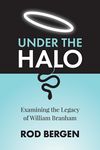
But this confuses the medium with the message. What is documented on this website is not "God's word on Google." It is William Branham's own recorded sermons, his own stated timeline, his own quotes, primary sources, examined. The squirrel quote above is Branham's, from his own tape. Waving at "the internet" does not answer a single one of those facts; it just declines to look at them. Our book, Under The Halo, has over 950 footnotes so you can examine the evidence yourself.
And notice: Coffey does not actually live by this rule. He tells the story of personally sitting down with Ed Byskal in Vancouver to research the caribou vision. He cites tapes and studies details. He gathers evidence when it supports the Message. The rule is not really "we don't investigate." The rule is "we investigate what confirms, and we avoid what challenges." That is not a defense of the faith. It is a defense against the faith being questioned. It is the classic definition of confirmation bias.
Scripture, Handled Rightly
Two passages anchor this sermon, and both, read in context, say the opposite of what Coffey needs.
2 Timothy 1:14 and the "vain babblings."
Paul tells Timothy to guard the deposit, "keep that which is committed to thy trust," and to shun "profane and vain babblings, and oppositions of science falsely so called." Coffey reads this as: avoid the critics who question the Message. But Paul's "deposit" is the apostolic gospel, and the thing he tells Timothy to avoid is not honest examination; it is speculative false teaching, the endless myth-spinning and novel revelation that the early church kept battling. Read that way, the verse cuts against Coffey, not for him. "Science falsely so called" and "vain babblings" describe added, speculative revelation dressed up as deeper truth, which is a far better description of serpent seed and seven-thunder mysteries than of a factual timeline of a man's own sermons. Paul says: hold the gospel that was delivered, and avoid the novelties. That is an argument against the Message's additions, not a shield for them.
2 Peter 1 and "make your calling and election sure."
Coffey builds his vertical axis on this chapter, and I am glad he went there, because it contains the answer to his whole conclusion. A few verses on, Peter explains why his own testimony can be trusted: "we have not followed cunningly devised fables, when we made known unto you the power and coming of our Lord Jesus Christ, but were eyewitnesses of his majesty" (2 Peter 1:16). In the very chapter Coffey chose to frame his series, Peter does the exact opposite of "nobody was there, just believe it." Peter says: we did not follow clever stories, we saw it with our own eyes, and there were many of us. The apostolic faith was never "believe it though no one witnessed it." It was "we witnessed it, and we are telling you what we saw."
That is the difference in one line. Peter's faith rests on many eyewitnesses to a public Christ. Coffey's example rests on no witnesses to a private squirrel.
An Honest Invitation
This is the last of six responses, so let me say something about the whole.
Across these six sermons, a single pattern has held, and it was never something I imposed on Barry Coffey. It came out of his own words each time:
- In the first sermon, the test he set for everyone else, that God will not back a lie, undid the Message when applied to Branham's own stories.
- In the second, the photograph he offered as proof collapsed the moment it was checked.
- In the third, the absolute he said everything must be tested against was quietly exempted for the one man it should have judged.
- In the fourth, the word "heretic" he wore as a badge turned out, by its real definition, to describe his own movement.
- In the fifth, the dress-based holiness he condemned in others was the holiness he preached to his own.
- And here, in the conclusion, the defense he spent six weeks promising ends with an instruction to stop looking.
I do not point that out to score a final point. I point it out because it is the kindest thing I can say. Every one of those turns happened because Coffey is defending something that cannot survive its own tests. That is not a failure of his intelligence or his sincerity. He is plainly intelligent and, as far as I can tell, entirely sincere. It is a failure of the thing he is defending.
Here is what I want the people in those pews to hear. The gospel has never been afraid of being examined. Christianity is the faith that says "come and see." It rests on events that happened in daylight, in front of crowds, that its own witnesses invited people to check. Paul told a king the thing "was not done in a corner." Peter said he was an eyewitness. Paul went and talked to the eyewitnesses. Luke wrote so his reader might "know the certainty" of what he had been taught. When Thomas doubted, Jesus did not tell him to avoid the arguments. He showed him his hands.
A faith that asks you to stop looking is telling you something about what looking would find. The true gospel makes the opposite request. It asks you to look, and look closely, and it promises it will hold.
So come and look. Not away from the evidence, but straight at it. That is where the real Christ has always been, and He is not afraid of your questions.
Come and reason. Six responses down. The series is finished. The invitation is not.
Footnotes
- ↑ William Branham, 59-1115, My New Ministry, para. 175. See Third Pull on BelieveTheSign.
- ↑ See Third Pull and The Tent Vision on BelieveTheSign. Branham described the Tent Vision as the final scene of the third pull and maintained until the end of his ministry that the tent ministry was coming; it never materialized.