The Test That Fails Its Maker
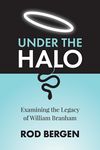
In 2012, we turned the Believethesign website from a site that promoted William Branham into one that examined him honestly. Barry Coffey responded that year from the pulpit at Hickory Bible Tabernacle with a six-part series called The Present Truth.
If you want to listen to all or part of the entire series, please click here. All of the timestamps in our article refer to the part of the series being examined. You are currently in the part of the series that is highlighted:
- Part 1 - The Test That Fails Its Maker
- Part 2 - The Photograph That Proves Too Much
- Part 3 - The Absolute He Would Not Apply
- Part 4 - What Heresy Actually Means
- Part 5 - The Dress Code He Condemned
- Part 6 - The Defense That Says "Stop Looking"
Barry said that some of his congregation had mentioned that "the message... and the messenger are both under attack," and that "attack seems to have intensified" (31:45). He was right about the timing. The website was the reason for the series.
So let's do what he asked. Let's look at whether there's a flaw. And let's do it the way he said he wanted it done: with the Bible open, gently, and honestly.
The Test That Fails Its Maker
A Response to Barry Coffey's "The Present Truth," Part 1
Near the end of Part 1 of the series, Barry Coffey issued an invitation. He was talking about someone who had written to him with doubts about the Message, and he described his own reply. "If there's a flaw in this message," he said, "you're obligated to tell me. I've told you all the truth I know over all these years" (1:30:43).
I want to take him at his word.
This is the first of six responses, one for each sermon in his series.
What Barry Coffey Actually Argued
I'm not going to build a strawman argument and I don't want to answer a caricature. Here is his argument, as fairly as I can state it.
Coffey's thesis is that God is bound by only one thing: His own word. Not by nature. Not by science. Not by what people think ought to happen. "God is not obligated to nature," he said. "God is not obligated to how you think it should be. God is obligated only to his word" (1:03:02).
From that foundation, he draws a conclusion about how we should respond to this website. Because God works supernaturally, and because the supernatural does not submit to natural investigation, the way to test the Message is not to research it but to "break into the spirit." He said it plainly: "Don't look in the natural, break into the spirit and see what's going on" (1:29:08). And more pointedly: "You will not get that on the computer screen" (54:24).
He illustrates this with the virgin birth (you could not have Googled it), with John the Baptist's baptism (it made no natural sense, but it was prophesied), with the shepherds and the angels (eternity breaking into time), and finally with William Branham's own accounts of the light on the Ohio River and the seven angels near Tucson.
It is a carefully built sermon. It is also, I believe, wrong in a way that Barry Coffey himself can help us see. Because the test he gives us in the middle of the sermon is a test the Message cannot pass. And he is the one who handed it to us.
Let's look at the evidence.
The Test Coffey Handed Us
About halfway through, Coffey does something important. He tells us how to know whether a supernatural claim is trustworthy.
He is talking about the private experiences of William Branham, the visions, the squirrels said to be spoken into existence, the events where Branham was alone. Nobody was there to verify them. So why believe them? Here is his answer:
"We just read to you how God would not use a hypocrite. God's not going to back a lie. So if Brother Branham had come out and told us a pack of lies about those squirrels, because none of us were there when it happened, then would God honor that? Well, no." (50:07)
This is Coffey's argument for trusting Branham's unverifiable claims is this: God would not back a liar. If the stories were lies, God would not have honored the ministry. Since God honored the ministry, the stories must be true.
I want to be fair to that reasoning. There is something biblical underneath it. Scripture does say a corrupt tree cannot bring forth good fruit. Coffey is not being foolish here. He is reaching for a real principle.
But watch what happens when we apply his principle to the very next stories he tells.
Applying the Test to the Arizona Cloud
Minutes after telling us God won't back a lie, Coffey reads a long account of the seven angels who supposedly met William Branham near Tucson in 1963. He quotes Branham describing the blast, the rocks tumbling, the angels lifting him up. Then he turns to his congregation and asks:
"Do you think he's making it up? Who was there? Who was there when this happened? Nobody was there, right? Just him and these angels." (1:24:21)
Nobody was there. That is the point Coffey wants to land. You can't check it, so you have to trust it, and you can trust it because God won't back a lie.
But here is the problem. This particular story is one we can check. And it does not hold together, not against the historical record, and not even against Branham's own words.
William Branham repeatedly claimed he was standing under the famous cloud, out hunting, at the moment it formed, when the angels departed. That is how he tied the cloud to the angelic visitation. But the facts are these:
- The cloud appeared near Flagstaff, Arizona, around sunset on February 28, 1963. Its southern edge was roughly ten miles north of Flagstaff, some two hundred miles from where Branham said he was hunting.
- According to the testimony of his own daughter, Rebekah Branham Smith, William Branham was at home in Tucson on February 28, not out hunting.
- The seven angels supposedly appeared to Branham on March 8, 1963, eight days after the cloud was photographed.
- Branham never mentioned any of this until after the cloud appeared in Life magazine that spring.
- His own account changed over time. The number of angels went from five to seven. The description of the constellation changed. His claim about whether he even noticed the cloud changed. His hunting companion Gene Norman later admitted they never saw the cloud at all.
I have documented all of this in Under the Halo, with the sermon dates and sources listed. I am not asking anyone to take my word for it. The primary sources are Branham's own sermons. I am asking that you check it for yourself.
Now put Coffey's test back on the table. "God's not going to back a lie." Branham told this story, and the story is false in its plain, checkable details. So one of two things must be true. Either God backs lies, which Coffey rightly denies, or William Branham was not speaking for God when he told it.
There is no third option. And notice: I did not invent the test. Barry Coffey did. I am simply applying it to the story he chose.
"Nobody Was There" Cuts the Other Way
Coffey builds a great deal on the fact that nobody witnessed Branham's private experiences. He treats this as a reason to trust them. If you can't disprove it, believe it.
But think about what that argument actually does. It moves the Message beyond the reach of any evidence at all. If the only claims that matter are the ones no one can check, then no claim can ever be tested, and no error can ever be found. That is not faith. That is a locked room.
And it ignores an inconvenient fact: many of Branham's claims can be checked. When we check them, they fail.
He said he saw a white horse standing guard at the grave of Muhammad, kept there for over a thousand years, awaiting the prophet's resurrection. There is no such horse. Islam does not teach that Muhammad will return on a horse. Branham was never in Medina, where Muhammad is actually buried.
He said he had circled the globe seven times. He had travelled around the world once.
He said he stood at the Vatican and personally read the words Vicarius Filii Dei above the papal throne. We will come back to that phrase, because it matters more than it first appears.
Here is the pattern. Where Branham's claims can be verified, they collapse. Coffey's response is to point us instead toward the claims that can't be verified and ask us to trust those. But why would anyone extend trust to the uncheckable stories of a man whose checkable stories keep turning out false? The direction of the evidence runs exactly opposite to where Coffey wants to lead us.
The Virgin Birth Was Not the Argument
Coffey's most persuasive move is the virgin birth. He walks through Matthew 1 and 2, showing that Jesus' birth broke every natural law, that "if you went to the internet in the days of Jesus, you wouldn't find a logical explanation for his birth" (1:02:53). His point: supernatural events don't answer to natural investigation, so stop investigating.
It is a moving passage. It is also answering a question nobody asked.
We have never denied that God acts supernaturally. We have never claimed that miracles must submit to a Google search. That is not the issue, and framing it that way lets the real question slip out the back door.
The real question is not "can God do the miraculous?" Of course He can. The question is narrower and simpler: did this man tell the truth about these particular claims?
And here the virgin birth actually works against Coffey, because of how it was authenticated. The virgin birth was foretold by a prophet centuries in advance. "Behold, a virgin shall be with child." It was announced before it happened, then fulfilled in the open, and confirmed by multiple witnesses. That is the biblical pattern.
Now compare William Branham. By his own admission, he did not announce his prophecies before they happened. He revealed them only afterward. "I usually just tell it after it happens," he said, in various forms, many times. That is the reverse of Isaiah predicting the virgin birth. It is the reverse of the standard God gave in Deuteronomy 18 and Jeremiah 28, where a prophet makes a public prediction and is judged by whether it comes to pass.
Coffey reaches for the virgin birth to defend Branham. But the virgin birth is exactly the kind of before-the-fact, publicly-verified prophecy that Branham never produced. The illustration convicts the man it was meant to defend.
A False Choice: The Spirit or the Search Engine
Running through the whole sermon is a single dividing line. On one side: the spirit, faith, revelation, the prophet. On the other: the internet, Google, the computer screen, "natural reasons." Coffey returns to it again and again. "God is not responsible for what's on the end of a search engine" (1:29:01). "You will not get that on the computer screen" (54:24).
I understand the instinct. But this is a false choice, and the Bible will not allow it.
When the apostle Paul preached in Berea, the people there did not simply "break into the spirit" and accept him. They "received the word with all readiness of mind, and searched the scriptures daily, whether those things were so" (Acts 17:11). They fact-checked an apostle. And Scripture does not scold them for it. It calls them "more noble" than the Thessalonians for doing it.
God Himself says, "Come now, and let us reason together" (Isaiah 1:18). He does not say "stop reasoning and feel your way to me." When Gideon asked for a sign, God gave it. When Thomas doubted, Jesus showed him the wounds and did not condemn the asking.
The Message has built a wall between faith and investigation, as if checking the facts were a spiritual failure. But the Bible treats honest investigation as a mark of a noble mind, not a carnal one. There is no verse that says God hides the truth from people who do their homework. Coffey looks for one, and he cannot find one, because it isn't there.
Testing a claim is not the enemy of faith. It is how the Bereans practiced it.
John the Baptist
Coffey's second great illustration is John the Baptist, but he misses something significant.
John the Baptist was convinced that Jesus was the Messiah, he was the one who baptized Jesus and saw the Dove descend. He heard the Father speak. But when he was in prison, he began to have some doubts.
How did Jesus deal with John's doubt?
Here is the story from Luke 7:18- 23:
- John’s disciples told him about all these things. Calling two of them, 19 he sent them to the Lord to ask, “Are you the one who is to come, or should we expect someone else?” When the men came to Jesus, they said, “John the Baptist sent us to you to ask, ‘Are you the one who is to come, or should we expect someone else?’ ” At that very time Jesus cured many who had diseases, sicknesses and evil spirits, and gave sight to many who were blind. So he replied to the messengers, “Go back and report to John what you have seen and heard: The blind receive sight, the lame walk, those who have leprosy are cleansed, the deaf hear, the dead are raised, and the good news is proclaimed to the poor. Blessed is anyone who does not stumble on account of me.” [1]
Jesus did not say, "How could you doubt me, John?" He did not tell him to just "break into the spirit." He did not condemn John for asking a very hard question.
What he did was point to the evidence and to tell John's followers to go back John the Baptist and tell him what they saw. They went back and presented the evidence.
Jesus did not condemn doubt or questioning. He simply pointed to the evidence.
The Parable That Turned Around
To make his case, Coffey tells a story from the Soviet era. A communist official comes to a village and announces that wheat production is up ten percent. A man named Minsky stands and asks, "Where is all the wheat?" There isn't any; it's a lie. The next year the official claims twenty percent, and Minsky asks again. The third year the official announces thirty percent, and when a man stands in the back, the official says, "I know you're Minsky." "No," the man replies, "my name is Pulaski. I want to know: where's Minsky?" (54:36)
Coffey's point is that people who "attempt to hide truth because they don't believe it themselves" will make the questioner disappear.
I don't think he noticed what he was saying.
Read the parable again. Who lies in it? The official. What is the lie? A claim that cannot be squared with the evidence in front of everyone's eyes. What happens to the man who keeps asking to see the evidence? He is made to vanish.
That is not a parable about a skeptical website. That is a parable about a movement that keeps announcing something the facts don't support, and that makes the honest questioner go away. If we are going to use Minsky, then let's be fair about it: those of us asking "where is all the wheat?" are Minsky. And the Message has been trying to answer us by explaining why we shouldn't be asking.
I'd rather be Minsky than the official.
Scripture Handled Rightly
Because this is a Bible study, and because Barry Coffey rightly says we should settle these things in the word, three passages need a closer look.
"Established in the present truth" (2 Peter 1:12).
Coffey uses Peter's phrase as the title and spine of his series, and he takes "present truth" to mean the end-time Message of William Branham. But read what Peter actually says. He tells his readers he will remind them of things "though ye know them, and be established in the present truth." The "present truth" is the truth that was already present with them, the apostolic gospel they had received, not a message that would arrive nineteen centuries later. And look at how Peter grounds their assurance in the very next verses. He does not say "break into the spirit." He points to eyewitness testimony: "we were eyewitnesses of his majesty" (1:16). Then he calls prophecy "a more sure word" (1:19), something confirmed, not something beyond checking. Peter's whole method in this chapter is the opposite of the sermon built on it.
"A reason of the hope" (1 Peter 3:15).
Coffey actually gets this verse right, at first. He notes that the Greek word is apologia, "the verbal defense... a reasoned statement or argument" (40:50). Exactly so. Peter commands believers to give a reasoned answer for what they believe. But having defined it correctly, Coffey spends the rest of the sermon telling people to do the opposite, to stop reasoning and break into the spirit. You cannot preach apologia and then forbid the very thing the word means. A reasoned defense is precisely what an honest examination of the facts requires.
"No prophecy of the scripture is of any private interpretation" (2 Peter 1:20).
This verse hovers behind the whole Message approach, the idea that only the prophet may interpret, so the rest of us must not investigate. But the verse teaches the reverse. Read verse 21: prophecy "came not... by the will of man: but holy men of God spake as they were moved by the Holy Ghost." Peter's point is that prophecy did not originate in the prophet's own imagination. It came from God. Which means the way you expose a false prophet is by asking whether his words actually came from God, or from himself. That is not a verse that shields Branham from scrutiny. It is a verse that demands it.
The Part That Is Hard to Write
I have saved one thing for the end, and I have thought carefully about whether to include it. I decided I had to, because it goes to the heart of Coffey's own argument, not to the man's character.
Coffey's sermon rests on two pillars: God will not back a lie, and you should trust credible witnesses who tell you what they have seen. He builds his case for the Message on the reliability of eyewitness testimony. Branham saw it, so it's true.
So let me tell you what Barry Coffey has seen. On July 3, 2024, from his own pulpit, he described a visit to Rome:[2]
"So I've been to Rome. Listen for a second. I've been to Rome and saw the chair where he sat. When I was a sinner and didn't know what it meant, but I saw the chair with the round back on it that said Vicarius Dei Filii. And it had... the inscription there, and it means, in a loose translation of the Latin, it means instead of Christ."
Notice what kind of claim this is. It is not "I read somewhere." It is not "Brother Branham said." It is "I've been to Rome and saw the chair." He even supplies a physical detail, the round back, to place himself at the scene. This is personal, first-person, eyewitness testimony. It is exactly the kind of testimony his sermon tells us to trust.
There is only one difficulty. It isn't true.[3]
The phrase has never been a title of the pope. It appears in no papal decree, no official document, no genuine tiara, and on no chair. This is not merely our claim. Catholic scholars have said so for decades. More striking still, it was the Seventh-day Adventists' own church historian, Le Roy Froom, who admitted back in 1948 that after examining many papal tiaras and their photographs, they had "failed to disclose one engraved with the inscription Vicarius Filii Dei." His words deserve to be heard in full: "No fabrication should ever becloud our presentation of truth... We cannot afford to be party to any fraud."
There is a further tell, and it is a small one, but it matters. Coffey did not even get the phrase right. He said Vicarius Dei Filii. The phrase he was reaching for is Vicarius Filii Dei. A man who had actually stood and read an inscription off a chair would not scramble the three words he had read. This is not the memory of something seen. It is the recitation of something absorbed, from Branham, who took it from Uriah Smith, who took it from a false tradition that cannot produce the artifact it describes.
William Branham made this same claim, word for word in substance: "I've been right there and seen it myself." Barry Coffey has now repeated it, as an eyewitness, more than a decade after the facts were laid out in plain view, including on the very website his 2012 series set out to answer.
I take no pleasure in writing this. I am not questioning whether Barry Coffey loves God, or whether he means well. I believe he does. This is not about the state of his heart, which I cannot see and will not judge. It is about the argument he made. His sermon asks us to trust the Message because God does not back liars, and because credible witnesses report what they have seen. The man making that argument has himself reported, as a personal eyewitness, something that did not happen.
The test he gave us is a fair one. God does not back a lie. I only ask that we apply it evenly: to William Branham, to the story of the seven angels, and yes, to the man in the pulpit. When we do, the same standard Coffey used to defend the Message is the standard that undoes it.
An Honest Invitation
Barry Coffey said that if there is a flaw in this message, we are obligated to tell him. I have tried to do exactly that, and to do it without contempt, because the people in those pews are not my enemies. Many of them are sincere. Many of them are people I love. Some of them, once, were me.
So I will end where he ended. He told the person who wrote to him, "I'm still waiting for you to tell me what's truer than what I've got." Here is my answer, and it is the oldest one there is.
What is truer is the gospel Paul preached before any self-proclaimed prophet came to Laodicea: that Christ died for our sins, was buried, and rose again, and that whoever believes on Him is saved. Not faith in a message. Not faith in a messenger. Faith in Jesus Christ, who really did break into time, whose birth was foretold, whose tomb was found empty in front of witnesses, and whose word invites you to search the scriptures daily to see whether these things are so.
You are allowed to ask where the wheat is. God is not offended by the question. He gave you a mind, and He said, "Come now, and let us reason together."
Let's keep reasoning. That's what the next five responses are for.
Footnotes
- ↑ The New International Version (Grand Rapids, MI: Zondervan, 2011), Lk 7:18–23.
- ↑ Barry Coffey, sermon of July 3, 2024. Youtube clip
- ↑ See "VICARIVS FILII DEI, which documents that the phrase has never been an official papal title, was never carved above the papal throne, and was never engraved on any papal tiara, mitre, or crown, together with William Branham's own claims to have "been right there and seen it myself."