Oneness

Oneness theology is a non-Trinitarian view of God that was rejected by the church in the third century AD. It is the fundamental belief of a minority of Pentecostal denominations and most churches that follow William Branham. Prior to the 20th century, the Christian church referred to the Oneness doctrine as Sabellianism, Patripassianism, Modalism or modalistic monarchianism.
If you are a follower of Oneness theology or are wanting to talk to someone who follows Oneness doctrine, you should first read our article on Cognitive Dissonance.
History of Oneness theology
Oneness Pentecostalism emerged in 1914 within the Assemblies of God, introducing a modalistic understanding of God and insisting on baptism in the name of Jesus Christ rather than the traditional Trinitarian formula. The movement traces its modern origins to April 15, 1914, when prominent leaders Frank Ewart and Glenn Cook publicly baptized themselves using the Jesus-name formula instead of the Trinitarian one. The theological seeds had been planted earlier through a baptismal sermon near Los Angeles in 1913, which Ewart then developed into systematic doctrine within a year.
The movement took organizational form in 1917 following expulsion from the Assemblies of God. In 1916, the Trinitarian-Oneness controversy led to the formation of the General Assembly of Apostolic Assemblies, which merged with the Pentecostal Assemblies of the World in 1918. Originally called the “New Issue” or “Jesus Only,” the movement adopted the designations “Jesus Name,” “Apostolic,” or “Oneness” pentecostalism by 1930.
The global Pentecostal and Charismatic movement represents over 25% of all Christians worldwide (just shy of 650 million) and is believed to be the fastest-growing religious movement in the world. It is estimated that somewhere between 2.5% to 5% of the Pentecostal group denies the doctrine of the Trinity.
Despite coming out of the Pentecostal movement, Oneness Pentecostalism remains relatively unknown among trinitarian Pentecostals.
What do Oneness Pentecostals believe?
The defining characteristic of Oneness Pentecostalism is its rejection of the Trinity in favor of a strictly unitarian conception of God. Rather than viewing the Trinity as three separate and equal members, Oneness Pentecostals believe Jesus constitutes the complete revelation of God, with Jehovah being identical to Jesus. The terms “Father,” “Son,” and “Spirit” function as manifestations of God for revelatory purposes rather than designating distinct members of the Godhead. Oneness followers are modalists, an ancient church heresy that God wore different “masks” depending on how He engaged with people — as Father, Son, or Spirit—meaning these three are not truly God’s own being but temporary appearances.
Salvation and Baptism
A second major distinction involves how Oneness Pentecostals understand the mechanism of salvation. They teach a “one blessing” approach where salvation, sanctification, and baptism in the Holy Spirit with tongues all occur simultaneously through water baptism by immersion in Jesus’ name. Most Oneness groups emphasize baptism and speaking in tongues as absolutely necessary to salvation, and they reject baptizing in the traditional Trinitarian formula (Matthew 28:19), insisting instead that genuine baptism occurs only in Jesus’ name.
Beyond these distinctive doctrines, Oneness Pentecostals affirm core evangelical convictions including Scripture’s authority, Christ’s incarnation and atonement, salvation through faith in Jesus, and — like other Pentecostals — the baptism of the Holy Spirit with tongues as initial evidence, spiritual gifts for today, and divine healing. They also emphasize outward holiness in lifestyle and dress.
Is Oneness theology false doctrine?
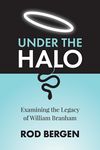
In Part 3 of our book, Under The Halo, we provide 5 characteristics of false doctrine:
- False doctrine is plausible;
- False doctrine is based on scripture;
- False doctrine is self-centered and self-focused.
- False doctrine is reductionist; and
- False doctrine is divisive.
We would now also add a 6th characteristic - false doctrine diverges significantly from the historic teaching of the Christian church.
All five are generally true of Oneness followers. The first three are rather obvious, but the last three deserve a bit more attention.
Reductionism
Reductionism is when truth is reduced or simplified to such an extent that the whole is lost. A portion of the truth becomes the main thing.
Here is Alan Hirsch on the subject:
- In its original meaning, the word heresy does not infer that someone is wrong or has believed a falsehood. Rather, it simply refers to a particular truth or belief that has been extracted from its true and complete context and is subsequently treated as if it were the whole truth. This explains why every heretic in the history of the church has had a verse or two of Scripture they rigidly hold to.
- Some of the sheep, and even some of the shepherds, may turn out to be wolves in disguise. And the attack will then take the form, not of direct contradiction or a clash of powers, but of distorting the truth. The greatest heresies do not come about by straightforward denial; most of the church will see that for what it is. They happen when an element which may even be important, but isn’t central, looms so large that people can’t help talking about it, fixating on it, debating different views of it as though this were the only thing that mattered.
- The point is that the so-called “heretic” really has (re)discovered some truth that has been lost, ignored, or suppressed. That is something to get excited about. However, the error in the heresy is in the exaggerated enthusiasm or preoccupation that ensues. The heretic becomes increasingly obsessive and sectarian by making the newly recovered particular truth into the whole truth. Its real meaning is obscured because it is separated from the greater Truth from which it has been extracted. Truth thereby becomes fragmented.[1]
This is very true within Oneness churches. They quote Acts 2:38 in almost every service. A reiteration of their divergent views on the Godhead and baptism occurs in almost every service.
Division
Oneness theology leads to division. Oneness ministers will generally not associate with trinitarians because they believe they are headed for hell. But this was not the position of Paul:
- I urge you, my brothers and sisters: watch out for those who cause divisions and upset people’s faith and go against the teaching which you have received. Keep away from them![2]\
- By the authority of our Lord Jesus Christ I appeal to all of you, my brothers and sisters, to agree in what you say, so that there will be no divisions among you. Be completely united, with only one thought and one purpose.[3]
- Give at least two warnings to those who cause divisions, and then have nothing more to do with them. 11You know that such people are corrupt, and their sins prove that they are wrong.[4]
Divergence from historic Christian teaching
Discussion of scriptures used by Oneness followers against the Trinity doctrine
Oneness proponents use these passages to prove their theology is correct.
Isaiah 9:6
One of the major proof texts for Oneness theology is Isaiah 9:6 which reads:
- For a Child will be born to us, a Son will be given to us;
- And the government will rest on His shoulders;
- And His name will be called Wonderful Counselor, Mighty God, Eternal Father, Prince of Peace.[5]
This is seen as proof that the Father's name is Jesus.
However, it is interesting when one looks at this same passage in the Septuagint, the Greek translation of the Old Testament, that is quoted by Jesus and the majority of the New Testament writers:
- Because a child was born to us; a son was given to us whose leadership came upon his shoulder; and his name is called “Messenger of the Great Council,” for I will bring peace upon the rulers and health to him.<ref>Rick Brannan et al., eds., The Lexham English Septuagint (Bellingham, WA: Lexham Press, 2012), Is 9:6.<ref>
What this means is that we can't rely on the exact wording of Isaiah 9:6 for the foundation of any doctrines. The exact wording in the original Hebrew is in doubt.
Scriptures which Oneness followers avoid
Logical problems with the Oneness position
Strawman arguments
Analysis of Oneness publications
We have provided the following critical analysis of the following Oneness publications:
Footnotes
- ↑ Alan Hirsch and Mark Nelson, Reframation: Seeing God, People, and Mission through Reenchanted Frames (100 Movements Publishing, 2019, 47-48
- ↑ American Bible Society, The Holy Bible: The Good News Translation, 2nd ed. (New York: American Bible Society, 1992), Ro 16:17.
- ↑ American Bible Society, The Holy Bible: The Good News Translation, 2nd ed. (New York: American Bible Society, 1992), 1 Co 1:10.
- ↑ American Bible Society, The Holy Bible: The Good News Translation, 2nd ed. (New York: American Bible Society, 1992), Tt 3:10–11.
- ↑ New American Standard Bible (La Habra, CA: The Lockman Foundation, 2020), Is 9:6.