We have our Bible and we have Jesus

This article is part of our series responding to the sermons of Barry Coffey, a Message pastor at Hickory Bible Tabernacle in Hickory, North Carolina. It examines comments he made near the close of his sermon "Manhood, Part 2," preached on March 25, 2026. You can listen to the sermon here. We also did a detailed analysis of his discussion of holiness from the same sermon - Prove all things.
All timestamps in this article refer to that sermon. Quotations are transcribed from the sermon audio and have been lightly edited to remove the false starts and repeated words of extemporaneous speech. None of the edits change his meaning, and I encourage you to listen for yourself.
We Have Our Bible and We Have Jesus
Near the end of a sermon on manhood, Barry Coffey told a story about someone who left the Message. This person had been raised in it their whole life, and when they explained why they walked away, they said something simple: "We have our Bible and we have Jesus."
Coffey has a practiced response to that, and he told his congregation he has used it on "many, many people" who say the same thing. He offers to set William Branham aside and reason from the Bible alone. Then he asks a question he plainly considers unanswerable.
Here is how he put it (1:29:43):
I was speaking to somebody who recently walked away from the message, been in the message all their life, walked away from it, and they said, "well, we have our Bible and we have Jesus." Okay, great. We have the Bible and we have Jesus. Let's just take Brother Branham out of the picture for a minute. Let's just go back to the Bible ... Tell me then, who is the fulfillment of Revelation 10:7? ... If it's not William Branham, and we've taken him off the table, we're not saying he's the messenger at all, but who is that? ... Who is Revelation 10:7? If it wasn't Brother Branham, who is it?
I want to take that question seriously, because the person who left deserves a real answer and so do you. I am not going to build a strawman. I am going to answer Barry Coffey's question directly, from the Bible he says he wants to reason from.
Here is where I am going. The person who left the Message did not fail Coffey's test. They passed it. "We have our Bible and we have Jesus" is not a dodge. It is the correct answer. Coffey asked them to name who fills a slot that the Bible never created, and when they wouldn't play along, he mistook a right answer for a missing one.
Let me show you why.
"Let's take Brother Branham off the table"
Watch the move carefully, because it happens fast. Coffey says he is setting William Branham aside. "We're not saying he's the messenger at all," he says. Branham is off the table.
And then, a breath later, Branham is the only name left on the table. The whole question, "if it wasn't Brother Branham, who is it?", only works if Branham is the presumed answer that the doubter has to unseat. Coffey did not actually remove him. He removed his own obligation to defend him, and handed the burden to the person who left.
That is not reasoning from the Bible alone. That is keeping Branham as the default and asking his critic to disprove him.
You cannot take a man off the table and still treat him as the answer.
The question that assumes its answer
Coffey's question sounds devastating:
"Who is the fulfillment of Revelation 10:7? If not Branham, who?"
But notice what the question smuggles in. It assumes that Revelation 10:7 predicts a single, identifiable, end-time human messenger, someone walking the earth right now whom we are obligated to name. That assumption is the entire thing in dispute. It is the very claim the person who left had already rejected.
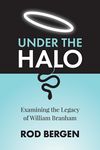
A question built on its own conclusion is what logicians call begging the question, and it is a fallacy. I did not invent that label for this occasion. I used it in Under The Halo to describe the identical move Message followers make about Elijah:
When confronted with the overabundance of evidence that William Branham was not who he claimed to be, Message followers often ask, "If William Branham wasn't the fulfillment of Malachi 4:5, then who is?" This question is posed indirectly to maintain William Branham's status as the last prophet of the Gentile age. If we can't find anyone better, William Branham must be that prophet. But this is begging the question.[1]
Coffey has simply run the same play with a different verse. "If not Branham, who fulfills Revelation 10:7?" is "If not Branham, who is Elijah?" wearing a new hat. And the answer is the same in both cases. Why must we assume the slot exists at all? Before you can be asked to name who fills it, someone has to show you from scripture that the Bible actually promises it. So let's do what Coffey said he wanted to do. Let's go to the Bible.
What Revelation 10:7 actually says
Here is the verse in the King James, the Bible the Message uses:
But in the days of the voice of the seventh angel, when he shall begin to sound, the mystery of God should be finished, as he hath declared to his servants the prophets.[2]
Read in context, this verse does not describe a twentieth-century prophet. It describes an angel with a trumpet. Let me walk through it.
The seventh angel is one of the seven trumpeting angels
The "seventh angel" of Revelation 10:7 is not introduced in Revelation 10. He is introduced back in Revelation 8, where seven angels are given seven trumpets:
And I saw the seven angels which stood before God; and to them were given seven trumpets.[3]
The first six of these angels sound their trumpets in order through Revelation 8 and 9. The first angel sounds (8:7), the second (8:8), the third (8:10), the fourth (8:12), the fifth (9:1), the sixth (9:13). When we reach the seventh, he is the next one in that same sequence. He is a supernatural being, exactly like the other six.
The Greek word for "angel" in Revelation 10:7 is angelos. It is the same word used for every one of the trumpeting angels in Revelation 8:6. Branham taught that this particular angel was a man, an "earthly messenger," while the other six were heavenly. But the text gives no such distinction. Do a simple word study and you will see it plainly. The word is the same.
"When he shall begin to sound"
The King James phrase "when he shall begin to sound" hides the timing, so I want to footnote a more literal rendering. The Greek is best translated "when he is about to sound."[4] In Revelation 10:7 the seventh angel has not yet blown his trumpet. He is getting ready to. He is standing there with the trumpet raised.
That single detail matters enormously, because it tells us where in the story we are.
The trumpet does not sound until Revelation 11:15
If the seventh angel is only "about to sound" in Revelation 10:7, when does he actually sound? The Bible tells us exactly. He sounds one chapter later:
And the seventh angel sounded; and there were great voices in heaven, saying, The kingdoms of this world are become the kingdoms of our Lord, and of his Christ; and he shall reign for ever and ever.[5]
And look at what stands between Revelation 10:7 and Revelation 11:15. It is the account of the two witnesses, who prophesy, are killed, and are resurrected before the seventh trumpet sounds.[6]
So here is the plain reading. The seventh trumpet sounds only after the two witnesses of Revelation 11 have finished their ministry and left the earth. William Branham cannot be the seventh angel of Revelation 10:7, because the two witnesses of Revelation 11 have not yet come. The events that must precede this angel's trumpet have not happened. There is no way to read Branham into this passage without lifting the angel out of his own chapter and dropping him into a story that has not started.
Branham borrowed this from Charles Taze Russell
There is one more fact worth knowing, and it should stop any honest inquirer in their tracks. William Branham was not the first man to claim to be the seventh angel of Revelation 10:7. Charles Taze Russell, the founder of the movement that became the Jehovah's Witnesses, claimed it first. In The Finished Mystery, published by his followers in 1917, we read:
But in the days of the voice of the seventh angel. — Pastor Russell was the seventh angel. — Rev. 3:14.[7]
Russell tied Revelation 10:7 to Revelation 3:14 and applied both to himself. Branham used the same interpretation and applied it to himself. Two different men, two different surnames, one identical reading of the verse, each pointing to the man teaching it. When the same proof text can be aimed at two rival claimants, it is not proving either one. It is being used.
Russell was the first to use it. Did William Branham simply copy and approriate the "revelation" to himself?
The pressure behind the question
If the argument itself does not hold, why does it work so often in the moment? Because Coffey does not ask his question in a calm room. He surrounds it with pressure. I want to name three of these, because I think they are worth recognizing the next time someone puts this challenge to you.
"I'm the last person afraid of truth"
Coffey says (1:31:19): "I'm the last person who's afraid of truth. If you've got a truth that I don't know, I pray you tell me ... And if you've got more truth and you don't give it to me, what kind of a Christian are you?"
This sounds humble and, open. In practice it flips the burden onto the person who left and quietly puts their character on trial. If you cannot satisfy his question on the spot, you are now the one withholding truth, and maybe not much of a Christian. That is a great deal of weight to hang on a doubter's silence, especially when the silence is really just an unwillingness to accept a loaded question.
We have waited 14 years for Barry to respond to us. I'm not sure his statement is correct. Why is he afraid to talk to us? I am going to send a message today to Barry inviting him to an online discussion of his defense of the Message. Sadly, I already know he won't even give me the courtesy of a response.
"Where are you going to go?"
Coffey then reaches for fear (1:32:15):
"Paul said they should all say peace and safety and then sudden destruction coming. What are you going to do in sudden destruction? Where are you going to go in a time of sudden destruction?"
He is quoting 1 Thessalonians 5:3 accurately.[8] But notice that this does nothing to establish that Branham was the seventh angel. It only raises the emotional cost of saying "no." A frightening question is not the same thing as a true argument. If the Revelation 10:7 claim is false, then no amount of "where will you go?" makes it true.
Was leaving really lukewarmness?
Finally, Coffey casts the decision to leave as spiritual apathy (1:32:53):
"the Bible even says that you're better off being hot or cold instead of lukewarm."
He is alluding to the Lord's words to Laodicea.[9] But that passage rebukes self-satisfied, complacent religion, the church that thinks it "has need of nothing." It says nothing about loyalty to a particular prophet. And the person Coffey is describing was not lukewarm at all. They examined what they had been taught their whole life, weighed it against scripture, and made a costly decision to follow Christ and the Bible. Whatever that is, it is not apathy. Coffey has taken a considered act of conscience and relabeled it as indifference so that Revelation 3 can be pointed at it.
They already gave the right answer
Let me come back to where we started, because the answer was there the whole time.
Coffey demanded that the person who left name the human fulfillment of Revelation 10:7. But we have now read the passage, and there is no human fulfillment to name. The seventh angel is a heavenly being holding a trumpet he has not yet blown. He sounds in Revelation 11:15, after the two witnesses. He is not a prophet from Indiana, and he is not a pastor from anywhere else either. The slot Coffey wanted filled does not exist. There is nothing to "reconcile."
So when the person said, "we have our Bible and we have Jesus," they were not avoiding the question. They were giving the only faithful answer to it. Take Branham off the table, really off, and go to the Bible, and what you are left with is exactly what they said: the Scriptures, and the Lord Jesus Christ they reveal.
And here is the part I most want you to hear if you are weighing this yourself. You are not left with less. Every believer in Jesus has received the Holy Spirit, and the Spirit of God living in you is greater than the spirit of Elijah resting on any prophet.[10] You do not need a man to stand between you and God as the messenger you must accept to be saved. You have the Word, and you have the Holy Spirit, and you have the Son. That is not a downgrade from the Message. It is the gospel the Message obscured.
Coffey asked, "who is it, if not Branham?" The Bible's answer, and the answer of the person who walked away, is the best answer a Christian can give.
We have our Bible, and we have Jesus. That is enough. It always was.
See also
- Revelation 10:7
- The Fulfillment of Malachi 4:5
- The Laodicean Church Age Messenger
- The Two Witnesses of Revelation 11
- Was William Branham Honest
- An Analysis of William Branham's Visions and Prophecies
- Leaving The Message
Footnotes
- ↑ Rod Bergen, Under The Halo: Examining the Legacy of William Branham, Chapter 16, "If William Branham Wasn't Elijah, Then Who Is?" See also The Fulfillment of Malachi 4:5.
- ↑ Revelation 10:7 (KJV).
- ↑ Revelation 8:2 (KJV). Compare Luke 1:19, where Gabriel says he is the one "that stand in the presence of God." These are heavenly beings.
- ↑ Revelation 10:7 (NASB): "but in the days of the voice of the seventh angel, when he is about to sound, then the mystery of God is finished." The Greek phrase is best rendered "when he is about to sound his trumpet." See Craig R. Koester, Revelation, Anchor Yale Bible 38A (New Haven: Yale University Press, 2014), 480.
- ↑ Revelation 11:15 (KJV).
- ↑ Revelation 11:3–12. See The Two Witnesses of Revelation 11.
- ↑ Charles Taze Russell, The Finished Mystery (Brooklyn: People's Pulpit Association, 1917). Russell also tied Revelation 10:7 to Revelation 3:14, exactly as Branham later did. See Revelation 10:7 for the full quotation and analysis.
- ↑ 1 Thessalonians 5:3 (KJV): "For when they shall say, Peace and safety; then sudden destruction cometh upon them."
- ↑ Revelation 3:15–16.
- ↑ See Under The Halo, Chapter 16. Compare Matthew 11:11, where Jesus says the least in the kingdom of heaven is greater than John the Baptist, and John 14:16–17 and Acts 2 on the gift of the Holy Spirit to every believer.