Prove all things
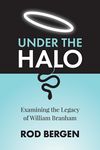

This article continues our series responding to the sermons of Barry Coffey, a Message pastor at Hickory Bible Tabernacle in Hickory, North Carolina. It examines the closing minutes of his sermon "Manhood, Part 2," preached on March 25, 2026, where he turns to the subject of holiness. It is a companion to We have our Bible and we have Jesus, which responds to comments from the same sermon. You can listen to the sermon here.
All timestamps refer to that sermon. Quotations are transcribed from the sermon audio and lightly edited to remove the false starts of extemporaneous speech, without changing his meaning. I encourage you to listen for yourself.
Prove All Things
In the closing minutes of his sermon on manhood, Barry Coffey warned his congregation about breweries. He said he needed to "get touchy," and then he made his case (1:26:20):
I think it's important that we learn what it means to avoid the very appearance of evil ... No matter where you go in North America, there's breweries everywhere ... I'm not sure a brewery is such a great place for you to be hanging around, as a Christian ... And the Bible says that we should avoid the very appearance of evil. But everybody's doing it. That's exactly why we need to question that, because we don't take our cues from the cosmos.
He then drew the line tight (1:28:57):
We are holiness people or we're not. And if we're going to throw holiness out, let's throw it all out, because you can't throw part of it out and still be holy. The Bible tells us if we reject one word, we reject all of it, right?
I want to look closely at this, because three things are happening here, and none of them survives a careful reading of the Bible. Coffey leans on a verse that does not say what he uses it to say. He skips the sentence right beside it that says the opposite. And he finishes with a rule, "reject one word and you reject all of it," that is not in the Bible at all.
Let me take them in order.
"Abstain from all appearance of evil"
The verse Coffey is reaching for is 1 Thessalonians 5:22. In the King James it reads:
Abstain from all appearance of evil.[1]
For generations this verse has been read as though it means "avoid anything that might look bad to somebody watching." That is how Coffey uses it. A brewery might look bad, so a Christian should stay away, lest someone see them there and think evil.
But that is not what the verse says. The word the King James renders "appearance" is the Greek eidos, which means a kind, sort, or form of something.[2] Paul is not talking about how things look to onlookers. He is talking about the many forms evil can take. The command is to stay away from evil itself, in all its varieties. Modern translations make the actual Greek meaning of the text plain: "abstain from every form of evil," "reject every kind of evil."
You can see it in the sentence right before, which Coffey did not read. The full thought is "hold fast that which is good; abstain from all appearance of evil." Hold on to the good, let go of the evil. The contrast is good against evil, not genuine against apparent. Being seen somewhere is simply not the thing this verse addresses.
The verse is about evil, not about optics. It asks whether a thing is evil, not whether someone might guess that it is.
The sentence Barry Coffey skipped
Here is where it becomes striking. Look at what Paul actually wrote, the three verses together:
Despise not prophesyings. Prove all things; hold fast that which is good. Abstain from all appearance of evil.[3]
Coffey quoted the last line. He left out the line before it. And the line before it is a command to do the very thing he was discouraging.
The subject of this passage is how to respond to prophetic claims. Do not despise prophecy, Paul says, but do not swallow it whole either. Test it.
"Prove all things." Examine everything that is put in front of you, keep what proves good, and abstain from what proves evil.[4]
That is not a call to stop asking questions. It is a call to ask them.
And notice who Paul is writing to. He is writing to the Thessalonians. He tells the Thessalonians themselves to prove all things. When the Bereans later "searched the scriptures daily, whether those things were so," Luke praised them as more noble than the Thessalonians had been.[5] The whole New Testament instinct runs in one direction here.
So consider the irony. **The passage Barry Coffey used to discourage a doubter from questioning is a passage that commands questioning.** It says, in the same breath, "prove all things." The person who examined what they had been taught and weighed it against scripture, the person I wrote about in We have our Bible and we have Jesus, was not disobeying 1 Thessalonians 5. They were obeying it.
The winebibber problem
There is a further difficulty with Coffey's reading, and it is a serious one. If "abstain from all appearance of evil" meant "never be seen where sinners gather to drink," then the Lord Jesus Christ broke it.
The Son of man came eating and drinking, and they say, Behold a man gluttonous, and a winebibber, a friend of publicans and sinners.[6]
Jesus went to the tables and the gatherings where tax collectors and sinners were. He did it deliberately, and it cost him his reputation among the religious. The appearance was against him. They called him a drunkard and a glutton. The reality was that he had come to seek and to save the lost, and the only way to reach the lost was to be found among them.
A reading of a verse that would have condemned Jesus for the company he kept is a reading that has gone wrong somewhere. Whatever "abstain from all appearance of evil" means, it cannot mean something that would have kept Christ out of the rooms he chose to walk into.
I am not making a case for the brewery. Barry Coffey says he is not sure it is a good place to hang around, and honestly, it may not be my favorite place either. But my preference is not a command of God, and neither is his. He says three times that he is not telling anyone what to do, and then tells them. The discomfort is his to have. It is not Scripture, and it should not be preached as though it were.
"If we reject one word, we reject all of it"
Which brings us to the last and most serious move. Coffey told his people, "if we reject one word, we reject all of it," and he introduced it with "the Bible tells us."
The Bible does not tell us that. William Branham did.
Here is where the phrase comes from:
Now, we must believe It. One Word off of It, and we lose our fellowship, go off into death, eternal separation from God, just as Adam and Eve did. We must believe God's Truth.[7]
This is Branham's "one word off" teaching. It rests on his claim that Eve believed all of God's Word except one word, and that this single word is what brought the fall. Message preachers have used it ever since to keep people afraid. If you are "one word off," you will not make the rapture. Coffey has handed his congregation a Branham doctrine and told them it was the Bible.
It is worth being clear about what the Bible actually says on this subject. The warnings against adding to or taking away from God's words are real. But they are about God's Word, the Scriptures, not about a movement's code of conduct.[8] That distinction is the whole game, because watch what Coffey has quietly done. He has stacked a chain of terms on top of one another until they all look like the same thing: a brewery, the appearance of evil, holiness, "one word," "all of it," in or out. Step over the first link and you have supposedly abandoned the last. But not one of those links is welded to the next in the text. He has taken a personal conviction about a building and made it a test of salvation.
That is exactly what the Bible warns against. Paul told the Colossians that rules like "touch not; taste not; handle not" have "a shew of wisdom" but no real power over the flesh.[9] He told the Romans that "the kingdom of God is not meat and drink; but righteousness, and peace, and joy in the Holy Ghost."[10] Biblical holiness is not a list of forbidden places. It is being set apart to God, made holy in Christ, and growing to look more like him.[11] See also Legalism, The Rules of the Message, and The Message Dress Code.
Holiness was never a fence
Let me give Barry Coffey his due on one point, because he is right about it. He said, "we don't take our cues from the cosmos." A Christian is not called to follow the crowd, and Paul says as much: "be not conformed to this world."[12] I have no interest in defending worldliness, and neither did the person who left the Message.
But the cure for worldliness is not a longer list of forbidden buildings. The cure is Christ. You do not become holy by staying out of a brewery, and you do not lose your soul by walking past one. Holiness is not manufactured by avoidance. It is the work of God in a person who is walking with his Son.
The real tragedy of "one word off" is what it does to people who love God. It teaches them to live afraid, forever measuring their standing by a code they can never quite keep, instead of resting in what Christ has already done for them. That is not the gospel. That is a weight the gospel came to lift.
So I would say to anyone weighing this: do what Paul told the Thessalonians to do. Prove all things. Test the fence you were handed. Hold fast to what is genuinely good. And what is genuinely good is not a rule about breweries.
Holiness was never a fence you keep. It is a Person you follow.
See also
- We have our Bible and we have Jesus
- Legalism
- Are Message Ministers modern day Pharisees?
- The Rules of the Message
- The Message Dress Code
- Mixing Law and Grace
- Fallen From Grace
- Leaving The Message
Footnotes
- ↑ 1 Thessalonians 5:22 (KJV).
- ↑ Modern translations render the verse accordingly. ESV and NASB: "abstain from every form of evil." NIV: "reject every kind of evil." The Greek eidos denotes a kind or form, and the parallel with the preceding clause ("hold fast that which is good") sets the contrast as good versus evil, not real versus apparent.
- ↑ 1 Thessalonians 5:20–22 (KJV).
- ↑ See D. A. Carson and others on 1 Thessalonians 5:19–21; the passage concerns weighing prophetic utterances rather than accepting them uncritically. Paul tells the church to test the prophecies, hold fast the good, and reject the bad.
- ↑ Acts 17:11 (KJV).
- ↑ Matthew 11:19 (KJV). See also Luke 7:34.
- ↑ William Branham, quoted in Rod Bergen, Under The Halo: Examining the Legacy of William Branham, Glossary, "One word off." (Rod, the primary sermon reference is footnote 951 in your book and can be dropped in here.)
- ↑ Deuteronomy 4:2; Revelation 22:18–19. These warnings concern the words of Scripture, not extrabiblical rules of dress, drink, or conduct.
- ↑ Colossians 2:20–23 (KJV).
- ↑ Romans 14:17 (KJV).
- ↑ 1 Peter 1:15–16; Hebrews 12:14; Galatians 5:22–23.
- ↑ Romans 12:2 (KJV).