The Diagnosis That Could Not Heal
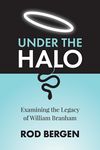
This is the first in a series examining the June 2026 sermons of Richard Hyatt. This article looks at a single claim from his Wednesday evening sermon of June 17, 2026, titled "The Atonement." A recording is available here. All timestamps in this article refer to that sermon. For related articles, see Was William Branham's discernment ministry genuine? and How many people were healed in Branham's meetings?.
Richard Hyatt did something in his sermon that I respect. He did not ask his congregation to take his word for anything. He read them a transcript, a long one, and he let William Branham speak for himself. It was a prayer line. Branham was standing in front of a sick woman, and Richard Hyatt wanted his people to hear the gift at work.
So let us hear it. And let us grant every word of it.
"You're ready for an operation"
In the recording, Richard Hyatt reads Branham's words to the woman at the platform. Branham tells her there is "a dark shadow" hanging between them. Then the diagnosis:
- "You're ready for an operation, aren't you? It's for tumors. It's under your arm. Serious. Only God can help you. That's the truth, isn't it?"
Branham lays his hands on her, at the very place, he says, "where a knife is to rip." And then he prays. Read his prayer carefully, because Richard Hyatt read it aloud and it is worth reading again slowly:
- "Almighty and gracious God, spare the life of this woman. Will you please, Father? ... Hear the prayer of your servant ... please, in Jesus' name, spare her life and let her live, and we will praise thee for it, in Jesus' name. Amen."
Then Branham sends her away: "God bless you, sister. Go happy on your road."[1]
Notice what is in that account, and notice what is not.
What is in it is a diagnosis. Tumors, under the arm, serious enough for surgery. What is not in it is a healing. Branham does not tell the woman she is healed. He asks God to "spare her life." He hopes she will "live." He sends her home, and the transcript ends, and we never learn whether she lived or died.
Richard Hyatt presents this as evidence of the gift. And on his own terms, it is fair to ask what the gift actually did. It named a disease. It did not remove one.
The question the sermon never asks
The whole sermon is built on a single promise. Richard Hyatt quotes Branham approvingly: "divine healing was included in the atonement."[2] He says healing and salvation are "two sides of the same coin." He says, "whatever you have need of is in the atonement." He tells his congregation that if they will simply believe, they will receive it, and then "walk in it and claim it each and every day."
So the promise on the table is not modest. The promise is healing. That is the point of the prayer line. That is the point of the sermon.
Which means there is one question that settles everything, and the sermon never asks it.
Did she live?
The Bible is not shy about this question. When John the Baptist sat in prison and sent his disciples to ask whether Jesus was the one, Jesus did not point to a diagnosis. He pointed to results. "The blind receive their sight, and the lame walk, the lepers are cleansed, and the deaf hear" (Luke 7:22). When Peter met the lame man at the gate called Beautiful, the proof was not that Peter knew what was wrong with him. The proof was that the man stood up and walked (Acts 3). When Jesus healed the man born blind, the argument was over before it started, because the man could see (John 9).
In Scripture, the word of knowledge and the healing came together. The healing is what proved the word. A gift that can name the tumor but cannot take it away is not the pattern of Jesus or the apostles. It is the reverse of it.
Pronounced healed, then buried
If the June 17 sermon were the only account we had, we might wonder whether that one woman was the exception. She was not. The record of William Branham's healing campaigns is well documented, and much of it comes from people who supported him.
William Branham himself claimed enormous numbers. He spoke of ten thousand healed, of "twenty-five thousand healings at once," of "thirty or forty thousand healed with one prayer."[3] Those are the claims. Here is the evidence.
In 1947, Reverend Alfred Pohl, a minister in Saskatchewan, watched people whom Branham pronounced healed die of the very ailment they were supposedly healed of. He recorded a friend standing beside his wife's deathbed and asking him:
"You were there beside my wife's bed the night Mr. Branham prayed for her and pronounced her healed. Can you tell me why my wife who was healed just a few days ago is now in the grave?"[4]
In 1948, W. J. Taylor, a district superintendent with the Pentecostal Assemblies of Canada, asked for a formal investigation. He believed that the numbers of people healed were vastly overstated. Taylor thought well of Branham personally, but still concluded: "I firmly believe there is a possibility that this whole business is wrong."[5]
In 1956, Doyne Miller published Modern Divine Healing, reporting on Branham's 1951 campaign in South Africa. Miller told of people who died before their "healing" was even printed in the newspaper. He told of tuberculosis patients pronounced whole who had not been cured. F. F. Bosworth, one of Branham's own team, reported in the Herald of His Coming that Branham had discerned a doctor's leukemia and pronounced him well. By the time Bosworth published the report, the doctor had been dead for two months.[6] Miller's conclusion was that a person "can come to no other conclusion than that the cures claimed are so largely exaggerated as to be almost fraudulent."
And then there is the witness I find hardest to wave away, because he was on Branham's side of the platform. Walter Hollenweger was a respected Pentecostal historian who served as an interpreter for Branham during a campaign in Switzerland. He was not a critic looking in from outside. He was standing right there. This is what he wrote:
- "He possessed an extraordinary diagnostic gift and could identify the illnesses (sometimes even the names) of persons he had never seen. Unfortunately, his healing prognosis was accurate only in rare cases ... by contrast to what he claimed, only a small percentage of those that sought healing were actually healed."[7]
The gift could name the disease. It rarely removed it.
That is not the testimony of enemies. That is the testimony of the men who believed.
A test that cannot fail
Now here is where the June 17 sermon turns on itself, and I want to show it carefully, because it is the heart of the matter.
When a sick person was not healed, the healing evangelists always had an answer ready. Hollenweger named it: "The patient did not really believe; for they were convinced that faith leads automatically to health." Ern Baxter, who managed Branham's campaigns before he left, put his finger on the same thing. He said the whole system had quietly turned faith in God into "faith in your faith."[8]
Read Richard Hyatt's own sermon again with that in mind. His mechanism is exactly this one. Believe, and you receive. Claim it every day. If the healing does not come, the shortfall is never in the promise. It can only be in your believing.
Look at what that does. It means no failed healing can ever count against the claim. The woman with the tumors dies, and it was her faith. The doctor with leukemia dies, and it was his faith. The wife in the grave, the tuberculosis patient, the small percentage Hollenweger counted, all of it gets charged to the account of the sick. The promise is protected no matter what happens in the hospital.
A promise that can explain away every failure by the sufferer's own unbelief is not a promise you can test.
And a gift that cannot be tested is not the gift of the Bible. The gift of the Bible was tested constantly, in public, by results, and it passed. That is the whole difference between evidence and "just believe." Evidence can be checked. Faith in your faith cannot fail, because it is built so that it never has to.
One more question
I want to raise one more question, and then I am going to leave it with you, because you are as able to weigh it as I am.
Branham's diagnoses were often strikingly detailed. Names. Home towns. Specific ailments. His supporters point to that detail as proof that the gift was supernatural, and Richard Hyatt is pointing to exactly that when he reads the tumor account. So it is fair to ask a plain question. Where did the detail come from?
Here is one fact that is not in dispute. Every person in Branham's prayer line had first filled out a card. A prayer card. On it went their name, their address, and what was wrong with them. And people were admitted to the line in strict order, by the number on that card.[9] They were told not to get out of order.
I am not going to tell you what to make of that. I am going to set the facts next to each other and ask you to look at them honestly. The cards existed. They held the person's name, town, and ailment. The order was kept strict and by number. The information written on the card and the information spoken from the platform were the same information. In the video, Deep Calleth Unto Deep, we see Billy Paul Branham, who knew what was on the prayer cards, having a conversation on the platform with his dad. William Branham prayed for very few people while Oral Roberts prayed for hundreds every night. Why?
You draw your own conclusion. I only ask that you be honest with yourself while you draw it.
Why this matters
I am not writing this to mock the woman with the tumors, or the thousands who walked those lines carrying real pain and real hope. I believed this message for most of my life. I would have stood in that line myself and counted it a mercy.
And I am not writing to wound Richard Hyatt. He strikes me as a sincere and warm-hearted man, and he told his own congregation something I wish more Message ministers would say: do not just take somebody's word for it. Test it. He said that. I am simply asking him, and you, to let the test run all the way through.
Here is the test, and it is the one Branham invited when he stood in front of that woman. If the gift was of God, the healing should have followed the diagnosis, the way it followed in the ministry of Jesus and the apostles. It should have followed reliably, and publicly, and often enough to survive the hospital records and the graveside. Instead, by the count of Branham's own friends, the diagnosis rarely became a healing.
The Bible knows a gift that names the sickness and also takes it away. William Branham had the first half. He did not have the second.
Naming a tumor is not healing it.
Test everything. Hold fast to what is good (1 Thessalonians 5:21). The Bereans were called noble for doing exactly that, searching the Scriptures to see whether the things they were told were so (Acts 17:11). I am asking you to be a Berean here. Look at the evidence for yourself.
See also
- Was William Branham's discernment ministry genuine?
- How many people were healed in Branham's meetings?.
Footnotes
- ↑ Richard Hyatt, "The Atonement," Wednesday, June 17, 2026, at approximately 1:05:37 through 1:12:05. [INSERT CLIP LINK].
- ↑ Hyatt, "The Atonement," approximately 34:00 through 39:00, reading from William Branham's sermon "The Manifestation of the Spirit."
- ↑ William Branham's own estimates, compiled in Rod Bergen, Under the Halo, chapter "The Tent Vision."
- ↑ Alfred Pohl, quoted in Under the Halo, "The Tent Vision."
- ↑ W. J. Taylor, District Superintendent, Pentecostal Assemblies of Canada, 1948; see Under the Halo, "The Tent Vision."
- ↑ Doyne Miller, Modern Divine Healing (1956), and F. F. Bosworth, Herald of His Coming, February 1952; see Under the Halo, "The Tent Vision."
- ↑ Walter Hollenweger, quoted in Under the Halo, "The Tent Vision." Hollenweger interpreted for William Branham during a campaign in Switzerland.
- ↑ Ern Baxter and Walter Hollenweger, quoted in Under the Halo, "The Tent Vision."
- ↑ The use of numbered prayer cards containing the name, address, and ailment of each person is documented in Under the Halo, "The Tent Vision."