Responding to Jesse Smith - Six Questions
Jesse Smith set out to answer six Believe the Sign questions and prove William Branham was a genuine prophet. He was respectful, and he told his listeners the feedback was "all positive." So let's take him seriously and test the answers. When you do, the same handful of broken moves shows up in all six: assuming the very thing that needs proving, relabeling failed predictions as "conditional," reversing the burden of proof on the bridge, and softening specific failed visions into "most likely fulfilled." The bear was never shot. The men never drowned. The tent was never raised. Here is a careful walk through of each answer, and why the reasoning underneath will not hold weight.
When the Answers Are Worse Than the Questions: A Response to Jesse Smith
On April 13, 2024, Jesse Smith, pastor of Bride of Christ Fellowship in Akron, Ohio, released a video titled Answering Six Believe the Sign Questions, Proving William Branham is a Genuine Prophet of God. Two days later he replayed the audio on his Defending the Message podcast and added some opening remarks. He told his listeners he had received "all positive feedback."
I want to take his answers seriously. He asked us to, and he deserves that courtesy. He was respectful (for the most part), and I will try to be as well. But taking an argument seriously means testing it, and when you test these six answers, they fall apart. Not because Jesse Smith is a bad man. He clearly believes what he is saying. They fall apart because the reasoning underneath them is broken.
Let me show you what I mean. We will go through his answers one at a time. I am not going to hide behind rhetoric. I am going to point to the evidence, name the reasoning problem, and let you decide.
Before we walk through his answers, here are the six questions Jesse Smith was responding to, in his own words:
- Can you please show us where William Branham is vindicated as a prophet of God scripturally?
- Why did William Branham change his mind and his doctrines through his ministry on topics such as the Trinity and water baptism and the verbal formulae?
- Can someone who claims to be a prophet of God have prophecies and visions that have failed to come to pass?
- Can someone who claims to be a prophet of God teach that which directly opposed Scripture?
- Can someone who claims to be a prophet of God lie in the name of the Lord?
- Where scripturally is it that the new covenant relationship with Jesus Christ requires a Gentile prophet?
Let's look at the evidence.
Answer One: "Revelation 10:7 proves he's a prophet"
Jesse Smith's first answer to "Where is William Branham vindicated as a prophet scripturally?" is Revelation 10:7 and Amos 3:7. He repeats it twice in his opening remarks, calling it the clear scriptural proof.
Here is the problem, and it is the biggest problem in the whole video. It is circular.
Revelation 10:7 says the mystery of God will be finished "in the days of the voice of the seventh angel." To use that verse as proof, you first have to assume that William Branham is the seventh angel. But whether William Branham is that messenger is the very question we are trying to answer. You cannot prove the claim by assuming the claim. Logicians call this begging the question. It is not a small technical foul. It is the load-bearing beam of the entire Message, and it will not hold weight.
Notice what the verse actually says in its own context. The seventh angel of Revelation 10 is one of the seven trumpet-angels of Revelation, a heavenly being sounding a trumpet in a vision. Reading a twentieth-century man from Indiana into that figure is not exegesis. It is eisegesis. It is reading your conclusion back into the text.
Amos 3:7 has the same trouble. "Surely the Lord GOD will do nothing, but he revealeth his secret unto his servants the prophets." That verse tells us God works through prophets. It does not name William Branham. It cannot, because it was written roughly 2,700 years before he was born. Quoting it proves God has prophets. It does not prove this man was one.
So Answer One does not vindicate anyone. It assumes what it was asked to demonstrate.
Answer Two: "He changed his doctrines because he was growing in grace"
The second question asked why William Branham reversed himself on major doctrines like the Trinity and water baptism. Jesse Smith's answer is 2 Peter 3:18, "grow in grace and in the knowledge of our Lord and Savior Jesus Christ," and John 16:13, the Spirit guiding us into all truth. He points to the apostle Peter as a man who grew.
I agree completely that every believer grows. I have. So have you. But watch the move being made here, because it quietly swaps one thing for another.
Growing in grace means coming to understand more over time. It does not mean announcing that God told you one thing, and then later announcing that God told you the opposite. And that is exactly what we are dealing with. William Branham did not offer these teachings as his best current understanding. He stamped "Thus saith the Lord" on them. He claimed direct divine revelation.
You cannot have it both ways. If God revealed doctrine A by direct revelation, and later God revealed the contradiction of doctrine A by direct revelation, then either God contradicted Himself, or the man was never hearing from God in the first place. "Growing in grace" describes a student. It does not describe a mouthpiece who quotes God on both sides of a reversal. The 2 Peter passage is being asked to cover a problem it was never about.
The Trinity and the Council of Nicaea
Inside this same answer, Jesse Smith makes a historical claim I have to stop on, because it is simply not accurate. He says the Trinity "was started over 300 years after the apostles" and, echoing William Branham, ties it to the Council of Nicaea in AD 325.
That is not what happened at Nicaea. Nicaea was convened to deal with Arianism, the teaching of a man named Arius who said the Son was a created being. The council affirmed that the Son is of the same substance as the Father. It did not invent the Trinity. The Trinity was already the worshiping faith of the church.
The evidence is not hard to find. Theophilus of Antioch used the Greek word trias, "triad," of God around AD 180. Tertullian was writing in Latin about the trinitas, three persons in one substance, around AD 200, more than a century before Nicaea. And the triune pattern is right there in the pages of the New Testament, in the baptismal command of Matthew 28:19, "in the name of the Father, and of the Son, and of the Holy Ghost," and in the apostolic benediction of 2 Corinthians 13:14.
Whatever you conclude about the doctrine itself, the historical claim that Nicaea created it in the fourth century is false. William Branham built an argument on bad history, and Jesse Smith has repeated it.
As for Hebrews 1:3, which Jesse Smith cites to say there is "only one person in the Godhead," the verse does the opposite of what he needs. It says the Son is "the express image of his person." That sentence has two parties in it. There is the One whose person is imaged, and there is the Son who images Him. A verse that distinguishes the Son from the Father is a strange verse to use for proving they are the same person.
Answer Three: The failed visions, and the "conditional prophecy" escape hatch
This is the heart of it. Question three asked whether a genuine prophet can have prophecies and visions that fail. Jesse Smith answers no, and then insists William Branham had no failures. Every apparent failure, he says, was a "conditional promise of God."
He leans on two Bible stories. Isaiah told Hezekiah he would die, and Hezekiah lived another fifteen years. Jonah announced Nineveh's destruction, and Nineveh was spared. If those count as conditional, he argues, then the Brown Bear vision was conditional too.
Here is what that argument leaves out.
Isaiah's word to Hezekiah and Jonah's word to Nineveh were warnings of judgment. Warnings of judgment carry a built-in condition, and the Bible tells us so plainly. God says in Jeremiah 18:7-8 that when He pronounces judgment on a nation, and that nation repents, He relents. That is the whole point of a warning. It exists to be heeded. Nineveh repented. Hezekiah prayed and wept. The condition is repentance, and in both stories the person or nation being warned actually repented.
Now apply that to the Brown Bear vision. William Branham said, on tape, that he would return to British Columbia and shoot a giant brown bear, "that's Thus saith the Lord." He said, "You find out if that's right or not." He staked it on the phrase that means God guaranteed it. He never shot the bear. He returned to British Columbia and came home without it, again, and then he died with the vision unfulfilled.
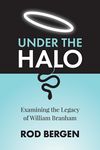
So where is the condition? For the Hezekiah and Jonah escape hatch to work, somebody has to repent. Who repents in the bear story? As I put it in Under the Halo, this rationale would require us to believe that the brown bear repented of its evil ways and was therefore spared. There is no scriptural precedent for God relenting of a vision because a bear got right with God. The analogy does not just limp. It collapses.
Message ministers have offered a different escape, that the vision failed because William Branham disobeyed. He reportedly told his hunting companions, "I am the Jonah in this group." But look what that does. It makes "Thus saith the Lord" weaker than one man's obedience, and it hands every false prophet in history a permanent alibi. Any failed prediction can now be explained with, "I'm sorry, I disobeyed, so it didn't come to pass. You can't call me false." A test that can never be failed is not a test.
And here is the piece Jesse Smith never mentions to his audience. William Branham himself said the one-strike test applied to him. These are his words: "One time, in all the times that it's ever told anything, that didn't come to pass just exactly the way it said, well now, you pin a sign on my back as a false prophet and I'll walk through your streets." He set the standard. He said if even one thing failed, call him false. Jesse Smith is now working very hard to lower the bar that William Branham himself raised.
Answer Three, continued: "You can't prove the bridge didn't happen"
On the Municipal Bridge vision, Jesse Smith makes a revealing argument. He says the accusers "cannot prove beyond a shadow of a doubt that this did not happen because they were not there physically." Then he compares it to Moses. If you trust government records over the prophet, he says, then Moses never led the Exodus either, because Egypt's records don't mention it.
Two reasoning problems, stacked on top of each other.
First, the burden of proof is backwards. William Branham is the one who made the positive claim. He said he saw sixteen men fall from the Municipal Bridge and drown, and that the vision was fulfilled "precisely." When you assert that sixteen men drowned, the burden is on you to show it, not on me to prove a negative. Demanding that critics "prove beyond a shadow of a doubt" that something did not happen is a classic reversal. It is how every unverifiable claim protects itself.
Second, this is not a case of missing records. This is a case of records that contradict the story. I did the work. The bridge was completed on time and on budget. Contemporary newspapers reported that two men died during construction, not sixteen, and neither of them drowned. No section of the bridge ever fell into the Ohio River. When I asked the well-known Message pastor Pearry Green for historical evidence, he told me William Branham had stood underneath the bridge and pointed out the very section that fell. When I pressed for evidence, he said, "The prophet of God wouldn't have lied to me."
I understood where Pearry was coming from. He had no reason to doubt the man. But notice that his answer is the same circle we started with. He believes the story because a true prophet said it, and he knows the man is a true prophet because of stories like this one. The Moses comparison does not rescue it. We have abundant independent testimony to Israel's history across the Scriptures. For sixteen drowned bridge workers we have the opposite: newspapers and construction records that say it never happened.
No section of the bridge ever fell into the Ohio River. Two men died, and neither drowned. That is the evidence.
Answer Three, continued: "Most likely fulfilled"
Watch the language Jesse Smith uses on the other visions. The India vision of 300,000 was "most likely fulfilled" in the 1954 Bombay trip, where the mayor's estimate was "probably an exaggeration." The Tent Vision was "most likely fulfilled" when William Branham preached the Seven Seals in 1963.
"Most likely." "Probably." This is what moving the goalposts sounds like. A vision with a specific number, 300,000, gets counted as fulfilled by a crowd estimate the speaker admits was probably inflated. A vision of a literal traveling tent revival, with a literal "little room" where the sick would be healed, gets counted as fulfilled by a preaching series that involved no tent at all.
And here is the tell. William Branham's own most devoted followers do not agree with Jesse Smith. Entire subsects of the Message, the "Returned Ministry" and Joseph Coleman's "Seven Thunders" group among them, teach that the Tent Vision is still future, waiting to be fulfilled when William Branham is resurrected or when the "Bride" carries it out. They believe he has to come back to do it. You cannot have it both ways. Either the Tent Vision was fulfilled in 1963, as Jesse Smith says, or it is still unfulfilled and awaited, as the Message itself teaches. It cannot be both.
I wrote this line in Under the Halo, and I stand by it. If you believe your prophet can't fail, human ingenuity will always come up with a rationale to maintain the belief while ignoring the failure. "Most likely fulfilled" is that rationale wearing its Sunday clothes.
Answer Three, continued: The Seven Seals and the "38 differences"
On the charge that William Branham took his Seven Seals teaching from Clarence Larkin, Jesse Smith answers with a count. There are "over 38 differences," he says, and only the sixth seal matches Larkin. So it can't be plagiarism.
This is a red herring, and it is worth understanding why. Plagiarism is not disproven by the parts that differ. It is proven by the parts that match. If a student copies three paragraphs of an essay and rewrites the rest in his own words, pointing at the rewritten pages does not clear him of the three he copied. The differences are not the question. The overlaps are. Listing what is different is a way of steering your eye away from what is the same. It answers a charge that was never made.
We would ask this simple question of Jesse Smith:
You're a school teacher. If one of your students handed in an essay that was clearly copied verbatim in places from another source, would you accept this excuse from your pupil? If they said, "Yeah, I copied it, but there are also 38 differences in my essay from the source I copied from, so it's not plagiarism." What grade would you give the paper?
By any reasonable teaching standard, you would fail them.
And that's why William Branham's claim that he received his revelations directly from God must be called out for what they are - blatant plagiarism.
Answer Four: "A prophet can teach against Scripture, but only in minor things"
Question four asked whether a true prophet can teach something that directly opposes Scripture. Jesse Smith answers yes, but only on "nothing major," and he introduces a distinction between "major and minor sins." His proof text is Galatians 2, where Paul rebuked Peter.
Two problems again.
First, that major-versus-minor framework is being read into Deuteronomy 18, not drawn out of it. Deuteronomy 18:22 makes no such distinction. It does not say a prophet may speak minor falsehoods in God's name as long as they are small ones. It says if the thing does not come to pass, "the LORD hath not spoken it." Once you allow a prophet to be wrong "in minor things" while speaking for God, you have quietly abolished the test. Who decides what counts as minor? The follower who has already decided the man is a prophet. This is special pleading, an exception invented to protect a conclusion.
Second, the Galatians 2 example does not fit. Peter's failure there was not a false doctrine preached under "Thus saith the Lord." It was hypocrisy in his conduct. He withdrew from eating with Gentiles out of fear, and Paul called him out for not being straightforward about the gospel he already knew and had preached. Peter never claimed God told him to separate from the Gentiles. William Branham, by contrast, attached direct divine authority to his teaching. A man behaving inconsistently with what he knows is not the same as a man claiming God revealed a falsehood. The comparison breaks on the very point that matters.
Answer Five: "A true prophet cannot lie in the name of the Lord, and he never did"
Question five asked whether a prophet can lie in the name of the Lord. Jesse Smith says no, and then adds, "Brother Branham never lied in the name of the Lord... I've never seen Brother Branham lie in the name of the Lord."
Do you see the circle closing again? A true prophet cannot lie in the Lord's name. William Branham was a true prophet. Therefore he never lied in the Lord's name. Therefore he is a true prophet. Round and round. The conclusion is smuggled into the premise.
But this answer is not just circular. It is contradicted by the evidence we have already walked through. "Thus saith the Lord" on a brown bear he never shot. "Thus saith the Lord" on sixteen men who never drowned. "Thus saith the Lord" on a tent vision his own followers admit never came to pass. These are not my accusations dropped on an innocent man. These are his words, stamped with God's authority, measured against what actually happened. Jesse Smith says the only lying going on is the accusers lying about the prophet. I would gently ask him to weigh the tape against the record before he says that again.
Answer Six: The chain of verses for a "Gentile prophet"
The final question asked where Scripture requires a Gentile prophet for a relationship with Jesus Christ. Jesse Smith runs a long chain of verses: Revelation 10:7, Luke 21:24, Romans 11:25, Malachi 4:5-6, Matthew 17:11, Acts 3:20-21, Luke 17:30.
Step back and notice what is happening. Not one of those verses mentions a Gentile prophet. Not one. The phrase appears in none of them. What Jesse Smith is doing is assembling verses that mention Gentiles, verses that mention Elijah, and verses that mention restoration, and then linking them into a doctrine none of them states on its own. That is not what the texts say. It is a framework built between the texts and then attributed to them.
The core assumption, that a Gentile Elijah must forerun the second coming, is once again begging the question. Why must we assume that at all? The whole case rests on Malachi 4:5-6, so let's actually read it.
Malachi opens by naming its audience: "The burden of the word of the LORD to Israel by Malachi" (Malachi 1:1). Not to Israel and the Gentiles. To Israel. Reading a Gentile mission into Malachi is reading something into the text that the text's own first sentence rules out.
Then there is the "great and dreadful day." William Branham built his two-Elijahs theory on the word "dreadful," arguing it points to the second coming. But "dreadful" is a weak translation. The Hebrew yare' carries the sense of awe and reverence, which is why the HCSB and ESV both render it "awesome." When Peter quotes this same Joel-and-Malachi material in Acts 2:20, the day is called "notable." An awesome or notable day is not necessarily the end of the world. Pull that word, and the whole two-comings structure loses its footing.
And Jesus already told us who fulfilled Malachi's Elijah. "Elias is come already, and they knew him not" (Matthew 17:12). He was speaking of John the Baptist, as Matthew 17:13 says explicitly. When Jesus uses the future tense in verse 11, "Elias truly shall first come," He is quoting the Septuagint wording of Malachi, not predicting a second Elijah two thousand years later. The Message reads a future tense as a future prophet. It is simply Jesus citing the verse as it was written.
One more thing, because it matters for the whole "Gentile prophet" idea. William Branham claimed there had "never been on the pages of history, a Gentile prophet." That claim is false. Columba, the sixth-century missionary, is credibly recorded as exercising prophetic gifts. Branham even confirmed this. The foundation stone of the "no Gentile prophet before me" argument is a historical error.
The tell at the end: "71 preachers left Jesus"
I want to close on the argument Jesse Smith returns to more than once, because it reveals the machinery underneath everything else. People who leave the Message, he says, left because they were in "sinful message churches." And then, "over 71 preachers left Jesus. 70 left him and Judas Iscariot left him."
This is where argument stops and the door quietly locks.
First, the factual sloppiness. The Bible does not record "70 preachers" abandoning Jesus. Jesse Smith seems to be blending the seventy that Jesus sent out in Luke 10, who were commissioned, not apostates, with the "many disciples" who turned back in John 6:66, a number never given. Judas is a third, separate figure. The "71 preachers" is a number assembled from unrelated passages.
But the real problem is what the argument is designed to do. It reframes every person who examined the evidence and walked away as an evil apostate on the level of Judas. It does not answer a single question about the bridge, or the bear, or the tent. It poisons the well. It tells the faithful that doubters are not people who looked at facts and found them wanting, but wicked men who abandoned Christ. Once you believe that, you never have to weigh what they found. You have been given permission to stop listening.
That is the same move as the evil spirits Jesse Smith attributes to the accusers earlier in the video, and the "seducing spirits," and the claim that critics "aren't even preachers, so they don't have a gift to rightly divide the word of God." These are not arguments. They are reasons not to have the argument. When the case is strong, you engage the evidence. When the case is weak, you attack the people asking.
What this all comes to
Look back over the six answers and you will see the same handful of moves, over and over.
The case begins by assuming the very thing it was asked to prove, in Revelation 10:7. It relabels failed predictions as "conditional" in a way that would clear every false prophet who ever lived. It reverses the burden of proof on the bridge, then ignores the records that contradict the story. It softens specific, failed visions into "most likely fulfilled." It answers plagiarism by pointing at the parts that differ. It invents a "minor sins" exemption that Deuteronomy 18 never grants. It builds a Gentile-prophet doctrine out of verses that never mention one. And when the reasoning runs out, it turns on the people asking the questions.
I am not writing this to wound anyone. I spent years inside this movement. I believed these answers once, and I would have nodded along with Jesse Smith. If you are reading this from inside the Message, I am not your enemy, and neither is Believe the Sign. We are asking you to do the one thing William Branham said he welcomed. He said to pin a sign on his back if even one thing failed to come to pass exactly as he said.
Things failed. The bear was never shot. The men never drowned. The tent was never raised.
The questions were simple. The answers should have been simple too. Instead they required six different ways of not looking at the evidence. That, by itself, tells you something.
Scripture citations follow the King James Version except where another translation is named. Historical and documentary claims regarding the Municipal Bridge, the Brown Bear vision, the Tent Vision, and the Seven Seals are documented in Under The Halo: The Visions and Prophecies of William Branham(2024). Direct quotations from Jesse Smith are transcribed from his Defending the Message podcast episode of April 15, 2024.
Footnotes