Responding to Jesse Smith - Donny Morton
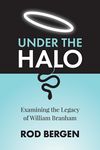
This is a critique of Jesse Smith's Defending the Message podcast, "The Donny Morton Reader's Digest Accusation v. William Branham — Did THUS SAITH THE LORD Fail?" (released Jan 15, 2026; podcast Jan 20, 2026)
Note: Timestamps [M:SS] refer to the uploaded transcript. Factual corrections are drawn from Under the Halo.
1. The Core Problem: The Argument Is Rigged Before It Starts
The single most important flaw sits at the center of the episode, and everything else grows out of it. At [27:02] Smith states his ground rule:
"The only possible explanations I'm willing to look at are the ones that assume Brother Branham was a faithful, genuine, true prophet of God."
This is the conclusion he claims to be arguing for, installed as a premise he refuses to test. It is textbook circular reasoning. The question on the table is whether Branham's "Thus Saith the Lord" failed. Smith answers it by ruling out, in advance, every explanation in which it did. No evidence could ever move him, because he has defined the disqualifying evidence as inadmissible.
Notice what this does to his two "possible explanations" [27:38]–[28:35]:
- Branham was right, and Reader's Digest covered up the healing and the hospital's fatal negligence.
- Branham "got his stories mixed up," and the healing prophecy was really for a different boy.
Both "explanations" are engineered to preserve the conclusion. He has not weighed hypotheses; he has listed two ways of saving the same belief. The one hypothesis a fair inquiry must include — the prophecy failed — is the one he refuses to write down.
This is the frame to expose first. Every later move (dismissing records, dismissing the family, attacking critics) is downstream of a decision to never let Branham be wrong.
2. Logical Fallacies and Flawed Argumentation
2.1 The self-defeating "mixed-up stories" theory [28:29]–[30:31]
Smith's preferred conclusion is that Branham "got his stories mixed up" and the "Thus Saith the Lord" healing "was probably for a different boy and not Donnie Morton."
He does not seem to notice that this concedes the accusation. Branham did not say "a boy was healed." Branham repeatedly attached God's own authority to Donnie by name: "the Holy Spirit spoke, Thus Saith the Lord, and the baby got well" and "the boy was made normal" (quoted in Under the Halo, Ch. 3). If a prophet can stand up and pin "Thus Saith the Lord" to the wrong child — a child who then dies — the prophecy has failed as delivered. A prophet whose divine dictation cannot reliably identify which boy God healed is, by definition, an unreliable prophet. Smith's rescue destroys the thing it was built to protect.
It is also produced with zero evidence. There is no "other boy." The theory exists only because it is the shape a defense has to take.
2.2 Special pleading against every hostile source [7:41], [7:53], [33:16]
Watch which evidence Smith accepts and which he throws out:
- Government records (the middle-name change): "we cannot make government records Thus Saith the Lord"
[7:44]. - Reader's Digest (a national magazine that investigated the story): dismissed as a possible cover-up
[27:47]. - The Morton family: "if indeed this family member was being honest"
[28:51]. - Branham's own uncorroborated recollection: accepted as reliable enough to override all of the above.
The only source held to a lower standard of proof is the one making the claim under dispute. That is special pleading — a different, easier bar for your own side. A CPA reading a file this way would flag it immediately: the auditor is disregarding every independent record and trusting only the party with the motive.
2.3 The "he just forgot / said the wrong word" reflex — applied to everything
Across the episode, every documented error becomes an innocent slip:
- Lied "time and time again" → "most likely he just forgot the details"
[6:36]. - "Have Brother Mercer revise the prophecies" → "he probably meant rewrite them"
[6:59]. - Middle name changed → "could have been forged. We don't know"
[7:34]. - "Satan was Eve's designer" → "simply used the wrong word... probably what Brother Branham meant"
[9:47].
This is an unfalsifiable defense. If any error can be reclassified as a misremembered word, then no error can ever count against him — which means the "prophet" claim can never be tested. Note also the double standard: Smith extends this infinite charity to Branham while, in the same breath, treating the critics' documented citations as deliberate slander [7:09].
2.4 Poisoning the well: the attack on the critics' character [20:42]–[23:21]
An entire section is devoted to the character of the accusers: they watch "filthy Hollywood movies," "enjoy vampires," "Halloween, rock and roll," support "non-binary relationships," call their podcasts "juicy." He closes: "By their fruit they are known" [23:19].
None of this touches the facts. Whether a critic watches a vampire movie has no bearing on whether Donnie Morton was healed, whether the FBI employed George Lacy, or whether a draft card says "Marvin." This is the genetic fallacy — attacking the source to avoid the argument. It is also a tell: when the evidence is being handled honestly, you don't need to first establish that the other side likes Halloween.
2.5 The "seven Thus Saith the Lord came to pass" shield [11:57], [28:46], and throughout
Smith's recurring move is to answer this accusation by pointing to seven other prophecies he says succeeded. This is a non-starter. Under his own operative standard — a true prophet's word cannot fail — a hit rate is irrelevant. One failure is fatal. Under the Halo makes the point sharply (Ch. 3): Branham used "Thus Saith the Lord" over 1,600 times; "if it failed even once, he must be considered a false prophet." Smith needs the standard to be Branham's batting average; scripture (Deut. 18) makes it pass/fail. Also worth noting: the "seven" are asserted, never enumerated or defended in the episode, and Under the Halo documents several of Branham's supposed successes (the Municipal Bridge, the 1933 visions' 1977 deadline, the cloud) as failures or retroactive claims.
2.6 The Moses/Egypt false analogy [7:45], [33:16]
"If that's the case, Moses never went to Egypt because there's no government Egyptian record of Moses bringing two million people out of Egypt."
This equivocates between two different things:
- Absence of evidence (no surviving ancient Egyptian record of the Exodus).
- Presence of contradicting evidence (a 1940 U.S. draft card, Branham's own document, giving his middle name as "Marvin," against his public claim of "Marrion").
Nobody is asking Branham to produce a record that is merely missing. They are pointing to a record that exists and says something different from what he claimed. The analogy collapses because it swaps a silent archive for a contradicting one. (Per Under the Halo, Ch. 1, the draft card is the only public legal document of his middle name, and it reads "Marvin.")
2.7 Conspiracy as a universal solvent [26:32], [30:11]
When the record contradicts Branham, Smith reaches for a hidden cover-up: Reader's Digest "didn't tell the full truth" and suppressed a lethal hospital blunder [26:32]; the Municipal Bridge death records were a "cover-up" [33:10]. These conspiracies are invoked precisely where evidence is absent, and they are unfalsifiable by design — the lack of corroboration is re-read as proof of a successful cover-up. That is not an argument; it is an immunity spell.
2.8 Shifting the burden of proof [6:34], [9:56]–[10:22]
"You can't prove Brother Branham lied on purpose."
The claim under examination is Branham's — that God healed Donnie. The burden sits with the one asserting the miracle, not with the one noting the boy died. Smith inverts it, demanding critics prove intent while he asserts innocence without proof. The same move powers his closing "gotchas": "Show me one Bible verse that says godly women should cut their hair... that God is three persons" [9:56]. Demanding your opponent disprove a negative is not evidence for your position; it is a rhetorical stall.
2.9 Motivated reasoning, stated aloud [10:32], [12:57]
Smith is candid that this study was "so hard for me to understand," "off again, on again," requiring prayer to resolve [10:32]. He also tells us he has "written two books" and "built my entire life and ministry" on Branham [12:57]. That is a direct conflict of interest with the question he is adjudicating. A difficult puzzle that resolves, every time, in the direction that protects the researcher's life's work is a signal that the conclusion is driving the analysis — not the reverse.
2.10 The Kenneth Hagin double standard [1:34]–[2:05]
Hagin's prophecy is waved away because "Hagin was an undoubtable false teacher," so "I don't put any weight on the testimony of Kenneth Hagin." But whether Hagin warned Branham is a question of fact, independent of Hagin's doctrine. More telling is the inconsistency: Smith excuses Branham's own unorthodox doctrines as misspoken words, yet uses doctrinal error to disqualify Hagin's testimony outright. The standard flips depending on whose credibility is at stake.
Jesse Smith IGNORES the FACT that the Hagin prophecy was confirmed by a third party AND he ignores the prophecy of Anna Schrader.
3. Factual Misrepresentations (checked against the record)
3.1 George J. Lacy and the FBI — the clearest factual error [8:48]–[9:04]
Smith says:
"George J. Lacey worked for the FBI as an independent contractor... he was not employed by the FBI, but he did contract work for the FBI. Brother Branham wasn't lying."
This is false, and it actually understates Branham's original claim. Branham did not say "a contractor." Branham claimed Lacy was "the head of the FBI in fingerprints and documents, the best there is in the world" (Under the Halo, Ch. 1). And per the same source, the FBI stated in 1974 that they had no knowledge of the Houston photograph and had never employed Lacy. There is no evidence Lacy did "contract work for the FBI"; Smith appears to have invented a middle position to soften a claim the FBI itself denied. This is the episode's cleanest example of a defense manufacturing facts.
3.2 The Arizona Cloud "prophesied two months in advance" [5:48], [33:44]–[34:01]
Smith says Branham called the cloud a "snow-white pyramid" and prophesied it "two months in advance."
The record (Under the Halo, Ch. 8) does not support a prophecy:
- Branham's pyramid-of-angels vision (Dec. 21, 1962) never mentioned a cloud, and he never linked it to a cloud during the seven seals series. The cloud connection was made after the Feb. 28, 1963 cloud appeared. That is retroactive claiming, not prediction.
- The number of angels in the vision changed from five to seven after Branham spoke with Lee Vayle on Dec. 26, 1962 — evidence the vision was being edited, not reported.
- The cloud has a documented cause: an Atlas rocket ("Pitch Pine") and a later Thor rocket launched from Vandenberg AFB on Feb. 28, 1963; the U.S. Air Force later confirmed in writing that unburned propellant produced the cloud.
So the "two months in advance" prophecy is a claim built backward from an event with a known, non-supernatural cause.
3.3 The middle name [7:29]–[7:41]
Smith: "could have been changed and it also could have been forged. We don't know." As noted in 2.6, the only public legal document is a 1940 draft card reading "Marvin," against Branham's public "Marrion." Under the Halo (Ch. 1) raises the plausible motive: Branham wanted a seven-letter middle name to match his first and last (a numerology tied to his Church Age teaching). "It could have been forged" is speculation offered to neutralize a document, with no evidence of forgery.
3.4 Minimizing the Morton family witness [28:46]–[29:24]
Smith reduces the family's testimony to "one of the accusers claims to have spoken to Donnie Morton's family member... if indeed this family member was being honest." The record is more specific: in August 2018 Denelda (Morton) Clayton, Donny's sister, stated directly (Under the Halo, Ch. 3): "What William Branham said about my brother — that he was healed, that he wore the shoes that my dad bought him, or that he came running to my dad after he was prayed for — none of it was true." She adds that her parents never knew what Branham claimed, "because they would have been very upset and made sure the truth was known." A named, on-record sibling is not the anonymous, doubtfully-honest "family member" Smith describes.
3.5 The timeline softened [24:59]–[25:31]
Smith allows that "Donnie Morton died the same year." The documented timeline (Under the Halo, Ch. 3): Branham pronounced him healed around June 1951; Donny underwent surgery and three further brain operations, contracted pneumonia in his weakened state, and died Nov. 1, 1951 — less than five months after the pronouncement. Smith also repeats Branham's "open window/draft/pneumonia" story [26:32] as though it were a competing account of equal weight, without noting the four operations or that the story was, per the book, uncorroborated and self-serving.
3.6 The "article never says a miracle" gambit [14:01]–[15:02]
Smith argues that because the Reader's Digest article's "miracle" was the awareness of a new surgical procedure, Branham simply "didn't understand the full article," and so we can't say his prophecy failed. This is a non sequitur wrapped around an equivocation on the word "miracle." Branham's prophecy did not depend on the article. Branham independently and repeatedly declared, on his own authority, "Thus Saith the Lord... the baby got well" and "the boy was made normal." The article's editorial framing is irrelevant; the disproof is the boy's death and the family's testimony. Smith uses "the article is ambiguous about a miracle" to smuggle in "so Branham's failed prophecy is unknowable" — two entirely different claims.
4. Scriptural Misinterpretation
4.1 Deuteronomy 18:20–22 turned upside down [17:58]–[18:06]
Smith cites Deut. 18:19–22 as proof Branham is genuine because "he has seven Thus Saith the Lord that came to pass." But Deut. 18 is not a scoring system that rewards a high pass rate. It is a disqualifier: "when a prophet speaketh in the name of the Lord, if the thing follow not, nor come to pass... the prophet hath spoken it presumptuously." One failed word in the Lord's name marks a false prophet. Smith invokes the very passage that condemns his subject and reads it as vindication by quietly deleting the failure clause. Under the Halo (Ch. 3) applies the text correctly.
4.2 Category error: personal sin vs. false prophecy [3:04]–[3:34]
Smith's opening defense — "every single prophet of God in the Bible... all had human mistakes," citing Abraham's lies and David's adultery and murder — conflates two unrelated categories. Deut. 18 concerns prophetic accuracy: words spoken in God's name. Abraham's lie about Sarah and David's sin with Bathsheba were moral failings; neither man ever prefaced those acts with "Thus Saith the Lord." Scripture nowhere excuses a false word spoken in God's name on the grounds that prophets are sinners. The comparison changes the subject from "did his prophecy fail" to "was he a flawless human," which no one claimed.
4.3 John the Baptist misused [33:35]–[33:45]
"Prophets can get confused with visions just like John the Baptist. He said, is this the Messiah or do we look for another?"
John's question from prison (Matt. 11:2–3) was a moment of personal doubt under duress, not a false prophecy. John never declared "Thus Saith the Lord, Jesus is not the Messiah." Doubt in a cell and a failed public prophecy in God's name are not the same category. The example is deployed to make "prophetic confusion" sound biblically normal so that Branham's contradictions look ordinary.
4.4 The unfalsifiable Ezekiel "translation" [8:31]
"Brother Branham could have been caught up by translation under the cloud because Ezekiel had that experience and there were no witnesses to Ezekiel's translation."
This weaponizes Ezekiel's visionary experiences to license an invisible, unverifiable miracle — precisely because "there were no witnesses." An argument whose whole appeal is that it can never be checked is not evidence; it is the manufacture of an unfalsifiable escape hatch, dressed in a proof text.
4.5 2 Chronicles 20:20 as a blank check [33:57]
The episode closes on "Believe his prophets, so shall ye prosper." In context this is Jehoshaphat rallying Judah to trust God's genuine prophets before battle. It presupposes the prophet is authentic; it cannot be used to establish that Branham is authentic without begging the question. Applied this way, the verse would command belief in any self-declared prophet — the exact error Deut. 18 exists to prevent.
4.6 "By their fruits" pointed the wrong way [23:19], [18:16]
Smith repeatedly invokes Matt. 7 — "by their fruit they are known" — against the critics. But Jesus frames that test as a way to detect false prophets, and the paradigmatic bad fruit in the Torah's own prophetic test is a word that fails to come to pass (Deut. 18). A prophecy that failed — Donnie's healing — is exactly the fruit Jesus says to watch for. The proof text, honestly applied, points back at Branham.
4.7 Doctrine of convenience: healing theology rewritten mid-defense [15:51]–[17:00]
To explain why a "healed" boy died, Smith says Branham "grew in his understanding of divine healing" and stopped saying "any positive attitude toward a promise of God would bring it to pass." So the theology that undergirded the original claim is quietly retired the moment it produces a failure. Paired with the "lose their healing" doctrine [cf. Under the Halo Ch. 3] — for which, as the book notes, there is no scriptural example in the ministry of Jesus or the apostles — this is a system that adjusts its rules after the fact to absorb any outcome.
5. Summary: The Recurring Pattern
Strip away the topics and one machine is running underneath the whole episode:
- Assume the conclusion (Branham is a true prophet; only Branham-friendly explanations allowed).
- Raise the bar for critics, lower it for Branham (dismiss records, magazines, and the family; trust Branham's memory).
- Reclassify every failure as an innocent slip ("forgot," "wrong word," "different boy," "cover-up").
- Change the subject when cornered (attack the critics' character; recite the "seven that came to pass").
- Enlist scripture that, read in context, argues the other way (Deut. 18, Matt. 7, 2 Chron. 20:20).
The tragedy Smith accidentally documents is that even his best defense — "he mixed up the stories" — requires admitting that Branham stood before people and attached "Thus Saith the Lord" to a healing that never happened, for a boy who died within months. By the standard Smith himself quotes, that settles the question.
Verification note
Every factual correction above is drawn from Under The Halo (Chapters 1, 3, 5, 8), and every characterization of Smith's argument is tied to a timestamp in the podcast transcript so it can be checked against his own words.
Footnotes