The Quack Druggist Analogy
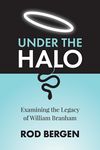
Deconstructing One of William Branham’s Favorite Analogies
One of William Branham's most persuasive and frequently repeated rhetorical devices was his medical metaphor of the "druggist misfilling the prescription." From the pulpit, it sounded like pure, undeniable common sense. But when test this metaphor against the rigorous standards of simple logic, the analogy completely collapses.
Let's look at the evidence.
The Claim: Peter's "Eternal Prescription"
William Branham argued that God was the Great Physician who had diagnosed humanity’s terminal sin disease. To cure this disease, God wrote a perfect, unalterable prescription on the Day of Pentecost. According to Branham, Doctor Simon Peter was the pharmacist authorized to write out this prescription. He quoted the formula from Acts 2:38:
"Repent, every one of you, and be baptized in the name of Jesus Christ for the remission of sins, and you shall receive the gift of the Holy Ghost."
In Branham’s view, Christian denominations and their seminaries are "quack druggists" who have spent centuries tampering with this perfect, divine formula. On December 11, 1960, in his sermon Is There No Balm in Gilead?, he explained the danger of this spiritual pharmacology:
"If your doctor wrote you a prescription, and you took it down to the drug store to some quack druggist, you know he could kill you with that prescription? ... And He [God] educated a man in His own theology, Peter ... so on the day of Pentecost, he wrote the prescription... 'Repent, and be baptized...'"
He took this further on March 18, 1962, in the sermon The Spoken Word Is The Original Seed, claiming that the prescription must be kept in its exact balance of "poison" and "antidote" to kill the germ of sin without killing the patient:
"Peter gave them an eternal prescription on the day of Pentecost... Now, some quack druggist could get a hold of that and kill you, see. Certainly! You know, there's so much poison in a prescription, to poison the germ, and the doctor knows just how much your system can stand... If he over poisoned, it would kill you. And if you haven't got enough of it, then what would it do? It would do you no good to take the medicine."
Finally, on February 18, 1965, in his sermon The Seed Is Not Heir With The Shuck, he warned his followers that any deviation from the formula is why the modern church is spiritually dead:
"But you can't afford, now, to try to get this prescription, take it over to some quack druggist that might put something else in it. It might kill the patient. That's the reason we got so many dead church members, today."
The Audit: Why the Analogy is False
An analogy is a comparison between two things to show their similarity. But an analogy is only valid when there are strong, essential similarities and only nonessential differences between the things being compared. If the similarities are only accidental, or the differences are essential, the argument commits the fallacy of the Faulty Analogy.
Let us measure the vast, unbridgeable gulf between Branham's physical illustration and spiritual reality.
1. The Fallacy of Chemical Volatility vs. Eternal Truth
A physical prescription is a highly volatile, material compound. If a pharmacist alters a single chemical ratio in a physical drug, it can turn the medicine into a deadly poison.
But God's Word is not a physical, unstable chemical compound. It is an eternal, living, spiritual reality. Unlike a medical prescription, which requires a human druggist to physically compound and measure it, the preservation of God's Word does not depend on the zero-tolerance precision of a human minister. The Holy Spirit Himself guards and keeps His truth active. To suggest that a human theologian can "spoil" the Holy Spirit's power by misfilling a verbal formula is to reduce the sovereign power of Almighty God to a fragile, volatile chemical.
2. The Category Mistake of "Poison" and "Antidote"
To make his analogy sound plausible, Branham relied on a bizarre explanation of pharmacology, claiming that God's Word must contain "poison" to kill the germ. This is a profound Category Mistake.
God’s supernatural power, His grace, and His moral teachings are not toxic, hazardous substances that must be kept in a delicate, dangerous balance to prevent sudden death. By treating the Gospel as a toxic cocktail that will destroy the believer if one word is out of place, Branham cultivated a spirit of fear. This left his congregation entirely dependent on him, the only "druggist" he claimed could read the prescription correctly.
3. Redefining the Role of the Church
By casting historical church confessions, creeds, and denominations as "quack druggists" trying to kill the patients, Branham constructed a massive Straw Man.
Historically, the great creeds of the Church were not written to "add poison" or "take away antidote" from the Word of God. They were written as defensive shields to protect the flock from heretical teachers who tried to twist the Word. Creeds do not replace the prescription; they guard the pharmacy.
Conclusion
William Branham's "quack druggist" metaphor sounded like robust, common-sense wisdom to his listeners. But when we strip away the absolute certainty of the pulpit and simply look at what he said, the logic collapses.
You cannot treat the eternal Word of the living God like a bottle of cough syrup. God has not left His children at the mercy of a careless druggist. When a minister tells you to completely bypass your own mind and accept his illustrations without testing them, he is not asking for deep faith.
He is asking for blind submission.
The Bible never tells us to shut off our understanding. It tells us to "prove all things; hold fast that which is good."
Accuracy always beats comfortable illusions.
Footnotes