He Picked This One
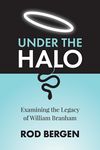
This article responds to David Courchaine's sermon "Spiritual and Logical Clarity," streamed July 22, 2026, in which he opened his "Manhattan Project" by examining the Congressman Upshaw chapter of Under The Halo. The full audio is available on his channel. This is part of our series of responses to Message followers.
He Picked This One
David Courchaine chose the Congressman Upshaw chapter himself.
He did not stumble into it. He picked it as the opening example of his "Manhattan Project," a project he says will grow into a three-hundred-page book and more beyond that. This was the moment he chose to show everyone how the case against the Message falls apart under examination. His best pitch. His first swing.
So let's look at what he actually found. I am the author of the chapter he examined, and I am going to hold his charge to the same standard I hold everything else. Let's look at the evidence.
The charge
Courchaine's one concrete accusation is about a footnote. The chapter cites a 1951 Los Angeles Times headline in footnote 419 as "Ex-Rep Upshaw Discards Crutches." The full headline actually ran three words longer: "Ex-Rep Upshaw Discards Crutches After 59 Years."
He does not treat this as a typo. He treats it as concealment. In his words, the book "cut out the after 59 years part," and he suggests it was done deliberately to hide something, because "some of the footnotes are paragraphs long," so there was room. The implication is plain: the book trimmed "59 years" to keep readers from learning how long Upshaw had been crippled, because that length makes the healing sound more dramatic.
It is a serious charge. It is also false, and it takes about thirty seconds to show why.
The fact he says was hidden is quoted twice, in Upshaw's own words
Here is the problem for Courchaine. You cannot conceal a fact that the chapter states twice, in the source's own voice, before you ever reach the footnote.
The chapter quotes Congressman Upshaw's own tract at length. The very first line of that quotation has Upshaw describing his crutches as "my helpful comrades for 59 of my 66 years as a cripple." That is near the opening of the chapter's account.
Then, a few paragraphs later, in the passage that sits immediately above the sentence carrying footnote 419, Upshaw is quoted again: "with no gray hairs, without my boon companions, my helpful crutches of fifty-nine years, I begin a new life."
Fifty-nine years. Stated twice. In Upshaw's own words. Both times before the footnote Courchaine is complaining about, one of them in the paragraph directly above it.
So the fact he says the book hid is not hidden. It is printed twice on the same pages, in the very testimony the chapter is built around. A reader working through the chapter meets "59 years" before he ever gets near footnote 419. A footnote title running three words shorter than a newspaper headline is an ordinary citation convention. It conceals nothing, because there is nothing left to conceal once the body text has already said it, plainly, in the healed man's own voice.
Courchaine went looking for a cover-up and walked straight past the two places the chapter states the very fact he accuses it of hiding.
What we will fix, and what it is worth
Now, in the spirit of holding my own work to a real standard, two small things.
The footnote title should carry the full headline, "After 59 Years" and all. That is simply good citation practice, and it will read that way in the second edition. And there is a sentence in the chapter describing Upshaw's mobility before the meeting that could be tighter. The chapter says he "could walk without crutches before the Branham meeting." The newspaper is more specific: Upshaw said he could manage only "two or three steps" before, and walked four blocks after. The second edition will match that wording exactly.
I want to be clear about what these changes are and are not. They are housekeeping. Neither one is material. Neither one touches the argument of the chapter by so much as an inch. I am making them because precision matters to me, not because Courchaine uncovered anything. His actual charge, that the book hid the 59 years, is not fixed by these edits, because that charge was never true to begin with.
That is the whole of what he found in the chapter he chose as his strongest. A three-word footnote title, next to a chapter that states the same fact twice in the source's own words.
Now here is what he did not touch.
The case he never mentioned
The Upshaw chapter is not really about crutches or footnotes. It is about a story that changed beyond recognition in William Branham's own mouth, over three years, and the chapter proves it from Branham's own recorded words. Courchaine did not address any of it.
Here is Upshaw's own account of how he was told he was healed in 1951. William Branham, exhausted, had been carried from the platform. Then, in Upshaw's words:
Brother LeRoy Kopp, Calvary Temple's golden-hearted pastor, came back to the pulpit and said: 'Brother Branham says "The Congressman is healed".
Read that carefully. In the healed man's own testimony, Branham never speaks to Upshaw at all. Branham does not even see him. The message is relayed by the host pastor, Leroy Kopp, after Branham has already left the platform. That is the 1951 account, from the man it happened to.
Now here is the same event as Branham told it three years later, in 1954. By this telling, Branham describes a vision of Upshaw walking across the audience "with a brown pinstriped suit on." A microphone is run back through the crowd to the congressman so he can converse with Branham from the pulpit. And Branham himself pronounces the healing: "The Lord Jesus Christ has made you well... 'Thus saith the Lord God,' He has had respect unto you and you are healed." Then the old congressman "jumped to his feet, ran to the platform without crutches... could almost do a handspring."
Look at what appeared in those three years. A vision of a brown pinstriped suit. A microphone carried back to Upshaw. A live pulpit conversation. Branham personally declaring "Thus saith the Lord... you are healed." And Leroy Kopp, the pastor who actually delivered the message in the real account, erased from the story completely.
Both of these are Branham's own words. Both are on the record. They describe the same afternoon, and they do not match. In the first, Branham is carried off exhausted and a pastor relays the news. In the second, Branham is the center of a face-to-face miracle with a vision, a microphone, and a divine pronouncement. Kopp is gone.
That is the chapter. Not the footnote. A "Thus saith the Lord" miracle that grew a vision, a conversation, and a handspring over three years, and quietly wrote out the one man who was actually at the pulpit.
Courchaine's sermon does not mention it. Not once. He examined the chapter closely enough to check the footnote against the newspaper, and somehow never addressed the two accounts in Branham's own voice sitting in the middle of the same chapter, three years and a whole cast of new details apart.
Are we the ones concealing things, or is it David Courchaine?
Why this matters
I am not going to pretend a three-word footnote does not exist. It does, and it will be corrected. But be clear about the exchange that just happened.
Courchaine picked this chapter as his flagship. He held it up as the example that would show the world his project has teeth. And what he produced was a citation-title three words short of a headline, sitting beside a chapter that states the same fact twice in the healed man's own words. Meanwhile the chapter's real evidence, Branham's story growing a vision and a microphone and erasing the pastor, all in Branham's own recorded words, he left completely untouched.
If this is the strongest opening he could find, it tells you something about what is waiting in the other three hundred pages.
I would ask you to do only what I ask of my own work. Read the 1951 account. Read the 1954 account. They are both in the chapter, both in Branham's own words. Then ask the question the whole chapter asks.
Why did the story change? And why did Courchaine conceal it?