Grant the Accident
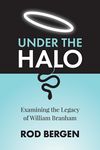
This article responds to David Courchaine's sermon "Spiritual and Logical Clarity," streamed July 22, 2026, in which he used the account of the Finland boy in Under The Halo (Chapter 10, "The Dead Raised in Finland") as the second case study in his "Manhattan Project." The full audio is available on his channel, and all sermon references below are to that stream. This is part of our series of responses to Message ministers, and a companion to our response on Congressman Upshaw.
Grant the Accident. Explain the Rest.
In my last response, David Courchaine had found a real error in my book, and I fixed it in front of everyone. So when he turned to a second chapter, the story of the Finland boy, I read his objection carefully. I expected to have to concede again.
This time is different. And I am going to show you why by granting him everything that is fair, and then showing that even his strongest detail does not hold.
Let's look at the evidence.
What I will grant
Courchaine's complaint is that my chapter did not take the accident seriously enough. He says a section titled "Looking at the Facts" should have reckoned with how severe it was. Fair enough. So let me reckon with it, openly.
Was there a terrible accident? Yes. A car struck two young boys near Kuopio, Finland, as Branham's party came down from the Puijo tower. The injuries were grave. Everyone present believed at least one boy was dead. Pastor Vilho Soininen said Branham felt for a pulse and answered that the boy "seemed to be dead." Jack Moore said the boy's pulse "was gone." I believe them. Something genuinely frightening happened on that road.
Could a child die after being hit by a car? Of course. Courchaine spends time establishing that children die at low speeds. He is right. A car striking a child is always a matter of life and death.
So I grant the accident, I grant its severity, and I grant that the men in that car believed they were looking at a dead boy. Now watch what happens to his argument once I have granted all of that.
The one detail he leans on does not hold
Courchaine's case rests heavily on the claim that the boy was run over. A boy run over by a car, he argues, must surely have died, so the resurrection must be real.
But were the boys run over? The witnesses do not agree that they were, and the evidence points the other way.
Pastor Soininen, the local pastor from Kuopio and the most careful witness, does not say run over. He says the car was "unable to avoid striking two small boys," and that the impact threw "one down on the sidewalk, and the other five yards away into a field." Struck, and thrown clear.
William Branham gives the dramatic version, "struck a little boy, throwing him to the ground, and then ran over him with such force that it threw him back near the sidewalk." Jack Moore uses "ran over," but pairs it with "knocking them down and out," the language of being hit and falling.
Three things weigh against a literal running-over.
First, the physics. The one precise description we have, from Soininen, is of boys thrown clear, one to a sidewalk and one five yards into a field. That is what a car does when it strikes and throws a body, not when it runs one over. Even Branham's own sentence says the boy was "thrown back near the sidewalk," and being thrown is what a strike does, not a running-over.
Second, the survival. Both boys lived. A young child whose body is run over by a car faces a very high chance of death. Two boys both run over and both surviving would be remarkable on its own. Struck and thrown fits two survivals far better than run over does.
Third, the distance. The most insistent "run over" language comes from Branham, who placed himself "some 300 yards ahead" of the scene. From three hundred yards, no one can tell whether a child was struck and thrown or run over. The man with the most dramatic account of the mechanism had the worst view of it.
So Courchaine's strongest single detail, the one his statistic depends on, is not established by the evidence and is contradicted by the most careful witness. The running-over is not the reliable core of the story. It looks like part of the layer that grew in the retelling.
None of it is the case anyway
Here is the deeper point. Even if I granted the running-over outright, the chapter would still stand, because the chapter was never about the mechanism of the accident. It was about what William Branham did with the story afterward.
Here is what Branham's own companions reported. The boy was placed in the back seat. They prayed as they drove. Somewhere on the way to the hospital, he regained consciousness. By the time they arrived, he was crying. He was admitted, and Soininen, who lived in that town, said the boy was released three days later.
That is the eyewitness account. A gravely injured child who came to, wept, was hospitalized, and went home in three days.
Now here is the same event as Branham told it over the following years. In 1954, the boy had been "laying dead for a half hour" and "pronounced dead by the doctors." In 1957, there were "hundreds standing around," and a five-minute prophecy staked on "or I'm a false prophet." In 1959, the boy "jumped on his feet, and started running, jumping all around." In 1962, Branham swore it before his Bible and said there was a statement signed "by the mayor of the city, by a notary public."
None of that is in the eyewitness accounts. Not one piece of it. Branham's own companions described a boy who woke up crying on the way to the hospital. Branham, years later and under oath, described a boy dead for thirty minutes who leapt up and ran.
This is the case. Not whether he was run over. The case is that a man swore before God to details that his own friends never reported, and that grew grander every year he told it.
The two documents that were never there
Here is where Courchaine's own standard becomes useful. He preached about combining "logical clarity" with "spiritual clarity," and said a Christian should reason honestly. Good. So let's reason honestly about two claims Branham made.
Branham said there was a statement signed by the mayor of the city and a notary public. A notarized document from a public official is exactly the kind of thing that can be produced. Where is it? It has never appeared.
Branham also claimed he had "witness of doctors' statements, of five people being pronounced dead." When the researcher Peter Duyzer asked Billy Paul Branham for copies of those doctors' statements, he was told they had been lost.
A notary's certificate. Doctors' death certificates for five people. These are documents, not memories. Branham said they existed. No one has ever produced a single one.
Courchaine used his logical clarity to ask whether my chapter analyzed the speed of the car. That is a fair question. Here is a fairer one. Why did a genuine miracle need a mayor's certificate that no one can find?
About the statistic
Courchaine's strongest-sounding move is a number. He says the average speed that kills children under ten is 18.7 miles per hour, and that most who die are run over. Therefore, he argues, this boy must have died.
Grant the number. It still does not do the work.
An average fatal speed tells you that children can die at low speeds. It tells you nothing about whether this particular child died. Children are also struck by cars and survive. I am personally a testament to that. When I was 7 or 8 years old, I was returning with my dad from church. While we were driving a young boy, about 5 years of age, ran out from behind a parked car chasing a small ball onto the street. His head struck our car, and he was knocked to the side, unconscious. He suffered a fractured skull but recovered after a stay in hospital.
A statistic about the average of fatal cases cannot settle the outcome of one specific case. It is the same shape of argument he made about Congressman Upshaw, where he turned a few steps into an "18,679.5% improvement." A precise number is offered to prove something the number cannot reach.
And notice what the number is built on. To get to "he must have died," Courchaine has to feed in the speed and the "run over" from Branham's own dramatic retellings, the very details the careful witness does not support. He is using Branham's least-tested claims as the raw material for a calculation meant to prove Branham trustworthy. The argument leans on the very thing in question.
There is one more irony. If we reason from the medical realities of children struck by cars, those realities include that head injuries routinely cause loss of consciousness, a faint or undetectable pulse, and a frightening appearance of death followed by recovery. That is precisely the alternative my chapter offered. The science Courchaine reaches for supports the ordinary explanation at least as well as the miraculous one.
What I will concede
I said I would be honest, so here is a fair point. If there are additional named eyewitnesses to that day whose accounts survive, they should be examined, and I would welcome them. My chapter rests on the two companions whose written testimony we have, Soininen and Moore. Both were Branham's own men. If Courchaine can produce more first-hand accounts, I will read every one... and include them on this website.
The question that clarity demands
I have granted the accident. I have granted its severity. I have granted that the men in that car believed they were holding a dead child. I have even granted Courchaine's statistic.
After all of that, the chapter stands exactly where it stood, because the chapter was never about the accident.
It was about a story that grew a running-over the careful witness never described, a half hour of death, a crowd of hundreds, a running and leaping boy, doctors' certificates, and a mayor's notarized statement, none of which his own companions reported, and none of which anyone has ever produced.
So I will ask the honest question, the kind a man of clarity should welcome.
If it happened the way he swore it did, where is the mayor's certificate?
And if it did not, why did he swear it?
Footnotes