Everything Except the Prophecy
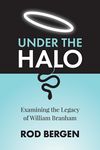
This article responds to David Courchaine's sermon "Spiritual and Logical Clarity," streamed July 22, 2026, in which he defended William Branham's brown bear vision as part of his "Manhattan Project." The full audio is available on his channel. This is part of our series of responses to Message followers, and a companion to our article on The Brown Bear Vision, where the vision itself is documented in full.
Everything Except the Prophecy
David Courchaine is careful with words. That is not a criticism. It is a compliment, and it is what makes this worth writing about.
In his July 22, 2026 sermon, he defended William Branham's brown bear vision, and he did it the way a thorough man does. He walked through the setting, the weather, the whole scene, building it piece by piece and asking his congregation to reason through it with him.
He quoted almost everything.
He did not quote the prophecy. And in the middle of his scene, he added something no witness ever said. Let's look at the evidence.
What Branham actually prophesied
Here is the prophecy, in Branham's own recorded words, the ones the whole discussion is about.
In April 1962:
I'd shot a mammoth, big, brown-looking bear... this is on tape. It's going to happen. See? Just remember; it's going to happen; it's a vision.
In May 1962:
I seen a great huge brown bear... It will be; that's THUS SAITH THE LORD. It will be.
And in June 1962, in a sermon titled "Presuming":
I'm going to get a brown bear that's almost twice that size. You see if it's right or not... God's perfect and never fails.
Notice what the prophecy was. It was not "I will see a bear." It was "I'm going to get a brown bear." Branham predicted the kill. He put it on tape, called it Thus Saith The Lord, and staked God's own reliability on it. "God's perfect and never fails."
He went back to British Columbia in July 1962. He went again in October 1964. He died in December 1965. He never shot the bear.
That is the whole matter. The prophecy was that he would get the bear, and he never got the bear.
The fact David made up
So how does David turn a failed prophecy into a success? He invents a scene.
In his telling, God delivered His part: the weather, the setting, the bear itself, showing up right where it was supposed to. Then Branham, by his own free choice, decided not to pull the trigger. He saw the bear, had it in his sights, and chose not to shoot. That is why the vision "failed," David says. Not because God failed, but because a humble prophet declined to finish it himself.
There is one problem with that scene, and it is fatal. It never happened. Not in any record we have.
Read the accounts of the men who were actually on those hunting trips. Byskal doesn't say Branham saw the bear. Billy Paul says that he and Byskal saw the bear, but Branham didn't. Not one of them says he saw it. Even more telling, Byskal related stories of hunting with William Branham but didn't tell the "Jonah" story until AFTER this website raised the issue of the failure of the brown bear vision.
Branham seeing the bear appears in exactly one place: in the vision Branham described beforehand. In real life, on the actual trips, Branham never sees him.
David's entire defense depends on Branham seeing the bear and choosing not to shoot it. But for Branham to choose not to shoot, he had to have seen the bear and aimed his gun at it, and there is no evidence that ever happened. David did not find that scene in the record. He supplied it himself, because his argument does not work without it.
Think carefully about what has happened here. To defend a prophet against the charge of making things up, David made something up.
Where the "he chose not to shoot" story comes from
If the eyewitnesses do not describe Branham seeing the bear, where does the story come from? It comes from two places, and neither one holds it up.
The first is a vague comment from Branham himself. He once said that a vision "passed right through exactly, God's part; and I was left standing." That quote does not name the brown bear. It does not mention a bear at all. It is general enough to fit any number of situations. To make it about the brown bear, you have to assume the very thing you are trying to prove.
The second is one man, the minister Ed Byskal, who reports Branham saying, "I am the Jonah in this group." Byskal is essentially the sole source for the whole "disobedience" story, and his reliability as a witness is suspect: the majority of his own congregation, including most of its leadership, left him over his personal moral failures. That is the single thread the entire defense hangs from. And Byskal never says Branham even saw the bear.
Billy Paul does not back up Byskal's version of the "Jonah" excuse. He states that his dad was still expecting to fulfill the vision. My personal experience with Ed Byskal would cause me to reject his testimony and go with that of Billy Paul, William Branham's son.
So the scene David painted so confidently, the weather, the setting, the bear appearing to the prophet, the prophet lowering his gun, is not in the recorded prophecy, is not in the eyewitness accounts, and rests on one vague quote that never mentions a bear and one witness whose own church walked away from him because he lied repeatedly.
Why the actual prophecy had to be left out
Now you can see why David quoted everything except the prophecy itself.
If he had simply read Branham's words aloud, "I'm going to get a brown bear... God's perfect and never fails," his listeners would have heard the plain prediction: Branham would kill the bear. Then the failure would sit there in the open, because the thing predicted, getting the bear, is the thing that never happened.
So instead of the prophecy, the congregation got a story. A story with a bear in it that no witness ever saw. Everything except the one sentence that would have shown the problem.
You do not answer a failed prophecy by quoting the weather around it and inventing a bear to go with it. You quote the prophecy. David quoted the bear. He quoted the setting. He quoted a minister. He did not quote "I'm going to get a brown bear... God's perfect and never fails," and he could not, because those words end the argument before it starts.
The honest question
I am not asking you to take my word over David's. I am asking you to do the one thing his sermon avoided. Read the prophecy, and then look for the bear in the accounts of the men who were there.
Branham said, "I'm going to get a brown bear... You see if it's right or not." He told you to check. So check.
He said he would get the bear. He never got the bear. And the story that he saw it and nobly chose not to shoot it is found nowhere except in David's own imagination.
David gave you the weather, the setting, and a bear that no eyewitness ever saw. He gave you a humble prophet lowering a gun that no one ever watched him raise.
He gave you everything except the sentence Branham actually spoke, and an invented excuse the record does not contain.
Why do you think the prophecy was the part he left out?