All Plus Something Else
This article is a response to a sermon titled "All or Nothing," preached on July 17, 2024, by Michael Rae at a Wednesday evening service at Cloverdale Bibleway in Surrey, British Columbia. All timestamps in this article refer to that recording. The sermon itself begins at approximately [32:57]. Please listen to the whole thing before reading further. I'm not going to build a strawman. I want you to hear him for yourself.
All Plus Something Else
Michael Rae opens his sermon with three scriptures, and he handles the first one so well that I want to start there rather than with my disagreement.
He reads 2 Timothy 3:16. Then Revelation 22, verses 17 through 19, with its warning about adding and taking away. Then Matthew 4:4, where Jesus tells Satan that man lives by every word that proceeds out of the mouth of God.
From those three he builds a straightforward thesis. You cannot be picky with the Word of God. All means all. Ninety-nine percent will not do. He puts it plainly at [39:39]:
So all is good. But all plus something else, you're in big trouble.
And at [39:57]:
But all minus anything. You're also in big trouble.
I agree with him. That is the argument of this article, and it is his argument, not mine. I am simply going to apply it to the sermon that contains it.
The best forty seconds in the sermon
First, the positives.
The heart of "All or Nothing" is an extended retelling of Daniel 5. Belshazzar at his feast, the vessels from the temple, the hand writing on the plaster, the knees knocking. Weighed in the balances and found wanting. Rae tells it well, and any preacher would be pleased to have told it that well.
Then he turns the scales on the congregation and starts placing things on them.
Well, maybe I need to turn a new leaf over and straighten things up. Maybe I need to put some better clothes on, get myself a Bible and, you know, put that on the scale. Plink. I ain't moving it. [1:04:27]
Church attendance once a month. Plink. Better clothes. Plink. Baptism, sprinkled or immersed, frontwards or backwards. Plink. Nothing moves.
And then this, at [1:05:38]:
That one day you placed your hand into the hand of your Savior. And he said, it's nothing you can do. There isn't nothing you can place on the scale. But my blood, I'll place there. The sacrifice that I did at Calvary, let's place that on the scale. And all of a sudden, at that joyous moment, when you and Christ became one, the scale went like this. And you felt freer than you ever felt before.
That is the gospel. It is preached clearly, it is preached well, and it is preached from a Message pulpit on a Wednesday night. If you are reading this from inside the Message and you have been told that people like me deny that anything good comes out of your churches, hold onto that paragraph. I am not going to pretend it isn't there.
Now watch what happens to it.
Then he takes it back
Look again at the list of things Rae puts on the scale, because one item in it is easy to miss. At [1:04:58], between baptism and the moment of grace:
Maybe I might just come to a message church and believe there's a prophet. Plink. Not even moving.
He says it himself. Believing there is a prophet does not move the scale.
Four minutes later, at [1:08:51], the scale needs it after all:
Because in my day, if I don't have the Word for my hour, the scale's going to be off.
And by [1:31:11] the transaction has changed shape completely:
Full obedience to the full word of God entitles you and me to the token.
Entitles. Paul has a category for that. "Now to him that worketh is the reward not reckoned of grace, but of debt" (Romans 4:4). Something you are entitled to by full obedience is a wage. Whatever was placed on those scales at [1:05:38], by [1:31:11] it has been lifted off and replaced with your performance.
The turn happens at [1:07:15], and Rae marks it clearly:
And the problem is, though, the problem is people are putting the message of past times. The Word of past ages ... you need the message, the Word for your day to be on the scale.
Two minutes after telling us that nothing we bring can weigh anything, we are told what we must bring.
Three scriptures, read aloud, that answer him
This is where I want to slow down, because I am about to make a strong claim: every one of the three texts Michael Rae builds his sermon on argues against the sermon.
I am asking you to check each one in your own Bible.
"Thoroughly furnished unto all good works"
This is his opening text as he read it at [33:53]. Notice that he read both verses:
All scripture is given by inspiration of God, and is profitable for doctrine, for reproof, for correction, for instruction in righteousness. That the man of God may be perfect, thoroughly furnished unto all good works.
Verse 17 is Paul's conclusion, and it is a statement of sufficiency. Scripture equips the man of God completely. Not partially, pending a further installment. Thoroughly furnished unto all good works.
The sermon uses verse 16 to argue that Scripture alone leaves you short and that you need the Word of your hour on top of it. Paul's own summary of what Scripture accomplishes was in the sentence he read out loud, and he went straight past it.
There is a second problem with the verse. Two verses earlier Paul reminds Timothy that "from a child thou hast known the holy scriptures" (2 Timothy 3:15). Those writings existed in Timothy's childhood. Whatever "all scripture" means in verse 16, it means something that already existed in the first century. The verse is not a container waiting to be filled with later material.
"If any man shall add unto these things"
Rae reads Revelation 22:18 and 19 at [39:19] and gives the congregation the moral twice, in the two lines I quoted at the top of this article. All plus something else, big trouble. All minus anything, big trouble.
Then, at [1:38:04], he tells us what we are to add:
We've got 1200 messages that give a light shining straight into that. And then you take that message and you lay it on top of that.
On top of it. Twelve hundred sermons laid on top of Scripture, in a sermon whose opening text pronounces plagues on anyone who adds.
I want to be fair to the text here, because it cuts both ways. The warning in Revelation 22 says "the words of the prophecy of this book," which most commentators take to mean the Apocalypse rather than the whole canon. If Rae wanted to make that argument, he could. But he did not make it. He took the broad reading, preached it hard for two minutes, and then did the thing he had just warned against.
"Let him be accursed"
The third one is the most serious, and I would ask you to read the whole of Galatians 1 tonight if you read nothing else.
At [1:16:33] Rae reads Paul's words:
But though we or an angel from heaven preach any other gospel unto you than that which we have preached unto you, let him be accursed.
He pauses and says, "that'll part your hair." Then, at [1:16:53]:
I wonder if the prophet in this day would have said something quite so clear like that. Oh, it was said. But this is very very clear. Let him be accursed.
He is aiming that verse at people like me.
But consider what Paul actually does in that sentence. He fixes the gospel at what he had already preached, and then he pronounces a curse on any later version of it. And he does not stop with human messengers. He includes an angel from heaven, and he includes himself, "though we." That phrase is doing deliberate work. Paul is closing the exact door that a supernatural credential would otherwise open.
A pillar of fire. A vindicated ministry. Signs and wonders in the meetings. Galatians 1:8 is written precisely so that none of those things can be offered as a reason to receive a gospel that arrived later than Paul's. Whatever else you say about the verse, it is the hardest text in the New Testament for the position Michael Rae is defending, and he read it from the pulpit as though it were on his side.
A few seconds earlier, at [1:16:07], he mentions this website by name while reading the same passage:
Oh there's a lot of chatter. You think believe the sign is something, oh my goodness they had their own I'm sure.
The comparison places him in Paul's chair and puts us in the seats of the Judaizers. I understand why that framing is appealing. But the Judaizers were the ones adding requirements to the finished work of Christ, and I would ask the reader to hold that thought until the section on hair below.
Which word?
For all the sermon's insistence on precision about the meaning of "all," it is remarkably imprecise about the meaning of "word."
Three different things are called the word over the course of ninety minutes.
- Scripture. The sense in 2 Timothy 3:16 and in Matthew 4:4.
- The Word for your day. The message of a given age, so that Noah had his and Moses had his and Luther had his [1:07:31].
- This message. The recorded sermons of William Branham, said here to number twelve hundred.
The argument only works if all three are the same thing. And that identity, which is the entire question in dispute between this website and Michael Rae's congregation, is never argued anywhere in the sermon. It arrives as a housekeeping note at [1:09:18]:
Just to recap, just so we're all on the same page, this message is the Word of this hour.
Just to recap. As though everyone had already agreed.
Norman Geisler calls this petitio principii, begging the question, where the conclusion has quietly been placed among the premises.[1] Everything after [1:09:18] rests on an assumption the congregation was invited to think they had granted twenty minutes earlier.
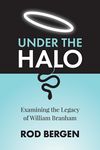
There is a related gap. Rae spends his opening minutes establishing what "all" means, going so far as to consult Webster's Dictionary at [44:14]. He never once tells us what the "all" we must believe consists of. Sixty-six books, plus twelve hundred sermons? Which sermons, when they disagree with each other? Under the Halo documents how William Branham's account of his 1933 visions changed over the years as newer technology appeared in the press.[2]
That gap matters because of the rule Rae himself sets. One deviation and death strikes. If the standard is undefined and the source contradicts itself, nobody can meet it, and everybody in the room has to live with that.
One more thing about Matthew 4:4
Rae takes "every word that proceedeth out of the mouth of God" as establishing the need for fresh revelation in every generation. Look at what is happening in the scene.
Jesus is in the wilderness, forty days without food, facing Satan directly. He answers three times, and every single time he answers with a sentence beginning "It is written." He quotes Deuteronomy. He brings nothing else to the fight.
If ever there were an hour that called for a new word, that was it. Jesus met it with the old one.
The Church Age Book on the scales
At [1:22:35] a real doctrinal question comes up. Is speaking in tongues the evidence of the Holy Spirit? A sister in the congregation had testified about it at prayer meeting, and Rae wants to settle it.
Watch which book he reaches for:
Anybody that has a question on that, you're going to go to page 140 and you're going to read to page 142 or so ... because it details in such detail what exactly and why tongues cannot be the evidence of the Holy Ghost. [1:23:57]
The Church Age Book. Not Acts. Not 1 Corinthians 12 through 14, where Paul discusses the gifts at length and addresses this exact question. A book written by William Branham.
And then, immediately, at [1:24:15]:
That's called adding and removing, or injecting your idea, causing thousands to worship in vain.
The people who read 1 Corinthians and reach a different conclusion are adding and removing. The man who settles the question from a book that is not in the Bible is not.
I do not think Michael Rae noticed himself doing this. That is rather the point. When a sermon's stated authority is Scripture alone and its working authority is the Message, the switch happens without anyone in the building registering it, including the preacher.
"Fail on one thing and see what happens"
The sermon compresses its own logic into a single sentence at [1:25:34]:
They might say, well I do this, I dance in the spirit, I speak in tongues, I prophesy, I preach the gospel, but fail to let your hair grow out, fail on one thing and see what happens. The spirit will leave you right there.
A woman in that congregation who cuts her hair loses the Holy Spirit.
Now go back to Galatians, the book Rae was quoting forty minutes earlier. Paul is writing to people who had received the Spirit by faith and were then told that one more requirement had to be added. His response is not gentle:
Are ye so foolish? having begun in the Spirit, are ye now made perfect by the flesh? (Galatians 3:3)
Behold, I Paul say unto you, that if ye be circumcised, Christ shall profit you nothing. For I testify again to every man that is circumcised, that he is a debtor to do the whole law. Christ is become of no effect unto you, whosoever of you are justified by the law; ye are fallen from grace. (Galatians 5:2-4)
That is the position Paul was cursing in Galatians 1:8. Add one requirement to the finished work of Christ and you become a debtor to the whole of it.
Michael Rae quotes the curse and then preaches the thing being cursed. I do not say that to score a point. I say it because a sermon that lands on a woman's hair as the hinge of her salvation is doing real damage to real people, and the young people being urged toward camp in the final minutes of that service are the ones who will carry it longest.
William Branham took this further than Rae does. He taught that a man could put his wife away in divorce for cutting her hair.[3]
The token
The sermon's last doctrinal move is the biggest one. At [1:32:03]:
I'd have to believe that this message, this gospel, revealed message, is the token today.
The token in Exodus 12:13 is the blood. "And the blood shall be to you for a token upon the houses where ye are: and when I see the blood, I will pass over you."
Two things have happened here.
The first is that the blood has been replaced by the Message. William Branham himself did this, and he was explicit about it, teaching that being under the blood required a person to be in his message.[4] We have written about the consequences of that teaching elsewhere and I will not repeat it here.
The second is subtler and belongs to this sermon in particular. Rae has made the token conditional on obedience, at [1:31:11]: full obedience entitles you to it.
Read Exodus 12 and see whether that is how it worked. Israel was not asked to demonstrate obedience in order to qualify for the blood. They were slaves, and God gave them a lamb, and the ones who put the blood on the doorposts were passed over. The eating of the lamb that the chapter describes in such detail is what people already under the token did afterward. The blood came first, as a gift, to people who had earned nothing.
Rae feels the weight of his own doctrine at [1:31:35] and says something admirable:
And I can tell you I don't have any record, but I'd have to believe if God is requiring every word to be followed ... if someone did not follow exactly what Moses had articulated, I do not believe when death knocked at the door, even if they had followed some of it, death still struck.
He is honest that no such account exists in Scripture. He then reasons from the case he has just invented, in a sermon whose entire thesis forbids adding anything to the text.
Jairus
The last twenty minutes of the sermon are the best twenty minutes of the sermon.
Rae tells the story of Jairus from Luke 8. The daughter dying, the crowd pressing, the woman with the issue of blood interrupting, the messenger arriving with the worst news a father can hear. Trouble not the Master. And then Jesus, hearing it:
Fear not: believe only, and she shall be made whole. (Luke 8:50)
Rae's application at [1:42:45] is simply pastoral: "He hears you. He knows your need. He hears your cry." And the appeal at [1:50:14] asks people to bring their situation to Christ and take him at his word.
Read that closing appeal carefully. It asks for faith in Jesus. It does not ask anyone to believe a prophet, receive the Message, or check whether all twelve hundred sermons are on their scale. When Michael Rae finally turns to the people in front of him and asks them to trust somebody, the somebody is Christ.
His sermon is at its best in the two places where it forgets its own doctrine.
One small correction, offered without much weight. At [1:43:22] he says that Jesus had not yet raised Lazarus and that this was the first time. In the same Gospel he is preaching from, one chapter earlier, Jesus raises the widow of Nain's son (Luke 7:11-17). It is an easy slip and I mention it only because the sermon asks so much of the phrase "every word."
Jesus + Nothing = Everything
I have not answered everything in this sermon. The Belshazzar section deserves its own treatment, and so does the argument that doubting William Branham is the same as doubting Paul, which we may come back to.
But look at where "All or Nothing" stands.
Its first text ends with Paul saying Scripture furnishes the man of God thoroughly, for all good works.
Its second text pronounces plagues on anyone who adds, and the sermon adds twelve hundred sermons.
Its third text curses any gospel that arrives after Paul's, from any messenger, however credentialed, and the sermon is a defence of exactly such a messenger.
Its own gospel moment says that nothing you bring can move the scale, and then requires you to bring something.
And when a genuine doctrinal question arises, the Bible is set aside and a Message book is opened.
Michael Rae is right that you cannot be picky with the Word of God. He is right that all means all. He is right that adding something is as dangerous as taking something away. I would not change a word of any of that.
So all is good. But all plus something else, you're in big trouble. [39:39]
Twelve hundred sermons is something else.
You already have all of it. It is sitting in your lap on Wednesday nights, and Paul says it is enough to furnish you thoroughly, unto every good work.
Why would you want to add William Branham's message?
Footnotes
- ↑ Norman L. Geisler and Ronald M. Brooks, Come, Let Us Reason: An Introduction to Logical Thinking, chapter 6.
- ↑ Under the Halo, chapter 4. See An Analysis of William Branham's Visions and Prophecies.
- ↑ Under the Halo, chapter 4. See also Women's Hair.
- ↑ See Taking a person out from under the blood and The Token.