William Branham's Logical Fallacies
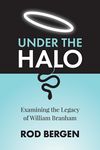
As a CPA, I spent my life researching tax issues for my clients. Structuring tax plans requires impeccable research and crisp logic. When I turned that same systematic approach to the sermons William Branham, the structural flaws in his reasoning became impossible to ignore. Faith and reason are not hostile forces; they cooperate on a biblical view of faith.
1965 sermons
Let's look at the evidence. When we test the 1965 sermons against the logical standards of Norman Geisler, Bo Bennett, Michael Withey, and Peter Kreeft, the result is a clear picture of flawed logic used to defend an unsustainable claim of absolute authority.
William Branham’s 1965 Logical Fallacies vs. Logical Standards
| Fallacy Type | William Branham’s 1965 Quote & Citation | Biblical & Logical Standard |
|---|---|---|
| Genetic Fallacy
(Fallacy of Origins) |
Quote: "Knowledge—do you know Satan's gospel is knowledge? You know that? He preached it in the garden of Eden to Eve, but she was deceived by his knowledge gospel. Now, and it's polluted the whole human race with it." <br><br>Sermon: The Filter of a Thinking Man (January 3, 1965), paragraph 66. | The Standard: Evaluating the truth or worth of an idea solely based on its historical, physical, or moral origin rather than its objective merits.
The Critique: Bennett notes that a belief's origin does not affect its truth. Geisler emphasizes that God is rational, and because He created us as rational beings, the principles of good reason flow directly from His nature. To reject scientific advancement and education on the basis that "knowledge" originated with Satan's deception of Eve is a classic genetic fallacy. It avoids dealing with the objective value of intellect. |
| False Dilemma
(Black-and-White Fallacy) |
Quote: "Notice, we cannot—we must not—listen to any other man's word... We don't care how smart, how educated. The Bible in Proverbs says we must cast down reasonings... You can't reason, say, 'Now wait, if God is a good God...' You'll be lost." <br><br>Sermon: The Filter of a Thinking Man (January 3, 1965), paragraph 93. | The Standard: Artificially restricting the options to two opposite extremes while ignoring any middle ground or cooperative alternative.
The Critique: Kreeft warns against this either-or bifurcation. Geisler and Kreeft point out that faith and reason are not intrinsically hostile. Biblical faith is not blind; it is a reasonable trust based on evidence. Pitting faith against the intellect by claiming that any use of logical reasoning will cause a believer to be "lost" is a false dilemma. It is a rhetorical device designed to insulate a teacher from objective testing. |
| Reductive Fallacies
(Nothing-Buttery) |
Quote 1: "There is only one sin: that's unbelief. That's right. You're not condemned because you drink, smoke, chew, wear shorts, do whatever you do. No, that don't condemn you; it's because you don't believe."
Quote 2: "And when we lust for knowledge (want a Ph.D., LL.D.), it's sin to do so." Sermon: The Filter of a Thinking Man (January 3, 1965), paragraphs 85 and 53. |
The Standard: Reducing a complex, multi-faceted issue to a single, oversimplified aspect, presenting only a caricature of the real problem.
The Critique: Geisler defines this as reducing a many-faceted question to a single point. Kreeft refers to this as the "Nothing Buttery" fallacy. Tracing all human behavior, morality, and complex Christian sanctification down to "nothing but unbelief" oversimplifies New Testament ethics. Similarly, reducing the entire pursuit of advanced education to a sinful "lust for knowledge" caricatures intellectual stewardship. |
| False Analogy
(Weak Analogy) |
Quote: "Think. Just think of it a minute. A woman speaking in tongues with bobbed hair and lipstick on, and then the church still holds to it that that's the evidence of the Holy Ghost... Is that a thinking man's filter? Not the way I see it, brother. It's a foolish man drawing through that."
Sermon: The Filter of a Thinking Man (January 3, 1965), paragraph 60. |
The Standard: Assuming that because two things are similar in one superficial way, they must be identical in other, more significant ways.
The Critique: Kreeft and Bennett state that analogies can illustrate but never prove a point. Comparing a commercial cigarette filter (the "thinking man's filter") to a spiritual or moral standard for evaluating a woman's outward appearance is a weak and logically invalid analogy. A physical tobacco filter has no structural or logical equivalence to the spiritual discernment of the Holy Spirit. |
| Begging the Question
(Petitio Principii) |
Quote: "They found out that the world is square. How many's seen that? See, I got it all copied off and just waiting for somebody to say something."
Sermon: The Filter of a Thinking Man (January 3, 1965), paragraph 42. |
The Standard: An argument where the premise is just as doubtful as, or identical to, the conclusion, often relying on false information to assume the truth of the claim.
The Critique: Bennett notes that while factual errors are not fallacies in themselves, using a demonstrably false premise to assume the validity of your conclusion is a failure of logic. Branham uses the false claim that science has proven the earth is literally square to "prove" his literalist interpretation of the metaphorical "four corners of the earth" (Revelation 7:1). He begs the question by assuming his literalism is correct through a false fact. |
| Apophenia & False Analogy
(Letter-Counting) |
Quote: "Now, if you'll notice, G-r-a-h-a-m is six letters. A-b-r-a-h-a-m is seven letters, and so is B-r-a-h-a-m seven letters... G-r-a-h-a-m is six letters, which means man, or world. B-r-a-n-h-a-m is seven, which is perfected, perfection... The message never went to Billy Graham’s group. It went to the elected group..."
Sermon: This Day This Scripture Is Fulfilled (February 19, 1965), paragraph 66. |
The Standard: Drawing an inductive generalization or causal connection based on accidental, random patterns (apophenia) rather than logical relation.
The Critique: Withey and Kreeft explain that establishing a logical or spiritual connection based on accidental traits—such as the number of letters in a modern English surname—is an invalid inductive generalization. The spelling of "Graham" or "Branham" is an accident of linguistic history, not a divinely ordained, mathematical proof of a minister's dispensational authority. |
| Ad Hoc Rescue
(Rationalization) |
Quote: "Now, I'm going back into the country, that you might know when I come back next year. I'm going to get a brown bear that's almost twice that size. You see if it's right or not. I seen it... But God's perfect and never fails."
Excuses: When Branham died on December 24, 1965, without fulfilling the vision, his followers claimed he was a "Jonah" who had disobeyed God, or that he would be resurrected to fulfill it. |
The Standard: Continuously inventing unprovable, untestable explanations to save a belief or prophecy from being clearly falsified by contrary evidence.
The Critique: Bennett defines this as a classic ad hoc rescue to handle cognitive dissonance. Under the biblical standard of Deuteronomy 18:21–22, a prophet is tested strictly by whether his words actually come to pass. To invent excuses of "disobedience" or "future resurrection" to explain away a failed public prophecy is an invalid rationalization that violates both scriptural and logical verification standards. |
A Forensic Conclusion
When we take away the emotion, the roaring voice, and the absolute certainty of the pulpit, these arguments fall apart. Clear, logical thinking is not a threat to genuine Christian faith—it is a safeguard. As the apostle Paul wrote, we are to "prove all things; hold fast that which is good." When we abandon logic to preserve our belief in a charismatic leader, we aren't showing deep faith. We are simply refusing to look at the facts.
1964 sermons
William Branham’s 1964 Logical Fallacies vs. Logical Standards
| Fallacy Type | William Branham’s 1964 Quote & Citation | Biblical & Logical Standard |
|---|---|---|
| False Dilemma (Black-or-White Fallacy) |
Quote: "Or, reason, don't reason with it! ... When God says anything, just the way He said, that's the thing to do. ... If it's contrary to the Word, it's not! So, anything, any teacher, any Bible expositor, anything else would teach you or try to get you to believe anything one little iota different from what this Bible says it, it's a false teaching. It's Satan, again, just exactly like it was to Eve." <br><br>Sermon & Date: Questions and Answers #1 (August 23, 1964), paragraph 42. | The Standard: Falsely forces a choice between two extreme alternatives when a reasonable middle ground or cooperative option exists. <br><br>The Critique: Geisler states that God is rational and created us as rational beings. Thinking is not an option for the Christian; it is an imperative. Faith and reason cooperate on a biblical view of faith; they are not intrinsically hostile. To claim that reasoning is inherently satanic is a false dilemma designed to make a teacher's authority completely unfalsifiable. |
| Genetic Fallacy
(Fallacy of Origins) |
Quote: "Did you know when you get more education, and more culture, did you know that's what side it puts you on? It puts you on the devil's side. The Bible said that the children of the darkness are wiser than the ones of the light. Look at the sons of Cain. Every one of them become scientists, dealers in buildings, and making great progress. But the sons of Seth were all humble peasants, sheepherders." <br><br>Sermon & Date: God's Word Calls For A Total Separation From Unbelief (January 21, 1964), paragraph 44. | The Standard: Evaluates the truth or worth of an idea solely based on its historical, physical, or geographical origin rather than its objective merits. <br><br>The Critique: Bennett notes that a belief's origin does not affect its truth. Geisler and Kreeft emphasize that scientific discoveries must be evaluated on their own merits and cannot be ruled out simply because of their source. Tracing the origin of education and science back to the line of Cain is an attempt to invalidate human intellect by association. |
| Slippery Slope Fallacy | Quote 1: "...just justification, believing and being baptized, that's not enough! You'll wander right back into the things of the world; bob your hair and wear shorts, and everything else." (paragraph 82) <br><br>Quote 2: "Only one word, one word is needed. That's all Satan had to have to Adam, just get him on one word... To add one or take one, it's total failure." (paragraph 91) <br><br>Sermon & Date: Both quotes from Questions and Answers #1 (August 23, 1964). | The Standard: Assumes that a relatively harmless first step will inevitably trigger a chain reaction of extreme, disastrous consequences without proving any logical or causal connection. <br><br>The Critique: Geisler explains that without a proven logical connection, there is no slippery slope. Assuming that minor outward choices (such as a woman's hair length or clothing) mathematically guarantee total spiritual apostasy is a flawed causal inference. This also functions as a Reductive Fallacy by oversimplifying complex moral maturity into a single, legalistic outward checklist. |
| False Analogy
(Faulty Comparison) |
Quote 1: "What good would it done Moses to come with Enoch's message? ... And what good would it done Wesley to come with Luther's message? What good would it done the Pentecost to come with Wesley's message? See what I mean? It's all 'lotted out here in the Bible, and we've got to know the age and hour, and what's for us." (paragraph 54) <br><br>Quote 2: "The Bible said 'Is there no ... is there no balm in Gilead?...' ... It's just the druggist is misfilling the 'scription ... prescription... This is God's standard... And we wonder why we got so much confusion..." (paragraph 39) <br><br>Sermons & Dates: Quote 1 from Questions and Answers #1 (August 23, 1964); Quote 2 from Is There No Balm in Gilead? (June 14, 1963). | The Standard: Assumes that because two things are similar in some minor, illustrative way, they must be identical in other, more significant ways. <br><br>The Critique: Bennett and Kreeft note that analogies illustrate but do not prove. Comparing the progressive covenants of biblical history to an expiring medical prescription or "stale manna" is a false analogy. It ignores the fact that Christ's apostolic Word remains alive and fully active in our day. This functions as a Spiritual Fallacy to justify adding extra-scriptural authority. |
| Category Error
(Category Mistake) |
Quote: "They built the pyramids in those days. We couldn't build them today. No. We haven't the material, we haven't the stuff to build them with, and we have no machinery to lift those boulders up there. It's still a mystery to the world. They built it. Jesus said, 'As it was in the days of Noah, so shall it be in the coming of the Son of man.'" <br><br>Sermon & Date: God's Word Calls For A Total Separation From Unbelief (January 21, 1964), paragraph 43. | The Standard: Places a concept or entity into an incorrect logical category, treating things of one category as if they belonged to another. <br><br>The Critique: Kreeft and Geisler define category mistakes as structurally invalid because they conflate distinct realms of reality. Treating archaeological mysteries (like the construction of the pyramids) or astronomical signs (like the zodiac) as if they were direct, verbally inspired divine revelations ("Three Bibles") is a massive category mistake. It undermines the unique, singular authority of Holy Scripture. |
1963 sermons
William Branham’s 1963 Logical Fallacies vs. Logical & Biblical Standards
| Fallacy Type & Definition | William Branham’s 1963 Quote & Citation | Biblical & Logical Standard |
|---|---|---|
| False Dilemma
(Pitting faith against understanding, forcing an artificial choice between the two). |
Quote: "Now, I want to ask you a question, brethren, sisters... You're not supposed to understand it; you're supposed to believe it. Just believe it, anyhow." <
Sermon: Jesus Christ The Same Yesterday, Today, And Forever (1963-06-04), paragraph 42. |
The Standard: Falsely restricts the options to two opposite extremes (either blind belief or sinful reasoning), ignoring the cooperative relationship between the two.
The Critique: Geisler and Kreeft emphasize that faith and reason are not enemies. God is rational, and He created us as rational beings. In Isaiah 1:18, He invites us: "Come now, and let us reason together." Blind credulity is not a biblical virtue; it is a defense mechanism used by teachers to render their own assertions completely unfalsifiable. |
| Slippery Slope & Reductive Fallacy
(Assuming a minor deviation must lead to absolute spiritual ruin, reducing salvation to legalism). |
Quote: "If God let all this happen because Eve disbelieved one little phase of the Word and caused humanity to get to the place it's in, do you think we'll ever get back disbelieving any phase of it? ... If it cost all of this, would He let you back free? Let you go anyway?"
Sermon: Jesus Christ The Same Yesterday, Today, And Forever (1963-06-04), paragraph 42. |
The Standard: Assumes a relatively harmless first step (doubting or misinterpreting a single detail) will inevitably trigger a catastrophic chain reaction (damnation) without proving a necessary connection.
The Critique: Bennett and Withey write that a slippery slope is invalid when the connection between the steps is purely psychological or legalistic rather than logically necessary. This argument reduces the entire gospel of grace to a fragile, zero-tolerance checklist. Under this rigid view, the sacrifice of Christ is made secondary to absolute doctrinal conformity. |
| False Analogy
(Comparing a spiritual reality to a physical, flawed illustration to prove a point). |
Quote: "See, we got the Bible. We got the physician. It's just the druggist is misfilling the 'scription ... prescription."
Sermon: Is There No Balm in Gilead? (1963-06-14), paragraph 32. |
The Standard: Assumes that because two things are alike in one minor, illustrative way, they must be identical in other, more significant ways.
The Critique: Kreeft and Bennett state that analogies are excellent for illustration but constitute zero logical proof. Comparing the historical theology, confessions, and creeds of the Christian Church to a careless pharmacist "misfilling" a chemical compound is a false analogy. The Word of God is a living, breathing, eternal truth—not a static pharmaceutical prescription that goes stale or gets ruined by careful examination. |
| Hasty Generalization
(Drawing a sweeping conclusion about an entire group based on a few extreme, localized cases). |
Quote: "The filth of the world comes right out of Hollywood, the worst nation in the world. More divorces than the rest of the world put together, see ... Here's where it hatched out, women preachers and everything else."
Sermon: Jesus Christ The Same Yesterday, Today, And Forever (1963-06-04), paragraph 53. |
The Standard: Reaching an inductive generalization too quickly, based on atypical or highly selective instances rather than broad, representative evidence.
The Critique: Bennett and Withey define a hasty generalization as a failure of representative data. To claim that global moral decay, high divorce rates, and female ministers "hatched out" of Hollywood is a massive, emotional generalization. It ignores historical and theological developments worldwide in favor of a localized, sensationalized polemic. |
| Reductive Fallacy ("Nothing-Buttery")
(Reducing a complex moral and spiritual reality to a single, oversimplified biological cause). |
Quote: "Adam was a son of God. Eve was a daughter of God... Then why was Cain a liar, a murderer, and everything else? Where did that come from? Just ask yourself that question. That was the serpent's seed."
Sermon: Jesus Christ The Same Yesterday, Today, And Forever (1963-06-04), paragraphs 62 and 63. |
The Standard: Reducing a multi-faceted question (like human sin, free will, and moral choice) to a single, oversimplified, and physical aspect.
The Critique: Kreeft and Bennett warn against "nothing-buttery". Explaining Cain’s moral failure as nothing but a physical, genetic inheritance from the Serpent bypasses personal moral responsibility. In Genesis 4:7, God warned Cain directly: "If thou doest well, shalt thou not be accepted? and if thou doest not well, sin lieth at the door." God treated Cain as a moral agent with free will, not as a pre-programmed, biological beast. |
1962 sermons
Below is a side-by-side reference table detailing the major logical fallacies of his 1962 sermons, fully verified by the exact sermon titles, dates, and paragraph numbers.
William Branham’s 1962 Logical Fallacies vs. Logical & Biblical Standards
| Fallacy Type | William Branham’s 1962 Quote & Citation | Biblical & Logical Standard |
|---|---|---|
| False Dilemma <br>(Pitting Faith against Reason) | Quote: "Let's take wisdom first. Wisdom has reasoning. Faith has no reasoning... Don't reason at all. Listen: '... calleth those things which were not as though they were.' ... Abraham didn't want any wisdom; he just wanted the Word: 'God said so and that finishes it.'" <br><br>Sermon: The Spoken Word Is The Original Seed - Pt. 1 (1962-03-18m), paragraphs 43 and 57. | The Standard: Artificially restricts the options to two opposite extremes (blind faith vs. satanic reasoning) while ignoring any middle ground or cooperative alternative. <br><br>The Critique: Geisler and Kreeft note that faith and reason are not enemies. God is rational, and He created us as rational beings. The greatest commandment is to love God with all our mind (Matthew 22:37). By declaring that faith has "no reasoning", Branham insulates his teachings from any possible testing. To say we must completely bypass our minds to believe God is a false dilemma designed to demand blind, uncritical submission. |
| Weak Analogy <br>(The Denominational "Mule" Caricature) | Quote: "Why is it not being done today? It's hybrid, bastard children, mixed up. It don't - it's a mule; it don't know what it believes. A mule don't know who his daddy is, who his mama is. He don't... He's no pedigree; there's nothing to him. He's a illegitimate creature. That's the way any person that claims to believe God and don't believe His Word will take a denominational creed and breed it with the Word." <br><br>Sermon: The Spoken Word Is The Original Seed - Pt. 1 (1962-03-18m), paragraph L-28-1. | The Standard: Assumes that because two things are similar in one minor, illustrative way, they must be identical in other, more significant ways. <br><br>The Critique: Withey, Bennett, and Kreeft emphasize that analogies are excellent for illustration but constitute zero logical proof. A biological hybrid, like a sterile mule, has no logical or structural equivalence to a voluntary, cooperative association of Christian believers (a denomination). Labeling a theological disagreement as a biological "monstrosity" is an emotional caricature (argumentum ad ridiculum) designed to evoke disgust rather than provide logical arguments. |
| Sweeping Generalization <br>(Dicto Simpliciter) | Quote: "They don't have common decency enough to clean themselves up and act like Christians. How you going to tell them spiritual things about heavenly things? ... How can I teach them algebra when they don't even know their ABC's? ... when you take women... that claim to have the Holy Ghost, and not decent enough to leave their hair grow... puts on a garment that pertains to a man..." <br><br>Sermon: The Spoken Word Is The Original Seed - Pt. 2 (1962-03-18a), paragraphs 118 & 50. | The Standard: Applies a general rule or rigid absolute to specific, individual cases when significant differences or exceptions exist that render the rule inapplicable. <br><br>The Critique: Bennett and Withey define Dicto Simpliciter as ignoring accidental or cultural circumstances that nullify a general rule. Branham applies rigid rules of outward appearance (hair length or wearing trousers) to judge a person's entire spiritual standing. He reduces the complex, supernatural work of the Holy Spirit to a legalistic, outward checklist. This ignores the biblical standard that the true, universal evidence of the Spirit is the internal fruit of character (Galatians 5:22), not cultural fashion. |
| Argument ad Baculum <br>(Appeal to Force and Fear) | Quote: "and then look up and defy God and His Word. When you defy the Word, you defy God... and you're sitting on a pot of it everyday - eight thousand miles thick just below you, volcanic, and then look up and defy God and His Word." <br><br>Sermon: The Spoken Word Is The Original Seed - Pt. 2 (1962-03-18a), paragraph 122. | The Standard: Attempting to force agreement by threatening physical or existential harm instead of offering rational, scriptural evidence. <br><br>The Critique: Kreeft, Bennett, and Withey define ad baculum as a diversionary tactic that relies on fear rather than truth. Instead of providing sound, exegetical proof for his highly controversial "Serpent's Seed" doctrine, Branham resorts to graphic physical threats of hellfire to terrify his audience. A perfectly loving God does not ask us to abandon right reason out of fear of volcanic destruction. |
| Circular Reasoning <br>(Begging the Question) | Quote: "He can't say something here, and something else over here. He's got to say the same thing every time in order to be God. So if the Spirit is on you is of God, it'll witness this Word's the truth... If it isn't according to this Word, and ties the Word together, then your revelation's wrong." <br><br>Sermon: The Spoken Word Is The Original Seed - Pt. 1 & 2 (1962-03-18), paragraphs 145 & 22. | The Standard: An argument where the conclusion is assumed to be true in one of the premises, creating an endless, uninformative loop. <br><br>The Critique: Bennett and Kreeft explain that circular reasoning is invalid because it assumes what it is trying to prove. Branham argues that his private revelations are true because they "tie the Word together". However, he has positioned himself as the only "divine interpreter" authorized to define what "tying the Word together" actually means. This is a classic circular trap: his authority is proven by his interpretation of the Word, and the Word is proven by his authority. |
A Final Thought
When you strip away the emotional delivery, the roaring voice, and the absolute confidence of the pulpit, the logic collapses. A mule has no pedigree. It is a biological dead end. But a Christian denomination is not a mule. Loving God with your mind is not a sin; it is a direct command from Jesus Christ Himself.
I understand how painful it is to face these facts. It took me years to admit that my prophet was committing basic, textbook errors in reasoning. But if we are to be honest with ourselves, we must place our loyalty in the Truth, not in a man. Accuracy always beats comfortable illusions.
A Forensic Conclusion
When I was in the Message, I didn't see these things. I was too busy defending the system. But when you are forced to look at the facts, you realize that the rules of logic are not an optional, academic game. They flow from the very rational nature of God Himself.
When a minister tells you to completely bypass your mind, he isn't asking for deep faith. He is asking for blind submission. The Bible tells us to test all things and hold fast to what is good. If we are to be honest with ourselves, we must be willing to apply the laws of right reason to the things we have been taught. Accuracy always beats comfortable illusions.
A Final Thought
The evidence speaks for itself. When we take away the emotional delivery, the roaring voice, and the absolute certainty of the pulpit, what we are left with is a series of structural flaws that fail the test of right reason. For the Christian, learning the rules of clear and correct reasoning is more than an academic exercise: it is a means of spiritual service. When we abandon logic to follow a charismatic leader, we are not displaying deep faith. We are simply leaving ourselves defenseless.
Footnotes