The Manhattan Project
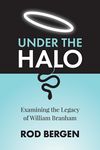

Tom Courchaine is the pastor of New Life Church, a small message church in Sweetwater, Tennessee. David Courchaine is the pastor's son and occasionally speaks at the church. In an intense, emotional video posted on Facebook on May 8, 2026, David described what he calls the "Manhattan Project":
- What is the Manhattan project? I am systematically dismantling every lie ever set against the message of the hour. All of them. Too long has the forces of darkness hurt God’s people… from the liars of Rod Bergen, John Collins, Tim Humes, and the others… Jeff Jenkins. I am systematically dismantling every single lie they have ever told.
- I am eight chapters in to Bergen’s book. 407 footnotes out of 955. It’s a lie. I actually have looked at it. I’ve lost track of all the lies. That’s what the Manhattan Project is. And when I’m done, the Manhattan Project is going to produce nukes that nuke these liars words back into hell where they belong. Because they’re lies and they come from the father of lies. They pervert what Brother Branham said into their own little lies a lie. So that’s what I’m doing and that’s what I’m going to do.
- Too long have this lies of Satan hurt God’s people. And no more. When I’m done someone can look at this stuff and conclude whatever they want, but they can’t conclude that these guys are honest, because they’re not. I just spent five and a half hours straight without stopping, running a voice message, going through three-fourths of the rest of chapter eight from the Arizona Cloud from Rod Bergen. It’s a piece of hell is what it is. It’s a lie. Even by intellectual standards. That’s what I’m doing. That’s what the Manhattan Project is. So I appreciate your prayers as I take these lies and I put them back in hell where they belong. Too long has this hell hurt God’s bride. And when I am done, it would be no more.”[1]
Several people contacted us after he posted this video to let us know about it and to request prayer for David as he seemed to be on the verge of an emotional breakdown.
God and the rules of logic
God serves as the foundation of all logic, having created the reality in which we discover the rules of laws:
However, this raises an important distinction about knowledge versus being: while God logically precedes all things in order of existence, logical reasoning becomes our pathway to understanding God in the order of human knowing[1]. Another theological approach grounds logic in ethics rather than metaphysics. Logic functions as the science of human reasoning—the study of how we should think—and its ethical foundation rests on the biblical prohibition against bearing false witness, making logic fundamentally about discerning and communicating truth[2].
The historical search results trace how logic developed through human intellectual tradition rather than explaining its ultimate origin. Mathematical methods significantly shaped logical development, with Aristotle’s Analytics establishing foundational principles of reasoning[3]. Aristotle’s logic passed through Byzantine, Syrian, and Persian commentators before reaching medieval Latin scholars[3]. Later thinkers reconceived logic’s scope: Mill defined logic as the science treating human intellectual operations in pursuit of truth[4], broadening it beyond mere argumentation to encompass all thinking operations.
These perspectives aren’t mutually exclusive. The theological accounts address logic’s ultimate metaphysical source, while the historical accounts describe how humans discovered and systematized logical principles through intellectual tradition. The ethical grounding suggests that logic’s rules reflect not arbitrary conventions but fundamental truths about how reality and human reasoning align.
[1] Norman L. Geisler and Ronald M. Brooks, Come, Let Us Reason: An Introduction to Logical Thinking (Grand Rapids, MI: Baker Book House, 1990), 17.
[2] Joel McDurmon, Biblical Logic in Theory & Practice: Refuting the Fallacies of Humanism, Darwinism, Atheism, and Just Plain Stupidity (Powder Springs, GA: American Vision, 2011), 22.
[3] William Wallace, Prolegomena to the Study of Hegel’s Philosophy and Especially of His Logic (Oxford: Clarendon Press, 1894), 295–296.
[4] John Stuart Mill, A System of Logic: Ratiocinative and Inductive (London; New York; Bombay: Longmans, Green, and Co., 1898), 3.
Footnotes
- ↑ The video was transcribed as posted. We have not corrected any grammar.