The Manhattan Project
David Courchaine is the son of Tom Courchaine, pastor of New Life Church, a small message church in Sweetwater, Tennessee. He occasionally speaks at the church, and this has been increasing of late.
What is the "Manhattan Project"
In an intense, emotional video posted on Facebook on May 8, 2026, David described what he calls the "Manhattan Project":
- What is the Manhattan project? I am systematically dismantling every lie ever set against the message of the hour. All of them. Too long has the forces of darkness hurt God’s people… from the liars of Rod Bergen, John Collins, Tim Humes, and the others… Jeff Jenkins. I am systematically dismantling every single lie they have ever told.
- I am eight chapters in to Bergen’s book. Four hundred seven footnotes out of nine hundred fifty-five. It’s a lie. I actually have looked at it. I’ve lost track of all the lies. That’s what the Manhattan Project is. And when I’m done, the Manhattan Project is going to produce nukes that nuke these liars words back into hell where they belong. Because they’re lies and they come from the father of lies. They pervert what Brother Branham said into their own little lies a lie. So that’s what I’m doing and that’s what I’m going to do.
- Too long have this lies of Satan hurt God’s people. And no more. When I’m done someone can look at this stuff and conclude whatever they want, but they can’t conclude that these guys are honest, because they’re not. I just spent five and a half hours straight without stopping, running a voice message, going through three-fourths of the rest of chapter eight from the Arizona Cloud from Rod Bergen. It’s a piece of hell is what it is. It’s a lie. Even by intellectual standards. That’s what I’m doing. That’s what the Manhattan Project is. So I appreciate your prayers as I take these lies and I put them back in hell where they belong. Too long has this hell hurt God’s bride. And when I am done, it would be no more.”[1]
Several people contacted us after he posted this video to let us know about it and to request prayer for David as he seemed to be on the verge of an emotional breakdown. It was clear from watching the video that David Courchaine was experiencing cognitive dissonance; however, because he is in a group where all five of the criteria required for increased fervency of belief are present, we must, in his eyes, be considered liars. This is what cognitive dissonance does to a person.
Courchaine's use of the term "The Manhattan Project" is interesting, as the original Manhattan Project resulted in the deaths of 150,000 to 246,,000 innocent civilians in Japan, while at least 86 workers perished in construction and radiation accidents at the Manhattan Project facilities in the U.S. Additionally downwind communities in New Mexico, primarily Hispanic and Native American populations, also suffered chronic health issues and elevated cancer rates due to fallout from testing.
Courchaine originally announced the Manhattan Project in a series of videos on Facebook and Instagram; however, these have all since been deleted. He also removed all of the episodes of his YouTube podcast, "What do you mean by."
Premature evaluation
From the video transcript above, it is clear that David Courchaine started with his conclusions already established... before examining all the evidence. This is typical of cult followers. The ad hominem attacks (attacking the person rather than the arguments) he engaged in are also typical of responses from a person in a cult.
While he has not released any of his "findings" with respect to his "research," he has given a number of clues in several recent sermons as well as in a document entitled "The Manhattan Project: Part One - The Meta-Layer" he published in May (but has since withdrawn). While we wait for his "bomb" to drop, let's look at the logical fallacies contained in his more recent sermons, which should reflect the work he is doing in trying to defend the Message.
There's Got to Be a True Answer Somewhere
A look at four recent sermons by David Courchaine
Over the last two months, David Courchaine has preached four sermons that, taken together, amount to something more than a preaching series. They amount to a worldview defense. The titles sound like separate topics: What Is the Message, The Value of the Flaw, There's Got to Be a True Answer Somewhere, Why Are People So Tossed About. But underneath the titles, all four sermons are doing the same job. They are building a case for why William Branham's message cannot be examined the way we examine any other historical or theological claim, and why anyone who tries to examine it that way has already disqualified themselves from the conversation. This is likely what the Manhattan Project is.
He recently lost his job which is allowing him to spend 12 to upwards of 19 hours a day studying William Branham's sermons. However, his apparent sincerity and the hours logged are not the same thing as a sound argument. And David spends four sermons insisting that there has to be a true answer somewhere, and that the answer should be reasoned, tested, and not just felt. I think he would want us to hold his own reasoning to that same standard. Let's do that.
The recurring themes
Read across, four things show up again and again.
The first is an appeal to faith as something that sits above and beyond evidence, evaluation, or correction. "We do not believe by proof and evidence," he says in What Is the Message. "Proof and evidence have a place. We believe by faith." This is not a throwaway line. It is the operating principle of all four sermons. Calvinism has scripture. Arminianism has scripture. Both have "church teaching, councils, institutions, seminaries, and a 2,000-year history." Neither can be proven or disproven. Therefore, he concludes, no system built on reasoning can be trusted, including the reasoning of anyone who might question the message.
The second is a defense of Branham's errors, inconsistencies, and unverifiable claims by turning them into virtues. This is the whole substance of The Value of the Flaw: God uses flawed people, David sinned worse than Saul yet was restored, Paul had a thorn in the flesh he couldn't shake, and therefore a prophet's mistakes are not evidence against him. They are evidence of him.
The third is a claim that the message is validated by personal, unrepeatable, unfalsifiable experience: a finger that healed faster than a doctor predicted, a sermon about a mother eagle that happened to play at the right moment, a voice heard in a dream that was later "confirmed" by a preacher who never actually said those words on tape. These stories function as proof throughout all four sermons, even while Brother Courchaine insists in the same breath that none of this can be proven.
The fourth is a habit of explaining away disagreement by diagnosing the disagreer. Critics, atheists, former members, "these little morons" who "found flaws" are consistently described as being driven by a "carnal nature" that "hates God" and "can't understand the things of God." Their objections are not answered. They are pathologized.
Those four moves recur across all four sermons in different clothing. Once you see the pattern, you can't unsee it. Let's look at each one.
The motte and bailey at the center of it all
Medieval castles were often built with a "motte," a small fortified tower on a hill that is easy to defend, and a "bailey," the larger, more comfortable settlement around its base that is hard to defend. When under attack, you retreat from the bailey to the motte. Philosophers use this as a name for a common argumentative trick: stake out a bold, sweeping claim, and when challenged, retreat to a much smaller, much more defensible claim, then reoccupy the bold one the moment the pressure is off.
Brother Courchaine does this constantly, and I don't think he notices himself doing it.
The bailey, the bold claim, sounds like this: "The message of Brother Branham... definitively brought my heart back to him, the truth... That is thus sayeth the Lord. God, strike me down if I'm wrong. That is beyond debate." Or this, regarding Malachi 4 and Revelation 10:7: "That happened." Not "I believe that happened." Happened. Settled. Beyond debate.
The motte, the fallback, sounds like this: "We're not united by believing Brother Branham's a prophet. We're united by believing in Jesus Christ... I'll get to heaven and I'll see Billy Graham and I'll give him a big hug... Turns out you were wrong about the Trinity. It's like, yeah, I was wrong, but it had a purpose." Or: "If you're telling me, David, I got a great relationship with Jesus Christ and I just haven't received the revelation of the message of the hour. Okay, praise the Lord. You're honest, you're reasonable, and you're sincere."
Do you see the shift? In the bailey, believing Branham was Malachi's messenger is beyond debate, and Brother Courchaine will bet his eternal soul on it. In the motte, whether you believe that at all doesn't even matter, because we're all just doing our best to point people to Jesus. Both of these cannot be his actual position at the same time. Either the fulfillment of Malachi 4:5 in William Branham is a load-bearing, salvation-relevant truth claim, in which case it needs to be defended as one, or it is one more denominational distinctive among many equally valid ones, in which case all the "beyond debate" language is theater. He wants the comfort of both positions and the cost of neither.
This is not a minor rhetorical quirk. It is the load-bearing structure of the whole set of sermons, and I'd encourage anyone still inside the message to watch for it, because once you see it in Brother Courchaine's preaching, you will start seeing it everywhere in message literature, including in Branham's own sermons.
When "you can't prove it" becomes the proof
Here is where the sermons get genuinely self-contradictory. Brother Courchaine spends real energy in There's Got to Be a True Answer Somewhere naming logical fallacies: the tu quoque fallacy ("well, you do it too"), the Gish gallop, the black swan fallacy, the problem of the criterion. He is clearly a sharp, curious mind, and he uses this vocabulary skillfully against atheists and critics. An atheist who claims neutrality is not really neutral, he points out. A critic who says "everyone has their own perspective" is smuggling in a truth claim of their own. These are fair points, and I don't disagree with any of them on their own terms.
But then he turns around and does the exact thing he just diagnosed in others.
He tells the story of Israel's four-hundred-year sojourn promised to Abraham in Genesis 15:13, compared with the four hundred and thirty years actually recorded in Exodus 12:40. "The logic doesn't line up," he says. "Looks like it's wrong. Oh, well, God made a mistake... And the skeptic loves, 'oh, you're making it unfalsifiable.' Yes. Because we believe by faith." He treats this as an example of something you simply have to accept without explanation, a contradiction faith must absorb.
Except it isn't a contradiction that needs faith to absorb it. It's a solved problem. Galatians 3:17 tells us plainly that the four hundred and thirty years run "from the covenant that was confirmed before of God in Christ" to Moses, meaning from the promise made to Abram, not from the birth of Isaac. Genesis 15:13's four hundred years is the shorter span of actual affliction in Egypt, counted from around the birth of Isaac. Two different starting points, two different but compatible numbers, no mistake and no mystery. Any decent study Bible will walk you through it. Brother Courchaine had a straightforward exegetical answer sitting one search away, and instead he reached for "we believe by faith it's unfalsifiable," which is precisely the move he mocks the atheist for making about naturalism a few minutes later. If unfalsifiability is a mark against a belief system when an atheist uses it, it's a mark against a belief system when he uses it too. You don't get to disqualify the tool for your opponent and then pick it back up for yourself.
This selective epistemology shows up again when he insists that belief in God is "not a rational belief... not reasonable by definition," only to quote 1 Peter 3:15 a few minutes later, a verse whose entire point is that Christians should "be ready always to give an answer... with meekness and fear" for the hope that is in them. Peter is telling us faith is reasonable enough to defend with reasons. Brother Courchaine wants the verse and its opposite in the same sermon.
Turning errors into evidence
The Value of the Flaw is, on its own terms, a genuinely warm and well-told sermon. The contrast between Saul's self-justifying excuses and David's simple "I have sinned against the Lord" is good preaching, and Rod would tell you the same thing I will: David's response in Psalm 51 is one of the most instructive passages in scripture on what real repentance looks like. I have no quarrel with that part of the sermon.
The quarrel is with what the sermon is quietly built to do. It takes the true and biblical principle that God uses imperfect people and stretches it into something scripture never claims: that a prophet's demonstrable errors are themselves confirmation of his calling. "The more flawed you are, the more God can use you," he says, and by the end of the sermon this has become, in effect, an all-purpose answer to any documented mistake Branham ever made. Got a date he set that didn't happen? Value of the flaw. Got a claimed vision that didn't match the historical record? Value of the flaw. Got a contradictory account of the same story told two different ways on two different tapes? Value of the flaw.
But there is a real difference between a king who commits adultery and murder and repents of it, and a self-described end-time prophet whose specific, checkable factual claims about history, geography, or the future turn out not to match reality. David's flaw was moral. It was sin, and scripture calls it that plainly, and David owned it as sin. The question critics raise about Branham's errors is usually not a moral one. It's a factual one: did the thing he said happened actually happen, in the way and order he said it happened? Dressing a factual error in the language of David's moral failure is a category swap, and once you make that swap, you have built yourself a device that can absorb literally any error without ever needing to check whether the underlying claim is true. That is not a flaw becoming a strength. That is an argument becoming unfalsifiable by design, which, again, is the very thing Brother Courchaine warns his listeners against two sermons later.
The son of Satan: a doctrine worth naming plainly
I want to flag something that passes by quickly in two of these sermons but deserves more attention than it gets. In What Is the Message, Brother Courchaine says: "We are led by one of two spirits. Outward man is self. That's Satan, the serpent seed." In Why Are People So Tossed About, describing Cain: "he wasn't the bride. He was the son of Satan."
This is the serpent seed doctrine, one of the more theologically consequential and least examined teachings unique to the Branham movement, and it is worth pausing on precisely because it gets stated so casually here, almost in passing, the way you'd mention something everyone already agrees on.
Genesis is not ambiguous about Cain's parentage. "And Adam knew Eve his wife; and she conceived, and bare Cain, and said, I have gotten a man from the LORD" (Genesis 4:1). The text names Adam as the father in the same breath it names the birth. There is no second party, no serpent, no alternate lineage introduced anywhere in the chapter. The tempter in Genesis 3 is described as a serpent who spoke and deceived Eve about a piece of fruit; nothing in the text turns that into a sexual union, and nothing in the rest of the Old Testament treats Cain as anything other than fully human, fully a son of Adam, whose sin is explained in purely moral terms two verses later: "sin lieth at the door... unto thee shall be his desire, and thou shalt rule over him" (Genesis 4:7). That is a warning about choice, not a comment on bloodline. Cain's problem was not his ancestry. It was his heart, and God tells him so directly.
This matters beyond a single verse, because the doctrine does real work in the sermons. It divides humanity into two lineages before anyone has done anything, quietly reintroducing the very kind of unconditional, ancestry-based predestination the sermons spend so much time criticizing Calvinism for. You cannot fault Calvinism for making salvation about who God arbitrarily chose before you existed, and then teach that half of humanity is disqualified from ever being the bride based on which spiritual father conceived their ancestor. That is the same shape of problem wearing a different name.
Coincidence mistaken for confirmation
Across these sermons, personal anecdote repeatedly does the work that evidence should do. The clearest example: Brother Courchaine describes searching his research notes and finding that Branham used the phrase "mother eagle" seventy-six times across roughly thirty-two of his twelve hundred and sixteen recorded sermons, then turning on a recording at random and having it happen to be one of those thirty-two. "That is about a one in thirty chance," he says, "and I just happen to have the one video of him ever preaching any sermon" that matched what he'd been studying that day. "I can't make that up."
But he was not selecting sermons at random from a hat. He chose that recording specifically because he was already deep in study on that exact topic, listening for exactly that content, on a day he'd spent hours immersed in nothing else. That isn't a one-in-thirty coincidence. That's closer to what statisticians call the base rate fallacy: treating an outcome as improbable while ignoring the fact that the conditions leading up to it made that outcome likely, even expected. If you spend an entire day reading everything you can find about your grandmother, and then flip on the radio and hear a song that reminds you of her, that isn't providence. That's what happens when your attention has been primed all day to notice exactly that.
The same pattern shows up with the healed finger and the dream about "Brother David" that supposedly matched a Branham quote, until Brother Courchaine himself admits, on tape, that he checked and Branham never actually said it that way. He even offers the naturalistic explanation for his own miracle story without seeming to notice he's done it: "you're so kind that even an atheist body will heal itself given enough time." Exactly. Bodies heal. That is not a rebuttal to the miracle claim, it is the miracle claim quietly answering itself.
None of this means Brother Courchaine is lying about what he experienced. I don't think he is. It means personal, emotionally significant coincidences are a famously unreliable way to confirm a truth claim, precisely because our minds are built to notice the hits and forget the misses. That is exactly the kind of "answer" that dissolves the moment you ask, "by what standard," which happens to be his own favorite question to ask everyone else.
A pastoral word about the hours
I'd be doing Brother Courchaine a disservice if I only critiqued his arguments and said nothing about the pace behind them. Across these four sermons, the hour count keeps climbing: eight hundred and fifty hours in May, thirteen hundred hours by early June, twelve to nineteen hours a day by late June, almost entirely spent inside Branham's own recorded sermons and message literature.
I understand that kind of drive. I lived a version of it myself for years, and I know how good it feels to be that certain, that immersed, that convinced you are finally getting to the bottom of something. But immersing yourself twelve to nineteen hours a day in one man's material, defended by one man's framework, checked against one man's own claims, is not a neutral research method. It is a near-perfect design for confirmation bias. Of course a mind fed that steady a diet will keep finding confirming coincidences. It has stopped being exposed to anything that could show it a different pattern.
If there really is a true answer somewhere, and I believe there is, it is not going to be found only inside the very source whose claims are in question. It's found by testing that source against something outside itself: the biblical text in its own context, the historical record, and the honest testimony of people who lived through the same events and remember them differently.
There really is a true answer
Brother Courchaine is right about one thing more than any other: there really does have to be a true answer somewhere. I agree with him completely. Where I part ways with him is in how you find it.
You don't find it by declaring your conclusion beyond debate and then, when challenged, retreating to "we're all just doing our best." You don't find it by relabeling every documented error as evidence of authenticity. You don't find it by treating a coincidence you were primed to notice as proof, while calling the same reasoning a fallacy when an atheist tries it. And you certainly don't find it by deciding in advance that anyone who disagrees with you must be running on a "carnal nature" rather than an honest reading of the same Bible you're both holding.
You find it the way scripture actually tells you to: test everything, hold fast to what is good (1 Thessalonians 5:21), and be ready to give a reasoned defense, not because faith is unreasonable, but because it isn't. Jesus never asked anyone to stop thinking in order to follow Him. He asked hard questions of the people who came to Him, and He answered hard questions honestly, in public, where they could be checked. That is still the better model. It was true before William Branham was born, and it will still be true long after every sermon about him has been forgotten.
Sources: What Is The Message Part 5 - Why Me - All Things, The Value Of The Flaw, "There's Got To Be A True Answer Somewhere", "Why Are People So Tossed About" — all preached by David Courchaine, April–June 2026.
What is the Message? - Part 5 - Why Me? - All Things - 2026-04-22
David appears to be warm, self-deprecating, repeatedly generous toward Calvinists, Arminians, Catholics, and even atheists ("some of my best conversations have come from people who don't believe in God at all"). This is certainly at odds with him calling us liars.
This sermon may be where the idea of the Manhattan Project started. In many of the videos he deleted, he talked about epistemology, the study of the nature, origin, scope, and limits of human knowledge. In this sermon, he appears to be retreating to higher ground, attempting to build an epistemological fortress, a theory of knowledge designed so that no evidence could ever counter the Message.
His core claim
His core claim is that you cannot use reasoning or evidence to establish spiritual truth. Such truth is grasped only by faith and revelation. The moment you allow reasoning to have a vote, you've already surrendered to the enemy.
And the HUGE problem with this is that it is self-refuting. He spends 45 minutes reasoning and citing evidence to convince you of that. He gives definitions, walks through history, cites Greek and Hebrew, compares proof texts, and weighs Calvinism against Arminianism. Every one of those is an appeal to your reason. A claim that "reason cannot establish truth" cannot itself be established by reason without refuting itself, and it cannot be established by revelation without simply asking you to take his word for it.
The law of non-contradiction isn't a hostile skeptic's tool; it's the precondition for meaning in any statement at all. When Courchaine says "intellectual consistency is not truth," he needs that statement itself to be intellectually consistent and true, or there's no reason to accept it. The sentence eats its own tail.
This is the load-bearing wall of Courchaine's argument. If it falls, then the whole "you can't question the Message" apparatus falls with it. While it should be obvious to those in the Message, cognitive dissonance will prevent them from seeing it. But those outside feel the sleight of hand even before they can name it: he told me not to reason, and then reasoned with me for an hour.
A false dilemma dressed up as humility
Courchaine repeatedly offers exactly two options:
- either you believe by pure faith/revelation, or
- you're a "skeptic" who thinks "any amount of reasoning can prove it right or wrong," which makes you into God and lands you with Dawkins, Sam Harris, and Satan.
There is no third door in his telling.
But there obviously is one, and it's the historic Christian position. The faulty dilemma is one of the favorite ways to make a Christian squirm.
Here is the alternative he never considers: faith grounded in evidence. True faith is a confidence based on reliable evidence, resting on an overwhelming amount of reliable evidence from God's words and God's works, not some blind hope apart from any evidence.
What he doesn't recognize is that this third alternative is firmly grounded in scripture. There was a person in the Bible who thought that Jesus was the messiah, but later on, he began to doubt.
How did Jesus deal with this man's doubt?
Here is the story about John the Baptist from Luke 7:18- 23:
- John’s disciples told him about all these things. Calling two of them, 19 he sent them to the Lord to ask, “Are you the one who is to come, or should we expect someone else?” When the men came to Jesus, they said, “John the Baptist sent us to you to ask, ‘Are you the one who is to come, or should we expect someone else?’ ” At that very time Jesus cured many who had diseases, sicknesses and evil spirits, and gave sight to many who were blind. So he replied to the messengers, “Go back and report to John what you have seen and heard: The blind receive sight, the lame walk, those who have leprosy are cleansed, the deaf hear, the dead are raised, and the good news is proclaimed to the poor. Blessed is anyone who does not stumble on account of me.” [2]
Jesus did not say, "How could you doubt me, John? Can't you just believe?" He did not condemn John for asking a very hard question. What he did was point to the evidence and to tell John's followers to go back to him and tell John the Baptist what they saw... to relate the evidence to him.
Jesus did not condemn doubt or questioning. He simply pointed to the evidence.
Notice what Courchaine's false dilemma accomplishes. It quietly relabels all critical examination as satanic. Once "questioning" equals "the enemy," looking at the failed prophecies and visions, the plagiarism from Larkin and Russell, all of it can be dismissed without being examined, because the act of examining has been ruled out of bounds in advance. That's not a defense of the Message. It's a false wall built around it.
Textbook unfalsifiability admitted and celebrated
Courchaine raises the skeptic's objection himself: "Oh, you're making it unfalsifiable. It can't be proven false." His answer is essentially "Yes."
He uses the 400/430 year "discrepancy" (Genesis 15:13 vs. Exodus 12:40) to argue that even apparent contradictions in Scripture don't count against it, because "if intellectual consistency were truth, God isn't God."
This is a textbook red herring (throw the Bible under the bus) tactic that was used by Voice of God Recordings (click here to see our video on the subject).
Set aside the fact that the 400/430 figures have a straightforward harmonization that Christian apologists have offered for centuries (did he intentionally ignorant this?), so it's a weak example to hang the point on. The deeper issue is the principle he draws from it: nothing can counter what I believe. A belief that no possible evidence could ever disconfirm isn't a strong belief. It's an empty one, in the sense that it's no longer making a claim about reality that reality could confirm or deny.
This exact reasoning would equally protect Joseph Smith, the Watchtower, or any group Courchaine himself rejects. He rejects Mormonism a few minutes later on the grounds that Joseph Smith "pointed people to himself, not the truth." But that's an evidential, historical judgment, the very kind of reasoning he just told us we can't trust. He wants falsifiability when judging Joseph Smith and unfalsifiability when defending Branham. You can't have it both ways.
The Pragmatic Fallacy: It brought millions to Jesus, therefore it's true
His climactic proof is testimonial and pragmatic: the Message introduced him to Jesus, it's brought millions to Christ, and that is "beyond dispute" and "THUS SAITH THE LORD."
Two problems. First, even granting the sincerity, this is a textbook pragmatic fallacy - "it works, therefore it is true." Results are never a guarantee of truth. Whether something works and whether it is true are two very different issues.
Anytime someone says... Try Jesus 'cause it works, he has committed a fallacy. Plenty of movements produce changed lives and sincere devotion, including ones Courchaine would call false. I am personally aware of:
- A Muslim man who claims Islam is true because he was miraculously delivered from drug addiction.
- A Mormon man who knows that the LDS religion is true because he experienced a "burning in his bosom."
- A Roman Catholic man who was an alcoholic but was delivered instantaneously from his addiction through the power of Jesus.
Based on the above, Courchaine would have to accept that Islam, Mormonism and Catholicism are all the truth.
Fruit in the sense of transformed affections is not the same as a true prophetic claim. Branham's claim wasn't "I'll introduce you to Jesus." It was "I am the prophet of Malachi 4:5, the angel of Revelation 10:7, and to reject my message is the mark of the beast." That claim is either true or false on the evidence, and no number of testimonies settles it.
Second, notice the quiet substitution. The thing that's "beyond dispute" (that the Message meant something to him personally) is smuggled in to vouch for the thing that is very much in dispute (that Branham was who he said he was). Those are two different claims. Conceding the first costs the critic nothing and proves nothing about the second.
The Malachi / Revelation 10:7 word-chain
Courchaine repeats the familiar Message move: Malachi = "my messenger," mal'ak = "messenger" = "angel," Revelation 10:7 speaks of the seventh "angel," therefore the threads tie together into a single end-time Gentile prophet.
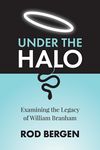
We dismantled the substance of this argument in Under the Halo. It's an equivocation (a term shifting meaning mid-argument). "Angel/messenger" is made to carry Branham across from Malachi to Revelation 10 by treating a translation overlap as if it were an identity of referents. But we show in Under The Halo, the Greek of Revelation 10:7 ties the seventh angel to the seventh trumpet (Rev. 11:15), and Branham's own claim that the text says "the message angel, not the trumpet angel" is simply not what the Greek says, a point confirmed by the ESV, HCSB, and NLT renderings of the passage. Courchaine inherits the conclusion without re-examining the exegesis. He's building the roof on a foundation we've already shown to be unsound.
Courchaine asserts Malachi 4 "happened" and that Branham fulfilled it, but his only stated evidence is, again, personal, "the message of Brother Branham definitively brought my heart back to him." That's the pragmatic fallacy doing the exegetical work that the text can't.
An internal contradiction he doesn't notice
This one is worth pointing out because it's his own words turning on him. He argues that the Nicolaitan spirit, the "image of the beast," is precisely the impulse to "settle disputes" by declaring who's right, elevating a teaching authority over the people, and "casting out those who would not agree." Councils, creeds, votes: beast.
But the Message does exactly this, and Branham did it in the sharpest possible terms. Branham didn't merely offer a view; he said those who believe the Trinity are "possessed by the devil" and "you're lost," and he called the denominations the mark of the beast. That is the most extreme possible "casting out of those who won't agree." Courchaine praises Branham's tolerance ("find that brother and go to his church") while standing inside a system whose founder consigned Trinitarians to damnation. By Courchaine's own definition of the beast, the Message qualifies. He's applied the test to everyone except the one group it most obviously indicts, which is the very thing he warned against: "question everything except the person telling you to question everything."
Smaller but real problems
A few things that don't deserve full sections but are worth noting for accuracy:
- "Faith is evidence because evidence is not conclusive." He's leaning on the KJV of Hebrews 11:1 ("evidence of things not seen") to argue that faith replaces evidence. But the Greek (elenchos) means something closer to "proof" or "conviction," and Christians for centuries have read the verse as faith being well-grounded confidence, not a substitute for grounds. He's turned a verse about assurance into a verse against inquiry.
- "Worship means to surrender." Stated flatly (32:37). The main biblical words for worship (shachah, proskuneō) center on bowing down / paying homage. Surrender is a fair devotional application, but it's presented as a definition, and it isn't one.
- Attributing the sinless-logic argument to "Satan knew he was intellectually wrong" from Ezekiel 28. Ezekiel 28 is addressed to the king of Tyre, and its application to Satan is an interpretive tradition, not a plain reading. Building a theory of skepticism-as-satanic on it is a lot of weight for a contested text.
- He never actually answers his own question. The sermon is titled "Why me / All things" and promises to explain "all things" (Romans 8:28) and "why me." He reads the texts at the start and then never returns to exposit them; the "why me" answer (God foresaw my free choice) is asserted in two sentences and dropped. The structure promises exposition and delivers a mood.
God and logic
- Main articles: God and the rules of logic and Logic and the Message
God serves as the foundation of all logic, having created the reality in which we discover the rules of laws.
Footnotes