The Manhattan Project: Difference between revisions
| (6 intermediate revisions by the same user not shown) | |||
| Line 27: | Line 27: | ||
== What is the Message? - Part 5 - Why Me? - All Things - 2026-04-22 == | == What is the Message? - Part 5 - Why Me? - All Things - 2026-04-22 == | ||
David appears to be warm, self-deprecating, repeatedly generous toward Calvinists, Arminians, Catholics, and even atheists ("some of my best conversations have come from people who don't believe in God at all"). This is at odds with | David appears to be warm, self-deprecating, repeatedly generous toward Calvinists, Arminians, Catholics, and even atheists ("some of my best conversations have come from people who don't believe in God at all"). This is at odds with hi s calling us liars. | ||
[[Logic and the Message#Self-refutation]] | This sermon may be where the idea of the Manhattan Project started. In many of the videos he deleted, he talked about epistemology, the study of the nature, origin, scope, and limits of human knowledge. In this sermon, he appears to be retreating to higher ground, attempting to build an '''epistemological fortress''', a theory of knowledge designed so that no evidence could ever counter the Message. | ||
=== His core claim === | |||
His core claim is that you cannot use reasoning or evidence to establish spiritual truth. Such truth is grasped only by faith and revelation. The moment you allow reasoning to have a vote, you've already surrendered to the enemy. | |||
And the HUGE problem with this is that it is [[Logic and the Message#Self-refutation|self-refuting]]. '''He spends 45 minutes reasoning and citing evidence to convince you of that.''' He gives definitions, walks through history, cites Greek and Hebrew, compares proof texts, and weighs Calvinism against Arminianism. Every one of those is an appeal to your reason. A claim that "reason cannot establish truth" cannot itself be established by reason without refuting itself, and it cannot be established by revelation without simply asking you to take his word for it. | |||
The law of non-contradiction isn't a hostile skeptic's tool; it's the precondition for meaning in any statement at all. When Courchaine says "intellectual consistency is not truth," he needs that statement itself to be intellectually consistent and true, or there's no reason to accept it. The sentence eats its own tail. | |||
This is the load-bearing wall of Courchaine's argument. If it falls, then the whole "''you can't question the Message''" apparatus falls with it. While it should be obvious to those in the Message, cognitive dissonance will prevent them from seeing it. But those outside feel the sleight of hand even before they can name it: ''he told me not to reason, and then reasoned with me for an hour.'' | |||
=== A false dilemma dressed up as humility === | |||
Courchaine repeatedly offers exactly two options: | |||
#either you believe by pure faith/revelation, or | |||
#you're a "skeptic" who thinks "any amount of reasoning can prove it right or wrong," which makes you into God and lands you with Dawkins, Sam Harris, and Satan. | |||
There is no third door in his telling. | |||
But there obviously is one, and it's the historic Christian position. The faulty dilemma is one of the favorite ways to make a Christian squirm. | |||
Here is the alternative he never considers: ''faith grounded in evidence.'' True faith is a confidence based on reliable evidence, resting on an overwhelming amount of reliable evidence from God's words and God's works, not some blind hope apart from any evidence. | |||
What he doesn't recognize is that this third alternative is firmly grounded in scripture. There was a person in the Bible who thought that Jesus was the messiah, but later on, he began to doubt. | |||
How did Jesus deal with this man's doubt? | |||
Here is the story about John the Baptist from Luke 7:18- 23: | |||
:''John’s disciples told him about all these things. Calling two of them, 19 he sent them to the Lord to ask, “Are you the one who is to come, or should we expect someone else?” When the men came to Jesus, they said, “John the Baptist sent us to you to ask, ‘Are you the one who is to come, or should we expect someone else?’ ” At that very time Jesus cured many who had diseases, sicknesses and evil spirits, and gave sight to many who were blind. So he replied to the messengers, “Go back and report to John what you have seen and heard: The blind receive sight, the lame walk, those who have leprosy are cleansed, the deaf hear, the dead are raised, and the good news is proclaimed to the poor. Blessed is anyone who does not stumble on account of me.” <ref>The New International Version (Grand Rapids, MI: Zondervan, 2011), Lk 7:18–23.</ref> | |||
Jesus did not say, "How could you doubt me, John? Can't you just believe?" He did not condemn John for asking a very hard question. What he did was point to the evidence and to tell John's followers to go back to him and tell John the Baptist what they saw... to relate the evidence to him. | |||
'''Jesus did not condemn doubt or questioning. He simply pointed to the evidence.''' | |||
Notice what Courchaine's false dilemma accomplishes. It quietly relabels all critical examination as satanic. Once "questioning" equals "the enemy," looking at the failed prophecies and visions, the plagiarism from Larkin and Russell, all of it can be dismissed without being examined, because the act of examining has been ruled out of bounds in advance. That's not a defense of the Message. It's a false wall built around it. | |||
=== Textbook unfalsifiability admitted and celebrated === | |||
Courchaine raises the skeptic's objection himself: "Oh, you're making it unfalsifiable. It can't be proven false." His answer is essentially "Yes." | |||
He uses the 400/430 year "discrepancy" (Genesis 15:13 vs. Exodus 12:40) to argue that even apparent contradictions in Scripture don't count against it, because "if intellectual consistency were truth, God isn't God." | |||
This is a textbook red herring (throw the Bible under the bus) tactic that was used by [[Red Herring Arguments|Voice of God Recordings (click here to see our video on the subject)]]. | |||
Set aside the fact that the 400/430 figures have a straightforward harmonization that Christian apologists have offered for centuries (which he appears to be intentionally ignorant of), so it's a weak example to hang the point on. The deeper issue is the principle he draws from it: ''nothing can counter what I believe.'' A belief that no possible evidence could ever disconfirm isn't a strong belief. It's an empty one, in the sense that it's no longer making a claim about reality that reality could confirm or deny. | |||
'''This exact reasoning would equally protect Joseph Smith, the Watchtower, or any group Courchaine himself rejects.''' He rejects Mormonism a few minutes later on the grounds that Joseph Smith "pointed people to himself, not the truth." But that's an evidential, historical judgment, the very kind of reasoning he just told us we can't trust. He wants falsifiability when judging Joseph Smith and unfalsifiability when defending Branham. '''You can't have it both ways.''' | |||
==== The Pragmatic Fallacy: ''It brought millions to Jesus, therefore it's true'' ==== | |||
His climactic proof is testimonial and pragmatic: the Message introduced him to Jesus, it's brought millions to Christ, and that is "beyond dispute" and "THUS SAITH THE LORD." | |||
Two problems. First, even granting the sincerity, this is a textbook pragmatic fallacy - "it works, therefore it is true." | |||
Results are never a guarantee of truth. Whether something works and whether it is true are two very different issues... Anytime someone says... ''Try Jesus 'cause it works,'' he has committed a fallacy. Plenty of movements produce changed lives and sincere devotion, including ones Courchaine would call false. Fruit in the sense of transformed affections is not the same as a true prophetic claim. Branham's claim wasn't "I'll introduce you to Jesus." It was "I am the prophet of Malachi 4:5, the angel of Revelation 10:7, and to reject my message is the mark of the beast." That claim is either true or false on the evidence, and no number of testimonies settles it. | |||
Second, notice the quiet substitution. The thing that's "beyond dispute" (that the Message meant something to him personally) is smuggled in to vouch for the thing that is very much in dispute (that Branham was who he said he was). Those are two different claims. Conceding the first costs the critic nothing and proves nothing about the second. | |||
==== 5. The Malachi / Revelation 10:7 word-chain ==== | |||
Courchaine repeats the familiar Message move: ''Malachi'' = "my messenger," ''mal'ak'' = "messenger" = "angel," Revelation 10:7 speaks of the seventh "angel," therefore the threads tie together into a single end-time Gentile prophet. | |||
You've already dismantled the substance of this in ''Under the Halo'', so I'll just flag how it functions in his argument. It's an equivocation (Geisler: a term shifting meaning mid-argument). "Angel/messenger" is made to carry Branham across from Malachi to Revelation 10 by treating a translation overlap as if it were an identity of referents. But as your book shows, the Greek of Revelation 10:7 ties the seventh angel to the seventh ''trumpet'' (cf. Rev. 11:15), and Branham's own claim that the text says "the message angel, not the trumpet angel" is simply not what the Greek says, a point confirmed by the ESV, HCSB, and NLT renderings you cite. Courchaine inherits the conclusion without re-examining the exegesis. He's building the roof on a foundation you've already shown to be cracked. | |||
Worth adding: he asserts Malachi 4 "happened" and that Branham fulfilled it, but his ''only'' stated evidence is, again, personal, "the message of Brother Branham definitively brought my heart back to him." That's the pragmatic fallacy doing the exegetical work that the text can't. | |||
==== 6. An internal contradiction he doesn't notice ==== | |||
This one is worth pointing out because it's his own words turning on him. He argues that the Nicolaitan spirit, the "image of the beast," is precisely the impulse to "settle disputes" by declaring who's right, elevating a teaching authority over the people, and "casting out those who would not agree." Councils, creeds, votes: beast. | |||
But the Message does exactly this, and Branham did it in the sharpest possible terms. Branham didn't merely offer a view; he said those who believe the Trinity are "possessed by the devil" and "you're lost," and he called the denominations the mark of the beast. That is the most extreme possible "casting out of those who won't agree." Courchaine praises Branham's tolerance ("find that brother and go to his church") while standing inside a system whose founder consigned Trinitarians to damnation. By Courchaine's own definition of the beast, the Message qualifies. He's applied the test to everyone except the one group it most obviously indicts, which is the very thing he warned against: "question everything except the person telling you to question everything." | |||
==== 7. Smaller but real problems ==== | |||
A few things that don't deserve full sections but are worth noting for accuracy: | |||
* '''"Faith is evidence because evidence is not conclusive."''' He's leaning on the KJV of Hebrews 11:1 ("evidence of things not seen") to argue that faith replaces evidence. But the Greek (''elenchos'') means something closer to "proof" or "conviction," and Grudem, along with the broad tradition, reads the verse as faith being ''well-grounded confidence'', not a substitute for grounds. He's turned a verse about assurance into a verse against inquiry. | |||
* '''"Worship means to surrender."''' Stated flatly (32:37). The main biblical words for worship (''shachah'', ''proskuneō'') center on bowing down / paying homage. Surrender is a fair devotional application, but it's presented as a definition, and it isn't one. | |||
* '''Attributing the sinless-logic argument to "Satan knew he was intellectually wrong" from Ezekiel 28.''' Ezekiel 28 is addressed to the king of Tyre, and its application to Satan is an interpretive tradition, not a plain reading. Building a theory of skepticism-as-satanic on it is a lot of weight for a contested text. | |||
* '''He never actually answers his own question.''' The sermon is titled "Why me / All things" and promises to explain "all things" (Romans 8:28) and "why me." He reads the texts at the start and then never returns to exposit them; the "why me" answer (God foresaw my free choice) is asserted in two sentences and dropped. The structure promises exposition and delivers a mood. | |||
=God and logic= | =God and logic= | ||
Latest revision as of 01:36, 4 July 2026

David Courchaine is the son of Tom Courchaine, pastor of New Life Church, a small message church in Sweetwater, Tennessee. He occasionally speaks at the church, and this has been increasing of late.
What is the "Manhattan Project"
In an intense, emotional video posted on Facebook on May 8, 2026, David described what he calls the "Manhattan Project":
- What is the Manhattan project? I am systematically dismantling every lie ever set against the message of the hour. All of them. Too long has the forces of darkness hurt God’s people… from the liars of Rod Bergen, John Collins, Tim Humes, and the others… Jeff Jenkins. I am systematically dismantling every single lie they have ever told.
- I am eight chapters in to Bergen’s book. Four hundred seven footnotes out of nine hundred fifty-five. It’s a lie. I actually have looked at it. I’ve lost track of all the lies. That’s what the Manhattan Project is. And when I’m done, the Manhattan Project is going to produce nukes that nuke these liars words back into hell where they belong. Because they’re lies and they come from the father of lies. They pervert what Brother Branham said into their own little lies a lie. So that’s what I’m doing and that’s what I’m going to do.
- Too long have this lies of Satan hurt God’s people. And no more. When I’m done someone can look at this stuff and conclude whatever they want, but they can’t conclude that these guys are honest, because they’re not. I just spent five and a half hours straight without stopping, running a voice message, going through three-fourths of the rest of chapter eight from the Arizona Cloud from Rod Bergen. It’s a piece of hell is what it is. It’s a lie. Even by intellectual standards. That’s what I’m doing. That’s what the Manhattan Project is. So I appreciate your prayers as I take these lies and I put them back in hell where they belong. Too long has this hell hurt God’s bride. And when I am done, it would be no more.”[1]
Several people contacted us after he posted this video to let us know about it and to request prayer for David as he seemed to be on the verge of an emotional breakdown. It was clear from watching the video that David Courchaine was experiencing cognitive dissonance; however, because he is in a group where all five of the criteria required for increased fervency of belief are present, we must, in his eyes, be considered liars. This is what cognitive dissonance does to a person.
Courchaine's use of the term "The Manhattan Project" is interesting, as the original Manhattan Project resulted in the deaths of 150,000 to 246,,000 innocent civilians in Japan, while at least 86 workers perished in construction and radiation accidents at the Manhattan Project facilities in the U.S. Additionally downwind communities in New Mexico, primarily Hispanic and Native American populations, also suffered chronic health issues and elevated cancer rates due to fallout from testing.
Courchaine originally announced the Manhattan Project in a series of videos on Facebook and Instagram; however, these have all since been deleted. He also removed all of the episodes of his YouTube podcast, "What do you mean by."
Premature evaluation
From the video transcript above, it is clear that David Courchaine started with his conclusions already established... before examining all the evidence. This is typical of cult followers. The ad hominem attacks (attacking the person rather than the arguments) he engaged in are also typical of responses from a person in a cult.
While he has not released any of his "findings" with respect to his "research," he has given a number of clues in several recent sermons as well as in a document entitled "The Manhattan Project: Part One - The Meta-Layer" he published in May (but has since withdrawn). While we wait for his "bomb" to drop, let's look at the content of his recent sermons.
What is the Message? - Part 5 - Why Me? - All Things - 2026-04-22
David appears to be warm, self-deprecating, repeatedly generous toward Calvinists, Arminians, Catholics, and even atheists ("some of my best conversations have come from people who don't believe in God at all"). This is at odds with hi s calling us liars.
This sermon may be where the idea of the Manhattan Project started. In many of the videos he deleted, he talked about epistemology, the study of the nature, origin, scope, and limits of human knowledge. In this sermon, he appears to be retreating to higher ground, attempting to build an epistemological fortress, a theory of knowledge designed so that no evidence could ever counter the Message.
His core claim
His core claim is that you cannot use reasoning or evidence to establish spiritual truth. Such truth is grasped only by faith and revelation. The moment you allow reasoning to have a vote, you've already surrendered to the enemy.
And the HUGE problem with this is that it is self-refuting. He spends 45 minutes reasoning and citing evidence to convince you of that. He gives definitions, walks through history, cites Greek and Hebrew, compares proof texts, and weighs Calvinism against Arminianism. Every one of those is an appeal to your reason. A claim that "reason cannot establish truth" cannot itself be established by reason without refuting itself, and it cannot be established by revelation without simply asking you to take his word for it.
The law of non-contradiction isn't a hostile skeptic's tool; it's the precondition for meaning in any statement at all. When Courchaine says "intellectual consistency is not truth," he needs that statement itself to be intellectually consistent and true, or there's no reason to accept it. The sentence eats its own tail.
This is the load-bearing wall of Courchaine's argument. If it falls, then the whole "you can't question the Message" apparatus falls with it. While it should be obvious to those in the Message, cognitive dissonance will prevent them from seeing it. But those outside feel the sleight of hand even before they can name it: he told me not to reason, and then reasoned with me for an hour.
A false dilemma dressed up as humility
Courchaine repeatedly offers exactly two options:
- either you believe by pure faith/revelation, or
- you're a "skeptic" who thinks "any amount of reasoning can prove it right or wrong," which makes you into God and lands you with Dawkins, Sam Harris, and Satan.
There is no third door in his telling.
But there obviously is one, and it's the historic Christian position. The faulty dilemma is one of the favorite ways to make a Christian squirm.
Here is the alternative he never considers: faith grounded in evidence. True faith is a confidence based on reliable evidence, resting on an overwhelming amount of reliable evidence from God's words and God's works, not some blind hope apart from any evidence.
What he doesn't recognize is that this third alternative is firmly grounded in scripture. There was a person in the Bible who thought that Jesus was the messiah, but later on, he began to doubt.
How did Jesus deal with this man's doubt?
Here is the story about John the Baptist from Luke 7:18- 23:
- John’s disciples told him about all these things. Calling two of them, 19 he sent them to the Lord to ask, “Are you the one who is to come, or should we expect someone else?” When the men came to Jesus, they said, “John the Baptist sent us to you to ask, ‘Are you the one who is to come, or should we expect someone else?’ ” At that very time Jesus cured many who had diseases, sicknesses and evil spirits, and gave sight to many who were blind. So he replied to the messengers, “Go back and report to John what you have seen and heard: The blind receive sight, the lame walk, those who have leprosy are cleansed, the deaf hear, the dead are raised, and the good news is proclaimed to the poor. Blessed is anyone who does not stumble on account of me.” [2]
Jesus did not say, "How could you doubt me, John? Can't you just believe?" He did not condemn John for asking a very hard question. What he did was point to the evidence and to tell John's followers to go back to him and tell John the Baptist what they saw... to relate the evidence to him.
Jesus did not condemn doubt or questioning. He simply pointed to the evidence.
Notice what Courchaine's false dilemma accomplishes. It quietly relabels all critical examination as satanic. Once "questioning" equals "the enemy," looking at the failed prophecies and visions, the plagiarism from Larkin and Russell, all of it can be dismissed without being examined, because the act of examining has been ruled out of bounds in advance. That's not a defense of the Message. It's a false wall built around it.
Textbook unfalsifiability admitted and celebrated
Courchaine raises the skeptic's objection himself: "Oh, you're making it unfalsifiable. It can't be proven false." His answer is essentially "Yes."
He uses the 400/430 year "discrepancy" (Genesis 15:13 vs. Exodus 12:40) to argue that even apparent contradictions in Scripture don't count against it, because "if intellectual consistency were truth, God isn't God."
This is a textbook red herring (throw the Bible under the bus) tactic that was used by Voice of God Recordings (click here to see our video on the subject).
Set aside the fact that the 400/430 figures have a straightforward harmonization that Christian apologists have offered for centuries (which he appears to be intentionally ignorant of), so it's a weak example to hang the point on. The deeper issue is the principle he draws from it: nothing can counter what I believe. A belief that no possible evidence could ever disconfirm isn't a strong belief. It's an empty one, in the sense that it's no longer making a claim about reality that reality could confirm or deny.
This exact reasoning would equally protect Joseph Smith, the Watchtower, or any group Courchaine himself rejects. He rejects Mormonism a few minutes later on the grounds that Joseph Smith "pointed people to himself, not the truth." But that's an evidential, historical judgment, the very kind of reasoning he just told us we can't trust. He wants falsifiability when judging Joseph Smith and unfalsifiability when defending Branham. You can't have it both ways.
The Pragmatic Fallacy: It brought millions to Jesus, therefore it's true
His climactic proof is testimonial and pragmatic: the Message introduced him to Jesus, it's brought millions to Christ, and that is "beyond dispute" and "THUS SAITH THE LORD."
Two problems. First, even granting the sincerity, this is a textbook pragmatic fallacy - "it works, therefore it is true." Results are never a guarantee of truth. Whether something works and whether it is true are two very different issues... Anytime someone says... Try Jesus 'cause it works, he has committed a fallacy. Plenty of movements produce changed lives and sincere devotion, including ones Courchaine would call false. Fruit in the sense of transformed affections is not the same as a true prophetic claim. Branham's claim wasn't "I'll introduce you to Jesus." It was "I am the prophet of Malachi 4:5, the angel of Revelation 10:7, and to reject my message is the mark of the beast." That claim is either true or false on the evidence, and no number of testimonies settles it.
Second, notice the quiet substitution. The thing that's "beyond dispute" (that the Message meant something to him personally) is smuggled in to vouch for the thing that is very much in dispute (that Branham was who he said he was). Those are two different claims. Conceding the first costs the critic nothing and proves nothing about the second.
5. The Malachi / Revelation 10:7 word-chain
Courchaine repeats the familiar Message move: Malachi = "my messenger," mal'ak = "messenger" = "angel," Revelation 10:7 speaks of the seventh "angel," therefore the threads tie together into a single end-time Gentile prophet.
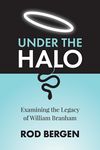
You've already dismantled the substance of this in Under the Halo, so I'll just flag how it functions in his argument. It's an equivocation (Geisler: a term shifting meaning mid-argument). "Angel/messenger" is made to carry Branham across from Malachi to Revelation 10 by treating a translation overlap as if it were an identity of referents. But as your book shows, the Greek of Revelation 10:7 ties the seventh angel to the seventh trumpet (cf. Rev. 11:15), and Branham's own claim that the text says "the message angel, not the trumpet angel" is simply not what the Greek says, a point confirmed by the ESV, HCSB, and NLT renderings you cite. Courchaine inherits the conclusion without re-examining the exegesis. He's building the roof on a foundation you've already shown to be cracked.
Worth adding: he asserts Malachi 4 "happened" and that Branham fulfilled it, but his only stated evidence is, again, personal, "the message of Brother Branham definitively brought my heart back to him." That's the pragmatic fallacy doing the exegetical work that the text can't.
6. An internal contradiction he doesn't notice
This one is worth pointing out because it's his own words turning on him. He argues that the Nicolaitan spirit, the "image of the beast," is precisely the impulse to "settle disputes" by declaring who's right, elevating a teaching authority over the people, and "casting out those who would not agree." Councils, creeds, votes: beast.
But the Message does exactly this, and Branham did it in the sharpest possible terms. Branham didn't merely offer a view; he said those who believe the Trinity are "possessed by the devil" and "you're lost," and he called the denominations the mark of the beast. That is the most extreme possible "casting out of those who won't agree." Courchaine praises Branham's tolerance ("find that brother and go to his church") while standing inside a system whose founder consigned Trinitarians to damnation. By Courchaine's own definition of the beast, the Message qualifies. He's applied the test to everyone except the one group it most obviously indicts, which is the very thing he warned against: "question everything except the person telling you to question everything."
7. Smaller but real problems
A few things that don't deserve full sections but are worth noting for accuracy:
- "Faith is evidence because evidence is not conclusive." He's leaning on the KJV of Hebrews 11:1 ("evidence of things not seen") to argue that faith replaces evidence. But the Greek (elenchos) means something closer to "proof" or "conviction," and Grudem, along with the broad tradition, reads the verse as faith being well-grounded confidence, not a substitute for grounds. He's turned a verse about assurance into a verse against inquiry.
- "Worship means to surrender." Stated flatly (32:37). The main biblical words for worship (shachah, proskuneō) center on bowing down / paying homage. Surrender is a fair devotional application, but it's presented as a definition, and it isn't one.
- Attributing the sinless-logic argument to "Satan knew he was intellectually wrong" from Ezekiel 28. Ezekiel 28 is addressed to the king of Tyre, and its application to Satan is an interpretive tradition, not a plain reading. Building a theory of skepticism-as-satanic on it is a lot of weight for a contested text.
- He never actually answers his own question. The sermon is titled "Why me / All things" and promises to explain "all things" (Romans 8:28) and "why me." He reads the texts at the start and then never returns to exposit them; the "why me" answer (God foresaw my free choice) is asserted in two sentences and dropped. The structure promises exposition and delivers a mood.
God and logic
- Main articles: God and the rules of logic and Logic and the Message
God serves as the foundation of all logic, having created the reality in which we discover the rules of laws.
Footnotes