Branham and the Virgin Birth: Difference between revisions
Created page with "{{Top of Page}} {{Bottom of Page}}" |
No edit summary |
||
| (4 intermediate revisions by the same user not shown) | |||
| Line 1: | Line 1: | ||
{{Top of Page}} | {{Top of Page}} | ||
{{Nestorianism}} | |||
=Introduction: The Shadow of Nestorius and the Chalcedonian Standard= | |||
The historical development of Christian dogma has always demanded a precise articulation of Christ’s nature to safeguard the integrity of the Incarnation. In 451 AD, the Council of Chalcedon established a definitive standard to navigate the "heretical reefs" of the early church: Nestorianism, which divided the Person of Christ into two separate agents, and Eutychianism, which confused the two natures into a single, hybrid substance. The Chalcedonian Definition established the ''Hypostatic Union''—that Jesus Christ is one Person in two distinct natures—divine and human—existing "without confusion, without change, without division, without separation." | |||
In the modern era, the teachings of William Branham represent a significant re-emergence of these pre-Chalcedonian struggles within a Pentecostal context. His Christology frequently departs from the orthodox standard, favoring a "Dual-Person" model and an "Incubator Mary" biological theory. This report evaluates whether Branham’s departures constitute a shift toward a physicalist redemptive model that prioritizes biological replacement over the ''incarnational solidarity'' and spiritual reconciliation found in historical orthodoxy. | |||
=The Dual-Person Concept vs. The God-man Union = | |||
{{Bottom of Page}} | The ''Hypostatic (God-man) Union'' is the strategic bedrock of orthodox salvation, necessitating that the divine and human natures be united in a single, undivided Person. This union allows for the exchange of properties, where the actions of the human Jesus are rightly attributed to the eternal Son of God. Without this singular personhood, the redemptive work on the cross is reduced to the suffering of a mere human instrument. | ||
Branham’s model, however, describes Christ in terms of alternating personalities, suggesting a moral or indwelling union rather than a natural, hypostatic one. This is evidenced in his 1953 Chicago sermons and subsequent teachings: | |||
* '''God as the Internal Speaker:''' "...He was God speaking out of His Son. God was in His Son" (''Believest Thou This?'', 1950-08-20). | |||
* '''The Temporal Phase:''' Branham describes Christ as coming "out of Spirit... out of eternity into time... Passed through time, went back into eternity" (''The Testimony of Jesus Christ'', 1953-08-29, §7). | |||
* '''The Being within the Son:''' "Jesus was God's Son... and He dwelt in this Son as a Being, manifesting Himself" (''The Spoken Word Is The Original Seed'', 1962-03-18). | |||
By characterizing the Son as a vessel through which God "passed through time," Branham views Christ’s humanity as a temporary "cast" or "mask" for the Father. This differs fundamentally from the orthodox view that the Son ''is'' the Person who became flesh. In Branham’s system, the "Son" is an instrument—a distinction that mirrors the Nestorian error of dividing the one Person into a divine inhabitant and a human dwelling. | |||
=The "Incubator Mary" Model vs. The Virgin Birth = | |||
A crucial element of orthodox Christology is the belief that Christ was truly human, possessing a genetic link to David and Adam through Mary. Historical theology has long debated the title of Mary as ''Theotokos'' (God-bearer) versus the Nestorian preference for ''Christotokos'' (Christ-bearer). Branham, however, bypasses this debate by denying Mary contributed any substance at all, effectively moving into a form of Gnostic Docetism. | |||
Branham’s "Incubator Mary" model asserts: | |||
* '''Total Biological Denial:''' "The female has nothing to do with it. She's only a incubator" (''Who Hath Believed Our Report?'', 1951-07-19). | |||
* '''A Borrowed Womb:''' "Mary wasn't even the mother of Jesus... She was just a borrowed womb that God used" (''Shalom'', 1964-01-12). | |||
* '''Absence of Substance:''' "There was no sperm come from Mary. It was altogether created virgin by God... He was no part of her—nothing" (''The Spoken Word Is The Original Seed'', 1962-03-18). | |||
By stating Jesus was "no part of her," Branham denies the orthodox doctrine of the Virgin Birth, which maintains that Jesus was conceived ''by'' the Holy Spirit ''in'' the womb of Mary, taking His human nature ''from'' her. This denial has grave salvational consequences. As Gregory of Nazianzus famously argued against Apollinarianism, "''That which was not assumed was not healed''." If Christ has no genetic link to the fallen race of Adam, He cannot serve as the "Second Adam" or the legal kinsman redeemer, as He does not share in the actual substance of those He came to save. | |||
=The Rejection of Eternal Sonship as Economic Modalism = | |||
Orthodox theology maintains the "Eternal Sonship" of Christ to ensure ''equivalence in being' between the Father and the Son. Branham rejected this, arguing that the term "Son" necessitates a beginning: | |||
<blockquote>"Now, I do not believe in eternal sonship... how could He be a Son? He had to have a beginning." (''The Restoration Of The Bride Tree'', 1962-04-22).</blockquote> | |||
Branham explicitly frames the Godhead through what systematic theologians categorize as '''Economic Modalism''' (or Sabellianism). He utilizes a "three-foot rule" metaphor to explain the Trinity: | |||
"God isn't three people. It's a three-foot rule that you let out. The same God the Father was made manifest in flesh, and now in the Holy Spirit... One person in three dispensations" (''The Testimony of Jesus Christ'', 1953-08-29, §48). | |||
In this system, "Son" is not an eternal person but a temporal role or "dispensation" played by the one Person of God. When combined with the "Incubator" model, the Son is reduced to a created, temporal manifestation rather than the eternal Second Person of the Trinity. | |||
=The Systemic Connection: Biological Fall and Redemptive Bypassing = | |||
In Branham’s worldview, biology is the primary theater of both the Fall and Redemption. He suggests that humans are "attributes of God" and that the Fall was a physical contamination. | |||
The Biology of the Seed: Fall vs. Redemption | |||
{| class="wikitable" | |||
!Feature | |||
!The Serpent's Seed (The Fall) | |||
!The Incubator Model (Redemption) | |||
|- | |||
|'''Mechanic''' | |||
|A physicalist view where the Serpent's biological "seed" entered the human race through Eve (''The Testimony of Jesus Christ'', 1953). | |||
|God bypasses the "tainted" human biology entirely, creating a "New Seed" with zero genetic connection to the fallen race. | |||
|- | |||
|'''Nature of Sin/Grace''' | |||
|Sin is a '''Biological Contamination''' of the literal bloodline. | |||
|Redemption is a '''Biological Replacement''' of the seed. | |||
|- | |||
|'''Soteriological Basis''' | |||
|Salvation is a matter of '''Lineage and Attributes'''. | |||
|Salvation is a '''Bypassing of the Incarnation'''. | |||
|- | |||
|'''Orthodox Contrast''' | |||
|'''Moral/Spiritual Depravity''' (Original Sin as a state of the soul). | |||
|'''Incarnational Solidarity''' (Christ assuming human nature to heal it). | |||
|} | |||
If the Fall is a genetic corruption, then redemption must be a genetic bypass. This logic necessitates the denial of Mary’s biological contribution. However, in doing so, Branham replaces the legal and spiritual framework of justification with a system of biological determinism, where Christ is a "pass-through" visitor rather than a true participant in the human condition. | |||
=Conclusion: Theological Consequences and Classifications = | |||
The Christology of William Branham represents a fundamental departure from the historic Christian tradition. By prioritizing a "pure" biological creation over the assumption of human nature, his system creates three critical theological trajectories: | |||
# '''Nestorian Trajectory:''' By dividing the Person into "God" (the speaker) and "the Son" (the vessel), Branham advocates for a '''moral union''' or indwelling, mirroring the Nestorian heresy that denies a single, natural ''union of natures''. | |||
# '''Docetic Implications:''' By asserting that Christ was "no part of" Mary, the system falls into '''Gnostic Docetism''', presenting a Christ who only appears to be human but lacks the shared substance of the Adamic race. | |||
# '''Arian/Modalistic Tendencies:''' By denying Eternal Sonship and describing God as "one person in three dispensations," Branham aligns with '''Modalistic Monarchianism''', stripping the Son of His eternal, distinct personhood and personal equality. | |||
Ultimately, Branham’s "Incubator Mary" model and "Dual-Person" Christology replace the orthodox Incarnation with a physicalist model of biological bypassing. In this system, the Son is a temporal, created instrument of a singular Divine Person, rather than the Eternal Word who became truly, genetically man to redeem the seed of Adam through incarnational solidarity. | |||
{{Bottom of Page No Ref}} | |||
Latest revision as of 02:25, 9 July 2026
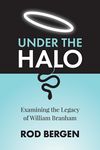

This article is one in a series of studies on William Branham and Nestorianism - you are currently on the topic that is in bold:
- What did William Branham believe about the Godhead?
- Did William Branham teach Nestorianism?
- Branham and the Virgin Birth
- Serpent's Seed and Nestorianism
Introduction: The Shadow of Nestorius and the Chalcedonian Standard
The historical development of Christian dogma has always demanded a precise articulation of Christ’s nature to safeguard the integrity of the Incarnation. In 451 AD, the Council of Chalcedon established a definitive standard to navigate the "heretical reefs" of the early church: Nestorianism, which divided the Person of Christ into two separate agents, and Eutychianism, which confused the two natures into a single, hybrid substance. The Chalcedonian Definition established the Hypostatic Union—that Jesus Christ is one Person in two distinct natures—divine and human—existing "without confusion, without change, without division, without separation."
In the modern era, the teachings of William Branham represent a significant re-emergence of these pre-Chalcedonian struggles within a Pentecostal context. His Christology frequently departs from the orthodox standard, favoring a "Dual-Person" model and an "Incubator Mary" biological theory. This report evaluates whether Branham’s departures constitute a shift toward a physicalist redemptive model that prioritizes biological replacement over the incarnational solidarity and spiritual reconciliation found in historical orthodoxy.
The Dual-Person Concept vs. The God-man Union
The Hypostatic (God-man) Union is the strategic bedrock of orthodox salvation, necessitating that the divine and human natures be united in a single, undivided Person. This union allows for the exchange of properties, where the actions of the human Jesus are rightly attributed to the eternal Son of God. Without this singular personhood, the redemptive work on the cross is reduced to the suffering of a mere human instrument.
Branham’s model, however, describes Christ in terms of alternating personalities, suggesting a moral or indwelling union rather than a natural, hypostatic one. This is evidenced in his 1953 Chicago sermons and subsequent teachings:
- God as the Internal Speaker: "...He was God speaking out of His Son. God was in His Son" (Believest Thou This?, 1950-08-20).
- The Temporal Phase: Branham describes Christ as coming "out of Spirit... out of eternity into time... Passed through time, went back into eternity" (The Testimony of Jesus Christ, 1953-08-29, §7).
- The Being within the Son: "Jesus was God's Son... and He dwelt in this Son as a Being, manifesting Himself" (The Spoken Word Is The Original Seed, 1962-03-18).
By characterizing the Son as a vessel through which God "passed through time," Branham views Christ’s humanity as a temporary "cast" or "mask" for the Father. This differs fundamentally from the orthodox view that the Son is the Person who became flesh. In Branham’s system, the "Son" is an instrument—a distinction that mirrors the Nestorian error of dividing the one Person into a divine inhabitant and a human dwelling.
The "Incubator Mary" Model vs. The Virgin Birth
A crucial element of orthodox Christology is the belief that Christ was truly human, possessing a genetic link to David and Adam through Mary. Historical theology has long debated the title of Mary as Theotokos (God-bearer) versus the Nestorian preference for Christotokos (Christ-bearer). Branham, however, bypasses this debate by denying Mary contributed any substance at all, effectively moving into a form of Gnostic Docetism.
Branham’s "Incubator Mary" model asserts:
- Total Biological Denial: "The female has nothing to do with it. She's only a incubator" (Who Hath Believed Our Report?, 1951-07-19).
- A Borrowed Womb: "Mary wasn't even the mother of Jesus... She was just a borrowed womb that God used" (Shalom, 1964-01-12).
- Absence of Substance: "There was no sperm come from Mary. It was altogether created virgin by God... He was no part of her—nothing" (The Spoken Word Is The Original Seed, 1962-03-18).
By stating Jesus was "no part of her," Branham denies the orthodox doctrine of the Virgin Birth, which maintains that Jesus was conceived by the Holy Spirit in the womb of Mary, taking His human nature from her. This denial has grave salvational consequences. As Gregory of Nazianzus famously argued against Apollinarianism, "That which was not assumed was not healed." If Christ has no genetic link to the fallen race of Adam, He cannot serve as the "Second Adam" or the legal kinsman redeemer, as He does not share in the actual substance of those He came to save.
The Rejection of Eternal Sonship as Economic Modalism
Orthodox theology maintains the "Eternal Sonship" of Christ to ensure equivalence in being' between the Father and the Son. Branham rejected this, arguing that the term "Son" necessitates a beginning:
"Now, I do not believe in eternal sonship... how could He be a Son? He had to have a beginning." (The Restoration Of The Bride Tree, 1962-04-22).
Branham explicitly frames the Godhead through what systematic theologians categorize as Economic Modalism (or Sabellianism). He utilizes a "three-foot rule" metaphor to explain the Trinity:
"God isn't three people. It's a three-foot rule that you let out. The same God the Father was made manifest in flesh, and now in the Holy Spirit... One person in three dispensations" (The Testimony of Jesus Christ, 1953-08-29, §48).
In this system, "Son" is not an eternal person but a temporal role or "dispensation" played by the one Person of God. When combined with the "Incubator" model, the Son is reduced to a created, temporal manifestation rather than the eternal Second Person of the Trinity.
The Systemic Connection: Biological Fall and Redemptive Bypassing
In Branham’s worldview, biology is the primary theater of both the Fall and Redemption. He suggests that humans are "attributes of God" and that the Fall was a physical contamination.
The Biology of the Seed: Fall vs. Redemption
| Feature | The Serpent's Seed (The Fall) | The Incubator Model (Redemption) |
|---|---|---|
| Mechanic | A physicalist view where the Serpent's biological "seed" entered the human race through Eve (The Testimony of Jesus Christ, 1953). | God bypasses the "tainted" human biology entirely, creating a "New Seed" with zero genetic connection to the fallen race. |
| Nature of Sin/Grace | Sin is a Biological Contamination of the literal bloodline. | Redemption is a Biological Replacement of the seed. |
| Soteriological Basis | Salvation is a matter of Lineage and Attributes. | Salvation is a Bypassing of the Incarnation. |
| Orthodox Contrast | Moral/Spiritual Depravity (Original Sin as a state of the soul). | Incarnational Solidarity (Christ assuming human nature to heal it). |
If the Fall is a genetic corruption, then redemption must be a genetic bypass. This logic necessitates the denial of Mary’s biological contribution. However, in doing so, Branham replaces the legal and spiritual framework of justification with a system of biological determinism, where Christ is a "pass-through" visitor rather than a true participant in the human condition.
Conclusion: Theological Consequences and Classifications
The Christology of William Branham represents a fundamental departure from the historic Christian tradition. By prioritizing a "pure" biological creation over the assumption of human nature, his system creates three critical theological trajectories:
- Nestorian Trajectory: By dividing the Person into "God" (the speaker) and "the Son" (the vessel), Branham advocates for a moral union or indwelling, mirroring the Nestorian heresy that denies a single, natural union of natures.
- Docetic Implications: By asserting that Christ was "no part of" Mary, the system falls into Gnostic Docetism, presenting a Christ who only appears to be human but lacks the shared substance of the Adamic race.
- Arian/Modalistic Tendencies: By denying Eternal Sonship and describing God as "one person in three dispensations," Branham aligns with Modalistic Monarchianism, stripping the Son of His eternal, distinct personhood and personal equality.
Ultimately, Branham’s "Incubator Mary" model and "Dual-Person" Christology replace the orthodox Incarnation with a physicalist model of biological bypassing. In this system, the Son is a temporal, created instrument of a singular Divine Person, rather than the Eternal Word who became truly, genetically man to redeem the seed of Adam through incarnational solidarity.